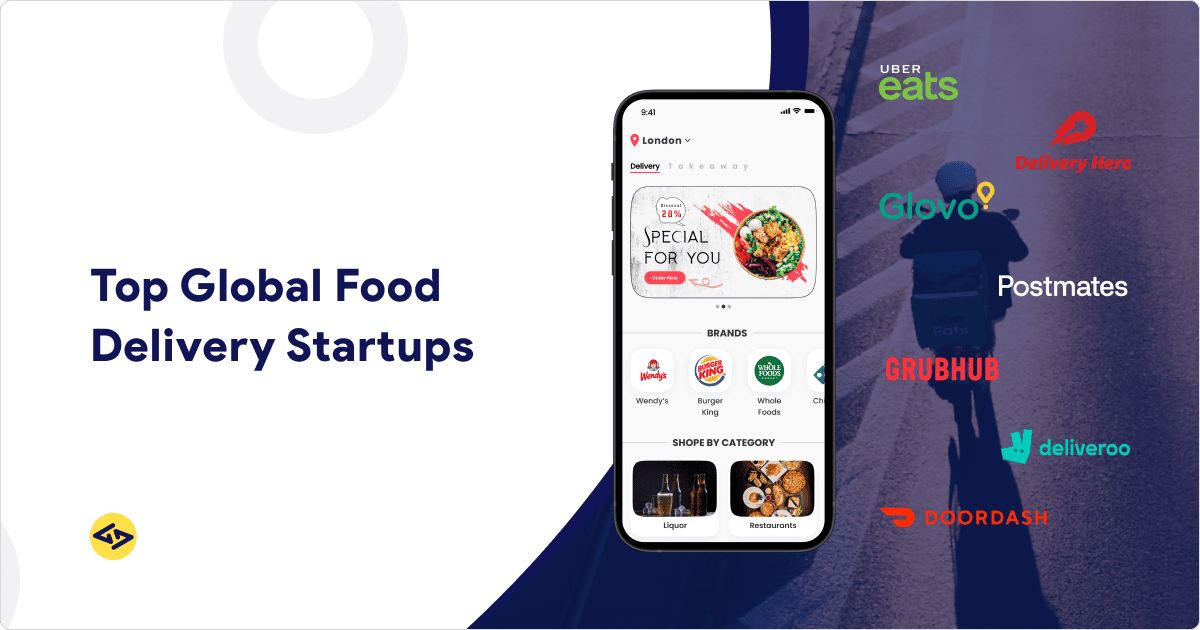
The global food delivery industry has exploded from a convenience feature into a full-blown tech ecosystem. Today, the top food delivery startups in the world are worth billions, powered by AI, cloud kitchens, and hyperlocal logistics networks that get a hot meal to your door in under 30 minutes.
Whether you’re an entrepreneur scouting food delivery startup ideas, an investor tracking unicorn food delivery startups, or a business owner planning to launch your own app, this guide breaks down the companies, technologies, and business models driving this industry — and what it takes to build one yourself.
What Is a Food Delivery Startup?
A food delivery startup is a tech-driven company that connects restaurants, customers, and delivery drivers through a digital platform — typically a mobile app or website. Unlike traditional restaurants, these companies don’t necessarily cook food; they build the technology layer that makes ordering, payment, and delivery seamless.
Common business models include:
- Marketplace model – connects multiple restaurants with customers
- Aggregator model – lists restaurants and takes a commission per order
- Cloud kitchen model – delivery-only kitchens with no dine-in space
- Quick commerce model – ultra-fast delivery of food and groceries (10–30 minutes)
Current market trends point toward AI-driven personalization, dark stores, and consolidation, with larger players acquiring regional food delivery startup companies to expand market share.
Why Food Delivery Startups Are Growing Rapidly
Rising Smartphone Adoption
Cheaper smartphones and mobile data have put ordering apps in the hands of billions of new users, especially across Asia, the Middle East, and Latin America.
Changing Consumer Behavior
Convenience-first lifestyles, remote work, and a preference for variety over cooking have made food ordering a daily habit rather than an occasional treat.
AI and Automation
AI food delivery startups use machine learning to predict demand, personalize menus, and optimize delivery routes in real time.
Hyperlocal Delivery Demand
Hyperlocal food delivery startups focus on tight geographic radiuses, enabling faster delivery and lower logistics costs.
Cloud Kitchen Expansion
Cloud kitchen startups let brands launch delivery-only menus without the overhead of a full restaurant, fueling rapid geographic expansion.
Venture Capital Investments
Investors continue to back food delivery startup funding rounds, betting on recurring revenue and long-term scalability in a market that isn’t slowing down.
Top Food Delivery Startups in the World
Here’s a detailed look at some of the best food delivery startups currently shaping the industry, including their ownership, funding, and what sets each one apart.
DoorDash
- HQ: San Francisco, USA | Founded: 2013
- Key Services: Restaurant delivery, grocery and retail delivery, DashPass subscription, DoorDash Drive (white-label logistics for merchants), advertising for restaurants
- Funding/Status: Publicly traded (NYSE: DASH); went public in 2021 at a $72 billion valuation and has continued expanding through acquisitions, including Wolt (2022) and Deliveroo (2025)
- USP: The widest logistics footprint in the U.S., now stretching into Europe and Asia-Pacific through its Wolt and Deliveroo acquisitions
- Why It Stands Out: DoorDash leads U.S. market share and has diversified into grocery, retail, and even B2B restaurant software (SevenRooms), making it far more than a single-category delivery app
Uber Eats
- HQ: San Francisco, USA | Founded: 2014
- Key Services: Restaurant delivery, grocery delivery, alcohol delivery, package delivery
- Funding/Status: Operates as a division of Uber Technologies (NYSE: UBER); in 2026 Uber agreed to acquire Delivery Hero — owner of Glovo, talabat, foodpanda, and PedidosYa — in a deal reported near $14.8 billion, which would massively extend Uber Eats’ global reach if completed
- USP: Cross-selling between Uber’s rides and delivery businesses inside a single app and single loyalty program (Uber One)
- Why It Stands Out: Its pending tie-up with Delivery Hero would push Uber Eats into dozens of new markets across the Middle East, Asia, and Latin America almost overnight
Deliveroo
- HQ: London, UK | Founded: 2013
- Key Services: Restaurant delivery, grocery delivery, Deliveroo Editions (delivery-only kitchen sites for restaurant partners)
- Funding/Status: Formerly listed on the London Stock Exchange; acquired by DoorDash in 2025, ending its run as an independent public company
- USP: Strong relationships with premium restaurant brands and early adoption of dark-kitchen infrastructure
- Why It Stands Out: Its acquisition by DoorDash gave the U.S. leader an instant foothold in the UK market, illustrating how consolidation is reshaping the sector
Glovo
- HQ: Barcelona, Spain | Founded: 2015
- Key Services: Food delivery, grocery and pharmacy delivery, courier-style “anything” delivery
- Funding/Status: Majority-owned by Delivery Hero since 2022; Delivery Hero itself agreed to be acquired by Uber in July 2026 in a deal valuing it at roughly $14.8 billion, with parts of Glovo’s business (including Spain and Portugal) set to be carved out to a separate investment firm as part of the transaction
- USP: A true multi-category app covering restaurants, groceries, pharmacies, and retail in over 20 countries
- Why It Stands Out: Glovo’s ownership is currently in transition, making it one of the clearest examples of how quickly the food delivery startup landscape can consolidate
Talabat
- HQ: Kuwait City, Kuwait | Founded: 2004
- Key Services: Restaurant delivery, grocery delivery (talabat mart), pharmacy delivery
- Funding/Status: Majority-owned by Delivery Hero and publicly listed on the Dubai Financial Market since 2024; included in Delivery Hero’s 2026 acquisition agreement with Uber
- USP: Deep market penetration across the Gulf region, where it remains the most recognized delivery brand
- Why It Stands Out: One of the earliest food delivery startups still operating under its original brand more than two decades after launch
Wolt
- HQ: Helsinki, Finland | Founded: 2014
- Key Services: Restaurant delivery, retail and grocery delivery, Wolt Drive for merchant logistics
- Funding/Status: Acquired by DoorDash in 2022 for roughly $8 billion in stock, giving DoorDash a base for European expansion
- USP: Known for a clean, minimalist app experience and strong reliability in mid-sized European cities often overlooked by larger rivals
- Why It Stands Out: Wolt has kept its own brand and app experience even after being folded into DoorDash’s global operations
Rappi
- HQ: Bogotá, Colombia | Founded: 2015
- Key Services: Food delivery, grocery delivery, RappiPay financial services, RappiTravel, an “order anything” request feature
- Funding/Status: Privately held; has raised more than $2.4 billion from investors including SoftBank, DST Global, Sequoia, and T. Rowe Price, and reported its CEO stating the company is now profitable and evaluating a possible IPO
- USP: A true super-app model that bundles delivery with banking and travel services across Latin America
- Why It Stands Out: Rappi has expanded into financial services and a partnership with Amazon (Amazon Now) to power fast grocery delivery, extending well beyond its original food delivery roots
Zomato
- HQ: Gurugram, India | Founded: 2008
- Key Services: Restaurant discovery and delivery, Blinkit (quick commerce), Hyperpure (B2B restaurant supply), District (events and ticketing)
- Funding/Status: Publicly traded; its parent company renamed itself Eternal Limited in 2025 to reflect its expansion beyond food delivery, though the Zomato app and brand remain unchanged
- USP: Its quick-commerce arm, Blinkit, has grown so fast it now generates more order value than Zomato’s original food delivery business
- Why It Stands Out: Zomato/Eternal shows how a food delivery startup can evolve into a diversified consumer platform without abandoning its original brand
Swiggy
- HQ: Bangalore, India | Founded: 2014
- Key Services: Restaurant delivery, Swiggy Instamart (quick commerce), Swiggy Genie (pickup and drop), Swiggy One membership
- Funding/Status: Publicly traded on Indian stock exchanges following its 2024 IPO
- USP: A trusted food delivery brand extending its logistics strength into 10–15 minute grocery delivery via Instamart
- Why It Stands Out: Swiggy remains one of the two dominant forces in Indian food delivery and quick commerce, locked in constant competition with Zomato/Blinkit and Zepto
Foodpanda
- HQ: Berlin, Germany (Delivery Hero group) | Founded: 2012
- Key Services: Restaurant delivery, grocery delivery (pandamart), pharmacy delivery
- Funding/Status: Owned by Delivery Hero, which itself is under a 2026 acquisition agreement with Uber
- USP: Deep localization across more than a dozen Asian markets, from Pakistan and Thailand to the Philippines
- Why It Stands Out: Foodpanda has stayed focused on emerging Asian markets that larger U.S. players have been slower to enter directly
Gopuff
- HQ: Philadelphia, USA | Founded: 2013
- Key Services: On-demand delivery of snacks, groceries, alcohol, and household essentials from owned micro-fulfillment centers
- Funding/Status: Privately held; has raised billions in venture funding from investors including SoftBank and Accel, and has shifted focus toward profitability and store-count discipline in recent years
- USP: Gopuff owns its own inventory and dark stores rather than relying purely on restaurant or retailer partnerships
- Why It Stands Out: It pioneered the “instant needs” micro-fulfillment model in the U.S. that quick-commerce startups worldwide have since copied
Bolt Food
- HQ: Tallinn, Estonia | Founded: 2019
- Key Services: Restaurant delivery, grocery and retail delivery
- Funding/Status: Operated by Bolt, a privately held ride-hailing and mobility company valued at several billion dollars, backed by investors including Sequoia and Fidelity
- USP: Leverages Bolt’s existing driver network from ride-hailing to keep delivery costs — and commissions for restaurants — competitive
- Why It Stands Out: Bolt Food expanded rapidly across Europe and Africa by cross-utilizing infrastructure built for a different core business
ChowNow
- HQ: Los Angeles, USA | Founded: 2011
- Key Services: Commission-free, restaurant-branded online ordering; POS and marketing tools for independent restaurants
- Funding/Status: Privately held; has raised venture funding to build out its SaaS ordering platform for independent restaurants
- USP: Restaurants keep their own branding and customer data instead of appearing on a shared marketplace
- Why It Stands Out: ChowNow proves there’s still a viable niche for food delivery startups that serve restaurants directly rather than competing with them
Just Eat Takeaway
- HQ: Amsterdam, Netherlands | Founded: 2020 (merger of Just Eat and Takeaway.com)
- Key Services: Restaurant delivery, grocery delivery, order-only marketplace listings across Europe and North America
- Funding/Status: Acquired by Prosus in a deal worth roughly €4.1 billion, which closed in late 2025 after Prosus took its stake to over 98%
- USP: One of Europe’s broadest food delivery footprints, spanning both delivery and order-only markets
- Why It Stands Out: Its acquisition by Prosus — which also owns a majority stake in Brazil’s iFood — turned Prosus into one of the largest food delivery investors in the world
Zepto Café
- HQ: Mumbai, India | Founded: 2021 (as Zepto)
- Key Services: 10–15 minute delivery of hot food, beverages, groceries, and everyday essentials from dark stores
- Funding/Status: Privately held; has raised significant venture funding at a multi-billion-dollar valuation and is reportedly preparing for a future IPO
- USP: Applies Zepto’s ultra-fast dark-store logistics, originally built for groceries, to hot food and café-style items
- Why It Stands Out: Zepto Café represents how quick-commerce startups are moving into food delivery from the opposite direction — starting with speed and logistics, then adding food
If you’re inspired by these global food delivery startups and want to build something similar, partnering with an experienced food delivery app development team can help you launch faster and avoid common early-stage mistakes.
Note: Ownership and funding details for private companies can change quickly through new rounds, mergers, or acquisitions. Figures above reflect the most recent publicly reported information at the time of writing.
Fastest Growing Food Delivery Startups to Watch
Beyond the established giants, a new wave of emerging food delivery startups is reshaping the space:
- AI-powered startups using predictive ordering and dynamic pricing
- Sustainable delivery startups experimenting with EV fleets and reusable packaging
- Regional leaders dominating underserved markets in Africa, Southeast Asia, and the Middle East
- Cloud kitchen innovators launching multi-brand virtual restaurants from single kitchen locations
These fastest growing food delivery startups share one trait: they solve a specific regional or niche problem rather than trying to be everything to everyone.
Innovative Technologies Used by Food Delivery Startups
Behind every seamless order is a stack of advanced technology:
- Artificial Intelligence – powers recommendations and fraud detection
- Machine Learning – improves delivery time predictions with every order
- Route Optimization – reduces delivery time and fuel costs
- Predictive Analytics – forecasts demand spikes during peak hours
- Cloud Computing – ensures the app scales during traffic surges
- Real-Time Tracking – gives customers live visibility into their order
- Contactless Delivery – a post-2020 standard for safety and convenience
- Digital Payments – supports wallets, cards, and buy-now-pay-later options
Startups that want to compete with the leaders often explore ai features in food delivery app development to close the gap with established platforms.
Business Models Used by Food Delivery Startups
Choosing the right food delivery startup business model shapes everything from revenue to operations:
| Model | Best For |
| Marketplace Model | Multi-restaurant platforms |
| Aggregator Model | Listing + commission-based revenue |
| Subscription Model | Frequent orderers (free delivery perks) |
| Commission-Based Model | Startups monetizing per transaction |
| Cloud Kitchen Model | Delivery-only brands |
| Quick Commerce Model | 10–30 minute delivery promises |
| SaaS Delivery Platform | White-label solutions for other businesses |
Understanding the full food delivery business model landscape helps founders pick the option that fits their market and budget.
Key Features Behind Successful Food Delivery Startups
The successful food delivery startups above share a common feature set:
- User-friendly app design
- Real-time order tracking
- Multiple payment options
- Loyalty programs and rewards
- AI-based recommendations
- Ratings and reviews
- Driver management tools
- Restaurant dashboards
- Built-in analytics
- Responsive customer support
A closer look at essential food delivery app features can help new founders prioritize what to build first.
Challenges Faced by Food Delivery Startups
Despite rapid growth, food delivery startup companies face real hurdles:
- High customer acquisition cost
- Complex delivery logistics
- Intense competition from established players
- Thin profit margins
- Fleet management at scale
- Maintaining food quality during transit
- Last-mile delivery inefficiencies
- Navigating local government regulations
Future Trends in Food Delivery Startups
The future of food delivery startups points toward deeper automation:
- AI-powered voice and chat ordering
- Drone delivery trials in select markets
- Autonomous delivery robots for short-distance drops
- Sustainability-focused packaging and sourcing
- Electric vehicle delivery fleets
- Deeper personalized recommendations
- Predictive demand forecasting for restaurants
How to Start a Food Delivery Startup
If you’re exploring food delivery startup ideas, here’s a practical roadmap:
- Conduct market research to identify demand gaps
- Choose a niche — regional, cloud kitchen, or quick commerce
- Select a business model that fits your target market
- Build an MVP to validate the idea with real users
- Partner with restaurants to secure your initial supply
- Develop the mobile app with core ordering and tracking features
- Launch and market across your target city or region
- Scale operations into new cities once unit economics work
Many founders choose to build food delivery app solutions with an experienced development partner rather than building an in-house team from scratch.
Technology Stack Behind Successful Food Delivery Startups
A modern food delivery startup technology stack typically includes:
- Frontend: Flutter, React Native
- Backend: Node.js, Laravel
- Databases: PostgreSQL, MongoDB
- Cloud & Hosting: AWS, Google Cloud, Firebase
- Payments: Stripe
- Maps & Logistics: Google Maps API
This combination supports cross-platform apps, real-time tracking, and the scalability needed to handle demand spikes.
How Much Does It Cost to Build a Food Delivery Startup?
Costs vary significantly depending on scope:
- MVP Cost – a basic app with core ordering features
- Standard App Cost – includes tracking, payments, and dashboards
- Enterprise Platform Cost – full-scale, multi-city, AI-integrated platform
Major cost factors include:
- Feature complexity
- Platform coverage (Android, iOS, Web)
- Team size and location
- Third-party integrations (payments, maps, SMS)
- Ongoing maintenance and updates
For a detailed breakdown, see this guide on the cost to develop a food delivery app, and factor in realistic food delivery app development time when planning your launch timeline.
Why Businesses Are Investing in Food Delivery Startups
Investors and entrepreneurs keep pouring money into this space because of:
- Sustained market growth across emerging economies
- Recurring, repeat-order revenue
- High and consistent consumer demand
- Scalability across cities and countries
- Broader digital transformation in retail and hospitality
- Attractive long-term investment opportunities
Why Choose iCoderz Solutions for Food Delivery App Development
Building a competitive food delivery platform takes more than good code — it takes proven experience. iCoderz Solutions brings:
- Expertise in custom food delivery app development
- White-label and fully custom solution options
- AI-powered features for personalization and route optimization
- Scalable architecture built for multi-city growth
- Cross-platform development (iOS, Android, Web)
- End-to-end support from planning to launch
- Post-launch maintenance and updates
Ready to build your own food delivery platform? Get a Free Consultation with our team today.
Conclusion
The top food delivery startups in the world — from DoorDash and Uber Eats to Swiggy and Rappi — show what’s possible when technology, logistics, and consumer convenience come together. These companies didn’t just build apps; they built entire ecosystems powered by AI, cloud kitchens, and hyperlocal delivery networks.
For entrepreneurs, there’s real opportunity here. Whether you’re drawn to a quick commerce model, a cloud kitchen concept, or a regional marketplace, the lessons from these successful food delivery startups offer a practical blueprint.
If you’re ready to turn your idea into a working platform, iCoderz Solutions can help you plan, build, and launch a food delivery app tailored to your business goals. Contact us today to get started.
Frequently Asked Questions (FAQ)
What are the top food delivery startups in the world?
Some of the top food delivery startups in the world include DoorDash, Uber Eats, Deliveroo, Glovo, Talabat, Wolt, Rappi, Zomato, Swiggy, and Foodpanda, each dominating different regional markets.
Which food delivery startup is growing the fastest?
Growth leaders shift by region, but quick-commerce players and hyperlocal startups in Asia, the Middle East, and Latin America currently show some of the fastest expansion rates.
What technologies do food delivery startups use?
Most rely on AI, machine learning, route optimization, cloud computing, real-time tracking, and digital payment systems to run efficiently at scale.
How do food delivery startups make money?
Common revenue streams include commissions from restaurants, delivery fees, subscription memberships, and advertising or promoted listings within the app.
How much does it cost to build a food delivery startup?
Costs range from a lean MVP build to a full enterprise platform, depending on features, platforms supported, and third-party integrations required.
What are the biggest challenges for food delivery startups?
High customer acquisition costs, thin margins, last-mile delivery logistics, and regulatory compliance are among the toughest ongoing challenges.
Can AI improve food delivery startups?
Yes — AI improves demand forecasting, route optimization, personalized recommendations, and fraud detection, all of which directly impact profitability.
What features should a food delivery startup app have?
Core features include real-time tracking, multiple payment options, restaurant dashboards, ratings and reviews, and responsive customer support.
How long does it take to develop a food delivery app?
Timelines vary based on complexity, but an MVP can typically launch faster than a full-featured, multi-city platform with advanced AI integrations.
Which business model is best for a food delivery startup?
It depends on your market: aggregator and marketplace models work well for broad reach, while cloud kitchen and quick commerce models suit speed-focused, niche markets.