Online grocery shopping has moved from a convenience to a habit. Shoppers now expect fresh produce, pantry staples, and household essentials delivered to their door in minutes, not days. That shift has pushed grocery store owners, retail chains, and startup founders to ask the same question: build a grocery app from scratch, or invest in a readymade online grocery delivery app system that’s already tested and ready to launch?
For most businesses, the second path wins. A ready-to-launch grocery app solution gets you into the market in weeks, not months, at a fraction of custom development cost, with features already proven by thousands of live users. This guide breaks down exactly why that matters, what a readymade grocery delivery app system includes, what it costs, and how to choose the right one for your business.
Quick Answer
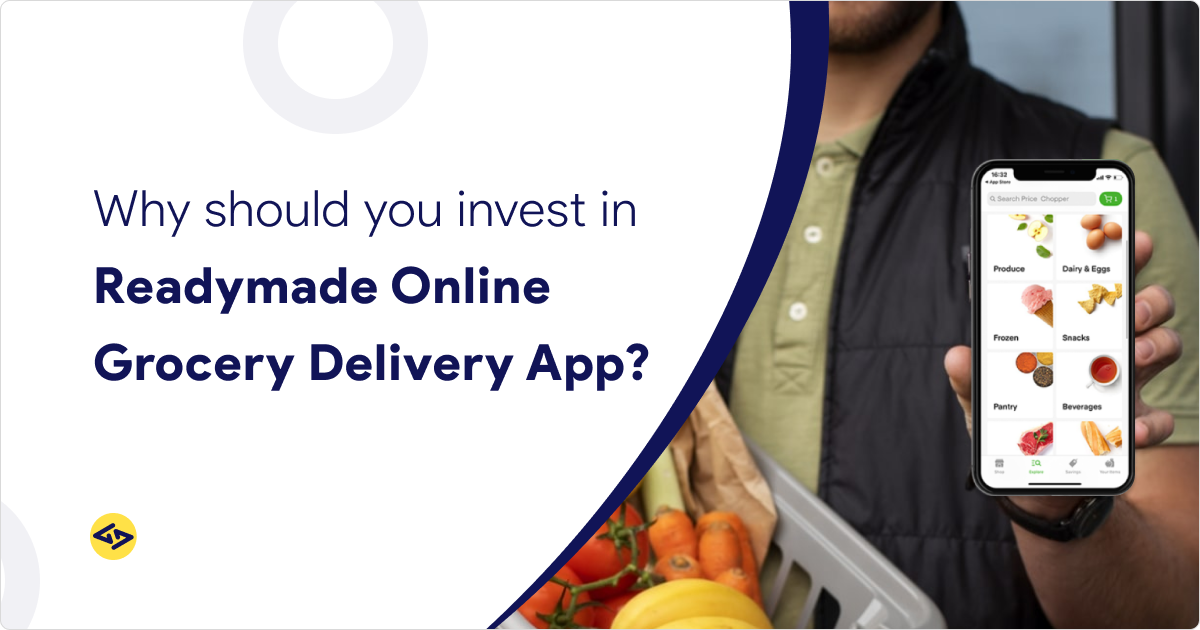
Why should you invest in a readymade online grocery delivery app system?
A readymade grocery delivery app lets you launch your online grocery business in weeks instead of months, at a much lower cost than custom development. You get proven, market-tested features, easy customization, and built-in scalability, so you can meet growing customer demand for quick commerce without the risk or delay of building software from the ground up.
Online Grocery Delivery Market Overview
Market Growth in 2026
The global online grocery delivery market has continued its steep climb into 2026, driven by smartphone penetration, rising urban density, and a generation of shoppers who default to app-based ordering. Quick commerce, the promise of delivery in 10 to 30 minutes, has grown from a metro-city novelty into a mainstream expectation across supermarkets, local grocery shops, and multi-vendor marketplaces alike. Grocery delivery trends 2026 point toward deeper AI personalization, hyperlocal dark stores, and tighter integration between inventory systems and delivery fleets, all signs that the opportunity window for new entrants is still wide open.
Why Businesses Are Investing in Grocery Delivery Apps
Three forces are pushing grocery businesses online at once. Customer expectations have shifted permanently toward same-day and instant delivery. Digital transformation budgets that once sat with enterprise retailers are now within reach of local grocery shops. And convenience-first shopping behavior, especially among working professionals and urban households, means a business without an app is quietly losing share to one that has it. You can see this reflected in some of the best grocery app development ideas currently shaping the industry, most of which start from a readymade base rather than a blank slate.
What Is a Readymade Online Grocery Delivery App System?
A readymade online grocery delivery app system is a pre-built, fully functional software solution that already includes the customer app, delivery driver app, store panel, and admin dashboard a grocery business needs to operate online. Instead of writing this software from scratch, you license or purchase a working product and configure it, brand it, and launch it.
This differs from custom development in one key way: with custom builds, every screen and workflow is designed and coded from zero, which takes months and a larger budget. A readymade solution, sometimes offered as a white-label grocery delivery app, has already been through this process. You’re investing in grocery delivery app development that’s already been engineered, tested, and refined, then adapted to your brand and business rules.
Why Invest in a Readymade Grocery Delivery App?
Faster Time to Market
A readymade grocery delivery app platform can go live within a few weeks. The core infrastructure, order flow, payments, tracking, and admin controls are already built, so your team spends time on branding and configuration rather than writing code from the first line.
Lower Development Cost
Custom development means paying for design, engineering, QA, and project management across every feature. A readymade solution spreads that cost across many clients, so you pay a fraction of the price while still getting a full-featured product. Maintenance costs stay lower too, since the core platform is already stable.
Proven Business Model
Every workflow in a readymade grocery delivery app software, from cart to checkout to delivery assignment, has already been tested by real users across other grocery businesses. You’re not guessing whether a feature will work; you’re deploying one that already does.
Easy Customization
Branding, color schemes, feature toggles, and UI adjustments are usually built into readymade platforms from day one, so your app doesn’t feel like a copy-paste template. Most solutions let you add region-specific features without touching the core codebase.
Scalability
A readymade grocery delivery app solution built on cloud infrastructure can expand from a single store to multi-city operations without a rebuild. That matters if your five-year plan includes more than one location. If you want a detailed roadmap for that growth, this guide on how to develop a grocery delivery app walks through the stages in more depth.
Key Features of a Readymade Grocery Delivery App
Customer App
Smart search, product categories, wishlist, secure checkout, multiple payment methods, order history, push notifications, and live order tracking form the baseline of any competitive grocery app today.
Delivery Driver App
Drivers need order acceptance controls, route optimization, GPS navigation, an earnings dashboard, and real-time delivery status updates to work efficiently and stay motivated.
Store Panel
Store owners manage products, update inventory, process orders, and run promotions or discounts directly from a dedicated panel, without depending on developers for every change.
Admin Panel
The admin panel ties everything together: customer management, store management, delivery analytics, reports, and commission management. Many of these features are built using cross-platform frameworks; if you’re comparing technology choices, this piece on using flutter for grocery delivery app development is a useful reference.
Readymade Grocery App vs Custom Grocery App
| Feature | Readymade App | Custom App |
| Development Time | 2–6 weeks | 4–9 months |
| Initial Cost | Low to moderate | High |
| Customization | Good, within platform limits | Fully flexible |
| Maintenance | Handled by vendor, lower effort | In-house, higher effort |
| Scalability | Built-in, cloud-ready | Depends on architecture chosen |
| Best For | Startups, retailers entering quickly | Enterprises with unique, complex workflows |
If you want to see how real products stack up in this space, this roundup of the best grocery delivery app options is a good starting point before you shortlist a vendor.
Business Benefits of Investing in a Readymade Grocery App
Investing in a readymade platform pays off across the business, not just in development speed. Expect faster ROI, lower investment risk, and reduced development effort compared to building in-house. Customer satisfaction improves through smoother ordering experiences, while store owners gain better inventory management and real-time analytics to guide decisions. Many platforms now bake in AI grocery delivery app capabilities, like demand forecasting and personalized recommendations, that open up new revenue opportunities without extra engineering work. For businesses exploring this angle further, this piece on AI grocery delivery app development covers where the technology is heading.
Revenue Models
A grocery delivery app can generate income through several channels at once: delivery fees on individual orders, subscription plans for frequent shoppers, commission on orders placed through partner stores, featured listings for vendors who want extra visibility, in-app advertising, surge delivery charges during peak demand, and membership programs that reward loyal customers. Choosing the right mix depends on your market and vendor structure; this breakdown of grocery delivery app monetization strategies goes deeper into which models work best for which business types.
Essential Technologies Behind Modern Grocery Delivery Apps
Modern grocery delivery apps run on AI recommendations for personalized shopping, GPS tracking and route optimization for delivery efficiency, cloud infrastructure for scalability, secure payment gateways, real-time inventory management, push notifications, and analytics dashboards for ongoing decision-making. The technology choices you make here directly affect app performance and long-term maintenance cost, which is why picking the right tech stack for grocery app development matters as much as the features themselves.
Why Readymade Grocery Apps Are Perfect for Startups
Startups rarely have the runway for a nine-month development cycle. A readymade grocery delivery app for startups solves for limited budgets, faster launch timelines, and lower business risk, while still allowing room to scale as the business grows. Investors also respond well to a working, investor-ready product over a pitch deck alone. This is part of why lean models like the one in this guide to build a dark store grocery delivery app have become popular among new entrants targeting quick commerce specifically.
Industries That Can Use Readymade Grocery Delivery Software
Readymade grocery delivery software isn’t limited to one type of business. Supermarkets, grocery chains, organic stores, local grocery shops, hypermarkets, wholesale grocery suppliers, farmers’ markets, and multi-vendor marketplaces can all run on the same core platform with different configurations. Retail chains in particular benefit from centralized control across locations; this resource on grocery delivery app development for retail chains explains how that setup typically works.
How to Choose the Best Readymade Grocery Delivery App Solution
Not all readymade platforms are built the same way. Before committing, evaluate customization options, the technology stack behind the platform, security features, scalability headroom, and the level of white-label support offered. Vendor management tools matter especially if you plan to run a marketplace model with multiple sellers, a setup covered in more detail in this guide to multi vendor grocery marketplace development. Also confirm what technical support looks like after launch and how the vendor handles future upgrades.
Cost of a Readymade Grocery Delivery App
| Solution | Estimated Cost | Launch Time |
| Basic Readymade Solution | $2,000 – $6,000 | 2–3 weeks |
| White Label Solution | $6,000 – $15,000 | 3–5 weeks |
| Enterprise Solution | $15,000 – $40,000+ | 5–8 weeks |
Actual pricing depends on licensing terms, the scope of customization you need, third-party API integrations (payment gateways, SMS, maps), hosting, ongoing maintenance, and future upgrades. For a full cost breakdown by feature and complexity, this guide on the cost to develop a grocery delivery app is a useful next read before budgeting your project.
Challenges Businesses Should Consider
A readymade app isn’t a shortcut without trade-offs. Customization limitations can surface if your business needs a workflow the platform wasn’t built for, and third-party integrations sometimes require extra development work. Data migration from an existing system, vendor dependency, scalability planning for future growth, user adoption on both the customer and driver side, and security compliance all deserve attention before you sign a contract. Security in particular shouldn’t be an afterthought; this overview of grocery delivery app security practices outlines what a compliant, trustworthy platform should include.
Why Choose iCoderz Solutions?
With 14+ years of experience in app development, iCoderz Solutions delivers end-to-end grocery delivery app development, from white-label grocery delivery solutions to AI-powered grocery platforms built for scale. The team brings hands-on multi-vendor marketplace expertise, scalable cloud architecture, and secure payment integration to every build, backed by ongoing maintenance and support after launch. Businesses that partner with iCoderz get a product built by people who’ve already solved the problems a new grocery app is likely to run into.
Conclusion
Investing in a readymade online grocery delivery app system is a practical, low-risk way to enter a market that’s only growing more competitive. You get faster deployment, lower upfront costs, and a business model that’s already been tested in the real world, without sacrificing the ability to customize and scale as your business grows. As AI, automation, and quick commerce continue shaping where the industry is headed, businesses that move now with a proven platform will be better positioned than those still writing code from scratch. Partnering with an experienced team like iCoderz Solutions can turn that decision into a live, revenue-generating grocery delivery platform in weeks rather than months.
Launch Your Online Grocery Business Faster
Start with a scalable, AI-ready readymade grocery delivery app system and launch your online grocery business in weeks, not months.

Frequently Asked Questions (FAQ)
What is a readymade online grocery delivery app system?
It’s a pre-built software solution that includes the customer app, delivery app, store panel, and admin dashboard needed to run an online grocery business, ready to be branded and launched.
Why should I invest in a readymade grocery delivery app?
It reduces development time and cost while giving you access to features already tested across other grocery businesses, letting you launch faster and with less risk.
How much does a readymade grocery delivery app cost?
Costs typically range from $2,000 for a basic solution to $40,000 or more for an enterprise-grade platform, depending on customization, integrations, and scale.
Is a readymade grocery app better than custom development?
It’s better for most startups and small to mid-size businesses that need to launch quickly and affordably. Custom development suits enterprises with highly unique workflows.
Can I customize a white-label grocery delivery app?
Yes. Most white-label solutions allow branding changes, feature toggles, and UI adjustments without altering the underlying codebase.
How long does it take to launch a readymade grocery app?
Typically two to eight weeks, depending on the complexity of customization and integrations required.
What features should a grocery delivery app include?
At minimum, secure checkout, multiple payment options, live order tracking, inventory management, and a driver app with route optimization.
How do grocery delivery apps generate revenue?
Through delivery fees, subscriptions, commissions on orders, featured vendor listings, in-app advertising, surge pricing, and membership programs.
Is a readymade grocery app suitable for startups?
Yes. It’s often the most practical option for startups working with limited budgets and tight launch timelines.
How can AI improve grocery delivery apps?
AI powers personalized product recommendations, demand forecasting, smarter inventory management, and optimized delivery routing, improving both customer experience and operational efficiency.