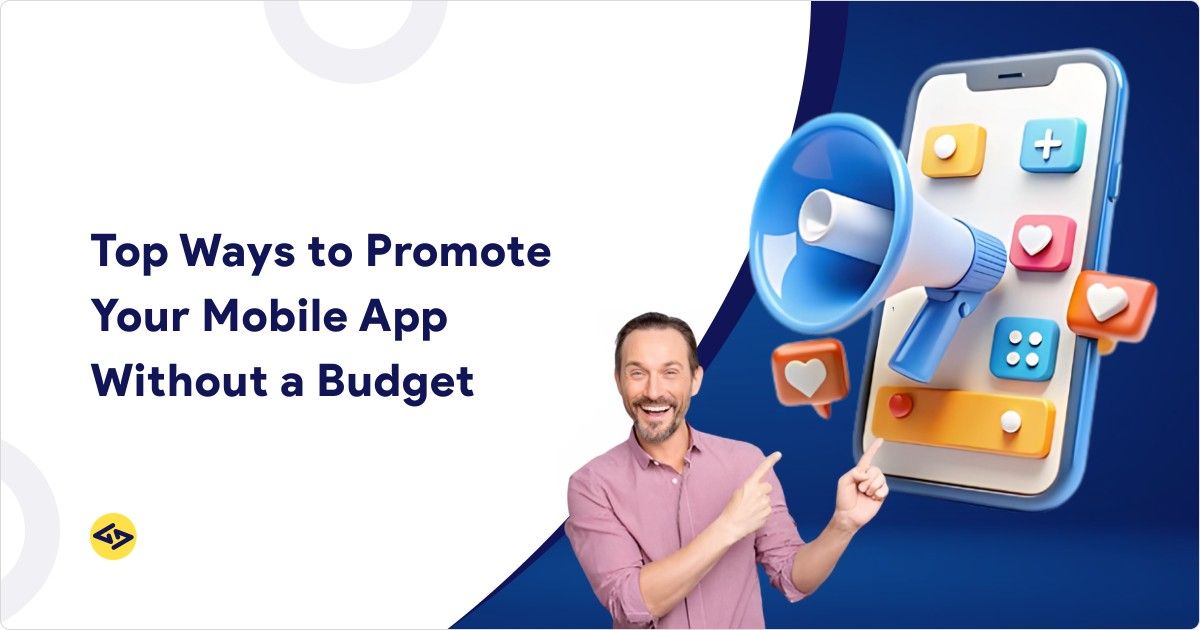
You’ve built your app and hit publish, but the downloads aren’t coming. It’s a common story: with millions of apps competing for attention, even a great product stays invisible without promotion, and most early-stage teams don’t have an ad budget. The good news is that you can promote your app for free and still get real users. This guide covers 18 proven strategies, the free tools to run them, and a 30-day plan to put them into action.
Quick answer: how do you promote an app for free?
To promote your app for free, start by optimizing your app store listing (ASO), then reach users where they already are: a landing page that ranks in Google, niche communities like Reddit, short-form video, a Product Hunt launch, and a referral loop inside the app. Track installs and retention with free analytics, and double down on the one or two channels that convert.
In this guide: 18 tactics, a channel comparison table, free tools, the best free app promotion sites, a plan for your first 100 downloads, and a 30-day schedule you can follow.
Why free app promotion matters in 2026
The app market is crowded. AppBrain lists roughly 1.71 million apps on Google Play as of March 2026. Paid user acquisition is expensive, which makes organic discovery the most sustainable option for most early-stage teams. Organic channels also compound: a well-optimized store listing, a ranking blog post or a loyal community keeps working after you stop.
Which free promotion channel should you start with?
| Channel | Effort | Time to results | Best for | Cost |
| App Store Optimization (ASO) | Medium | 2-8 weeks | Every app | Free |
| Landing page + SEO | Medium-High | 2-6 months | Apps with search demand | Free (domain extra) |
| Reddit / niche communities | Medium | Days | Niche or utility apps | Free |
| Short-form video (TikTok, Reels, Shorts) | High | 1-4 weeks | Consumer, visual apps | Free |
| Product Hunt / startup directories | Medium | 1 day (spike) | SaaS, productivity, tools | Free |
| Referral program | Medium | 1-3 months | Social, finance, marketplace apps | Reward cost only |
| Micro-influencers (product swaps) | Medium | 2-6 weeks | Lifestyle, fitness, education | Free access/swap |
| Email list | Low-Medium | 2-8 weeks | Apps with a pre-launch audience | Free tier |
Tip: pick two channels, not eight. Depth beats breadth when you have no budget.
Before you promote: get the foundations right
Every tactic below sends people to your store page or website. If those leak, promotion is wasted effort.
- Fix your store listing first (see Strategy 1).
- Set up free analytics. App Store Connect and Google Play Console give install and conversion data at no cost. Add a free tier of Firebase Analytics or PostHog to see what users do after opening the app.
- Create one trackable link per channel (UTM links, Google Play referrer parameters or Apple campaign links) so you know what actually works.
- Add deep links (Universal Links on iOS, App Links on Android) so shared links open the right screen.
- Write your one-sentence value proposition. Every post, listing and pitch should repeat it.
Need a stronger launch foundation? Our mobile app development team builds apps with ASO, analytics and deep linking in mind from day one.
Group 1: App store tactics (the highest-impact free channel)
1. Optimize your app store listing (ASO)
What it is: Improving your title, subtitle, keywords, description, icon, screenshots and video so the app ranks higher in store search and converts more visitors.
How to do it:
- Title and subtitle (iOS) / title and short description (Google Play): Put your main keyword in the title. Titles on both stores are limited to 30 characters; the iOS subtitle is also 30 characters and Google Play’s short description is 80.
- iOS keyword field: 100 characters, comma-separated, no spaces. Don’t repeat words already in the title or subtitle.
- Google Play long description: up to 4,000 characters. Use keywords naturally, since Google Play indexes this text.
- Screenshots: Lead with the outcome (“Track spending in 10 seconds”), not a feature list. The first 2-3 screenshots do most of the selling.
- Test it: Use Apple’s Product Page Optimization and Google Play’s store listing experiments (both free) to A/B test icons and screenshots.
- Localize: Translating your metadata into even 3-5 languages can open markets with less competition.
Free tools: App Store Connect, Google Play Console, and the free tiers of ASO tools such as AppTweak, MobileAction or Sensor Tower for keyword research.
Mistake to avoid: Keyword stuffing. It hurts conversion and can violate store guidelines.
Related reading: iOS app optimization techniques.
2. Use custom product pages and in-app events
Apple’s custom product pages and Google Play’s custom store listings let you create tailored store pages for different audiences or campaigns, for example one page for fitness beginners and another for runners, each with its own screenshots and link. Apple’s in-app events and Google Play’s promotional content surface time-limited events (a challenge, a launch, a seasonal feature) in the store. All are free and underused.
3. Ask for reviews at the right moment
Ratings affect both ranking and conversion. Use the official in-app review prompts (StoreKit on iOS, the Google Play In-App Review API) right after a positive moment, such as completing a workout, finishing a lesson or a successful order. Never gate reviews (“rate us 5 stars or we’ll…”) and never prompt on first launch. Reply to every review; replies show prospective users that you’re active. Apple limits how often the system prompt can appear, so choose your moments carefully.
Group 2: Owned channels (assets you control)
4. Build a landing page that ranks
A landing page gives you a place to rank in Google, capture emails and send traffic with a smart app banner. Include your one-sentence value proposition, screenshots or a short demo video, store badges, social proof, FAQs and a clear call to action. Add SoftwareApplication schema and keep images fast-loading.
Example: Chowman pairs app store links with feature highlights and reviews to turn visitors into installs.
5. Start a blog around the problem your app solves
Don’t write about your app; write about your user’s problem. A budgeting app can rank for “how to build a monthly budget”; a fitness app for “4-week beginner running plan”. Add a soft in-content call to download, and target low-competition long-tail keywords first.
Example: MyFitnessPal’s blog publishes nutrition and fitness content aimed at people searching for those topics.
6. Build an email list before and after launch
Add a waitlist form to your landing page before launch and a newsletter opt-in inside the app. Send a launch announcement, an onboarding series (3-5 emails) and monthly product updates. Most email platforms (Mailchimp, MailerLite, Brevo, Beehiiv) have free tiers; check current limits before choosing.
7. Turn your own app into a growth channel
- Add a share button for results, achievements or invites.
- Use smart app banners (Safari on iOS) on your website.
- Add your app link to your email signature, social bios, invoices, receipts and packaging if you have a physical business.
- Show an “invite a friend” screen after the first successful action.
Group 3: Community and earned media
8. Engage on Reddit and Quora (without spamming)
Find 5-10 subreddits where your audience asks questions, and read each community’s rules first: many ban self-promotion or limit it to specific threads. Spend two weeks answering questions genuinely, then share your app only where it’s relevant and allowed, disclosing that you’re the developer. On Quora, answer questions in depth and mention your app only when it directly solves the problem.
9. Launch on Product Hunt and startup directories
Product Hunt, BetaList, Indie Hackers and similar platforms reach early adopters who give feedback and share. Prepare a clear tagline, 4-6 visuals or a short demo video, a first-comment story, and a small group of real supporters ready to try the app on launch day. A launch brings a traffic spike rather than sustained installs, so pair it with an email capture. Check each platform’s current submission rules before launching.
10. Join niche communities and forums
Think Discord servers, Slack groups, Facebook groups, Telegram channels, Stack Exchange and specialist forums for your industry. Contribute first, promote second. Sharing a free template, checklist or tip that links back to your app works far better than a bare link.
11. Pitch bloggers, newsletters and podcasts
Small niche newsletters and podcasts are often hungry for content. Send a short, personalized pitch: who you are, what problem the app solves, one surprising insight or data point, and a promo code or early access. Guest posting on niche blogs can also earn backlinks that help your landing page rank.
12. Partner with micro-influencers
Creators with roughly 5,000-100,000 followers often have higher engagement than large accounts and are open to free-access or revenue-share deals. Choose creators whose audience matches your user, give them early access and a unique link or code, and let them show real use rather than scripted ads. Disclose the partnership as platform rules and advertising regulations require.
13. Create short-form video content
TikTok, Instagram Reels and YouTube Shorts reward good content regardless of budget. Show the app solving a real problem in 15-30 seconds, hook viewers in the first 2 seconds, add captions and end with a clear call to action. Reuse each video across all three platforms, and use a free editor like CapCut or Canva.
Example: Duolingo’s TikTok presence is built on humor and trends rather than ad spend.
Group 4: Product-led growth
14. Build a referral program
Dropbox famously offered extra storage for referrals and grew rapidly. You don’t need that scale: reward both the referrer and the new user, make sharing take two taps, and tie the reward to your core value (extra credits, premium days, unlocked features). Track referrals with unique links.
15. Offer a freemium plan or free trial
Let people experience the core value before paying. Keep the free tier genuinely useful and make the upgrade moment contextual (when they hit a meaningful limit), not a wall on day one. Spotify’s free tier plus premium trial is a well-known model.
16. Encourage user-generated content (UGC)
Prompt users to share results, creations or progress with a branded hashtag, a “share your result” card, or a monthly feature of the best submissions. UGC doubles as social proof for your store page and landing page. Always ask permission before reposting.
17. Use promo video templates for fast creative
Free templates in Canva, CapCut and InShot make it easy to produce an app preview, a feature explainer and vertical clips without a designer. Keep videos under 30 seconds, show the UI in the first 3 seconds, and add captions, since most social video is watched muted.
18. Listen to feedback and iterate publicly
Read reviews, support emails and community threads weekly. Ship fixes quickly and announce them (“You asked, we built it”) in release notes, social posts and emails. Retention is free growth: users who stay are users who recommend.
Best free app promotion sites and platforms
| Platform | Best for | How to use it |
| Product Hunt | SaaS, productivity, consumer tools | One-day launch; prepare assets and supporters |
| BetaList | Pre-launch apps | Collect early sign-ups |
| Indie Hackers | Bootstrapped founders | Share build-in-public updates |
| AlternativeTo | Apps that replace a known tool | List as an alternative to a popular app |
| Reddit (relevant subreddits) | Niche and utility apps | Follow each subreddit’s self-promotion rules |
| Hacker News (Show HN) | Developer tools, technical products | Honest, technical post |
| Google Business Profile | Apps tied to a physical business | Add your app link where relevant |
| Medium / DEV / Hashnode | Technical or founder stories | Publish with a link to your app |
How to get your first 100 downloads
- Friends, family and colleagues (10-20): Ask for an honest install, a review and one share each.
- Your existing audience (20-30): Email list, personal social, WhatsApp/Telegram groups, LinkedIn.
- Niche communities (20-30): Genuine posts in 3-5 communities you’ve already contributed to.
- Product Hunt or BetaList (20-30): One launch day with prepared assets.
- One micro-creator partnership (10+): Give early access and a unique link.
Ask each early user one question: “What nearly stopped you from downloading?” The answers improve your listing and onboarding faster than any tool.
Your 30-day free app promotion plan
| Week | Focus | Actions |
| 1 | Foundations | Set up analytics and UTM links; rewrite title, subtitle, keywords and screenshots; publish a landing page with email capture |
| 2 | Community | Join 5 communities; post 10+ helpful answers; reach out to 10 micro-creators and 5 newsletters |
| 3 | Launch push | Product Hunt or BetaList launch; publish your first blog post; post 3-5 short videos |
| 4 | Optimize | Review analytics; A/B test screenshots; add a referral prompt; ask happy users for reviews; double down on your top 1-2 channels |
How to measure free app promotion
| Metric | Why it matters | Where to find it |
| Store listing conversion rate (views to installs) | Shows whether your listing persuades | App Store Connect / Play Console |
| Installs by source | Shows which channel works | UTM / campaign links, console reports |
| Day-1, Day-7, Day-30 retention | Shows real product-market fit | Firebase, PostHog |
| Ratings and review velocity | Affects ranking and trust | Store consoles |
| Landing page to install rate | Shows web funnel health | Google Analytics / Search Console |
| Referral rate | Shows virality | In-app analytics |
Common mistakes to avoid
- Promoting before the listing is ready. First impressions are hard to undo.
- Spamming communities. The result is bans and reputation damage.
- Trying every channel at once. Pick two and go deep.
- Ignoring retention. Installs without retention don’t compound.
- Buying fake reviews or installs. It violates store policies and risks removal.
- Skipping tracking. If you can’t attribute installs, you can’t improve.
Final thoughts: free promotion is a system, not a hack
You don’t need a budget to get your first users; you need a repeatable system. Fix your listing, pick two channels, track results weekly and keep improving retention. Do that for 90 days and organic growth starts compounding.
Key takeaways
- ASO is your highest-leverage free channel.
- Community and content bring trust; referrals bring scale.
- Measure by channel and double down on what works.
- Retention is the growth lever most teams ignore.
Ready to launch and grow your app?
Whether you’re still building or ready to scale, iCoderz can help you create an app that’s designed to be discovered, from ASO-ready architecture to analytics and launch strategy.
Frequently asked questions
How can I promote my app for free?
Optimize your store listing (ASO), build a landing page, engage authentically in niche communities, launch on Product Hunt, create short-form video and add a referral loop. Track installs per channel and focus on the best two.
How do I get my first 100 app downloads for free?
Start with your personal network and existing audience, then add niche communities, a Product Hunt or BetaList launch and one micro-creator partnership. Prepare your store listing first so every visitor has a reason to install.
How long does free app promotion take to work?
Community posts and launches can bring installs within days. ASO usually shows results in 2-8 weeks, and SEO-driven traffic from a landing page or blog often takes 2-6 months. Free promotion is slower than ads, but it compounds.
Is ASO enough to promote an app?
ASO is the best starting point because it captures people already searching in the store, but it works best combined with off-store channels that build awareness and backlinks.
Can I promote my app on Reddit?
Yes, if you follow each subreddit’s rules, contribute genuinely before sharing, and disclose that you built the app. Blatant self-promotion often gets removed or banned.
Is Product Hunt good for app promotion?
It’s great for a one-day visibility spike, early-adopter feedback and backlinks, especially for SaaS and tools. It rarely produces sustained installs on its own, so combine it with email capture and follow-up content.
What’s the best free app promotion strategy for a startup?
For most startups: ASO, a niche community presence and a landing page with an email waitlist. Add short-form video if your app is visual or consumer-focused.
What free tools help promote an app?
App Store Connect, Google Play Console, Firebase, PostHog, Google Search Console, Canva, CapCut and the free tiers of email tools like Mailchimp or MailerLite.
How do I promote an Android app vs. an iOS app?
The principles match, but the details differ. Google Play indexes the long description and offers store listing experiments; iOS relies heavily on the title, subtitle and 100-character keyword field and offers custom product pages and in-app events. Optimise each store natively.