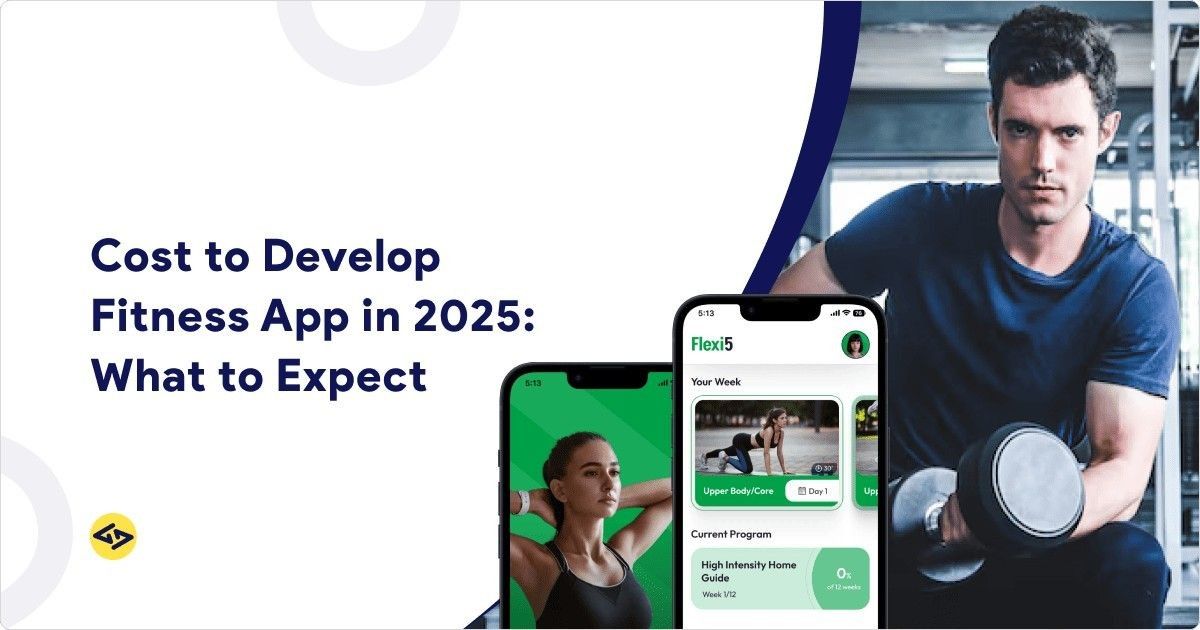
The fitness app market is booming. Valued at USD 2.21 billion in 2024, it’s projected to reach USD 14.10 billion by 2032, growing at a CAGR of 26.1%, according to Data Bridge Market Research. Users now expect far more than basic step counters—they want AI-powered coaching, personalized workout plans, real-time progress tracking, and seamless wearable integration.
If you’re planning to build a fitness solution, understanding the fitness app development cost upfront helps you budget accurately and make informed decisions. Whether you’re creating a simple activity tracker or a feature-rich platform like Peloton or Strava, this guide breaks down every cost factor for 2026 so you can invest wisely and launch with confidence.
At iCoderz Solutions, we’ve helped startups and enterprises build successful fitness applications. This guide shares the real-world insights we’ve gathered from those projects.
Quick Cost Reference Table: Fitness App Development in 2026
| App Type | Features | Estimated Cost | Timeline |
| Basic MVP | Activity tracking, user profiles, push notifications | $25,000 – $60,000 | 2–4 months |
| Standard App | Personalized plans, nutrition tracking, video content, gamification | $60,000 – $150,000 | 4–6 months |
| Advanced App | AI coaching, live streaming, deep wearable integration, AR/VR | $150,000 – $500,000+ | 6–12 months |
What Is a Fitness App?
A fitness app is a mobile application designed to help users stay active, track their health metrics, and achieve their wellness goals. These apps range from simple activity trackers to comprehensive platforms offering:
- Workout routines and exercise libraries
- Activity and calorie tracking
- Nutrition and meal planning
- Progress monitoring and analytics
- Integration with wearable devices
Popular examples include MyFitnessPal for nutrition tracking, Strava for running and cycling, Nike Training Club for guided workouts, and Peloton for live fitness classes.
Fitness apps serve diverse needs—from casual users wanting to count steps to serious athletes tracking performance metrics. Your target audience directly influences the features you’ll need and, consequently, your development budget. For a comprehensive overview, explore our health and fitness app development guide.
What Factors Influence the Cost of a Fitness App?
The cost to build a workout app varies significantly based on several key factors. Understanding these helps you prioritize features and allocate your budget effectively.
1. App Complexity and Features
This is typically the largest cost driver. A basic calorie tracker requires far less development than a Peloton-style app with live classes, AI coaching, and deep wearable integration.
Real-World Comparison:
- Simple: Apps like Pedometer++ focus on step counting with minimal features
- Moderate: JEFIT offers workout tracking with exercise libraries and progress charts
- Complex: Peloton combines live streaming, on-demand content, leaderboards, and connected hardware
2. Platform Choice
Your platform decision significantly impacts costs:
- Single Platform (iOS or Android): Lower initial cost, faster launch
- Native Development (Both Platforms): Best performance but requires separate codebases, nearly doubling development costs
- Cross-Platform (React Native/Flutter): Write once, deploy on both—typically 30-40% savings compared to native development for both platforms
3. Development Team Location
Developer rates vary dramatically by region:
| Region | Hourly Rate Range |
| North America | $100 – $200+ |
| Western Europe | $80 – $180 |
| Eastern Europe | $40 – $100 |
| South Asia | $20 – $60 |
| Latin America | $35 – $80 |
While lower rates are attractive, balance cost against communication quality, time zone compatibility, and proven experience with fitness applications.
4. Backend Infrastructure
Your backend handles user data, real-time tracking, content delivery, and scalability. Apps expecting thousands of concurrent users (especially those with live streaming) require robust, scalable infrastructure—significantly increasing costs.
5. Third-Party Integrations
Each integration adds development time and potential licensing fees:
- Payment gateways (Stripe, Apple Pay)
- Wearable device APIs (Apple HealthKit, Google Fit, Garmin, Fitbit)
- Social media platforms
- Video streaming services
- AI/ML services
Learn more about wearable integration for fitness apps and its cost implications.
6. Ongoing Maintenance
App development doesn’t end at launch. Budget for:
- Bug fixes and performance optimization
- Security updates
- OS compatibility updates (iOS and Android release new versions annually)
- Feature enhancements based on user feedback
Annual maintenance typically costs 15-20% of your initial development budget.
Fitness App Features and Their Costs: A Detailed Breakdown
Understanding feature costs helps you prioritize what matters most for your launch. Here’s a tier-by-tier breakdown with specific cost estimates.
Basic Fitness App: $25,000 – $60,000
Ideal for MVPs and market testing. Focus on core functionality that validates your concept.
Core Features:
| Feature | Estimated Cost | Development Time |
| User registration & profiles | $2,000 – $5,000 | 1–2 weeks |
| Goal setting | $1,500 – $3,000 | 1 week |
| Activity/progress tracking | $4,000 – $10,000 | 2–3 weeks |
| Push notifications | $1,000 – $3,000 | 1 week |
| Basic social sharing | $1,500 – $4,000 | 1–2 weeks |
| Simple subscription payments | $3,000 – $6,000 | 1–2 weeks |
| Pre-set workout library | $3,000 – $8,000 | 2–3 weeks |
Real-World Example: Apps like Simple Workout Log or Strong started with basic tracking features, then expanded based on user feedback.
For more fitness app development ideas, explore what’s working in the current market.
Standard Fitness App: $60,000 – $150,000
Builds on basic features with personalization, richer content, and enhanced engagement.
Additional Features:
| Feature | Estimated Cost | Development Time |
| Personalized workout plans | $8,000 – $20,000 | 3–5 weeks |
| Nutrition/diet tracking with food database | $10,000 – $25,000 | 4–6 weeks |
| Video tutorials & on-demand workouts | $8,000 – $20,000 | 3–5 weeks |
| Advanced analytics & progress visualization | $6,000 – $15,000 | 2–4 weeks |
| Gamification (challenges, badges, leaderboards) | $5,000 – $15,000 | 2–4 weeks |
| Basic wearable integration (Apple HealthKit, Google Fit) | $5,000 – $12,000 | 2–4 weeks |
Real-World Example: MyFitnessPal combines comprehensive nutrition tracking with a food database of over 14 million items, demonstrating the value of investing in robust content. JEFIT excels with detailed workout tracking and community features.
Discover high-impact fitness app features that drive user engagement.
Advanced Fitness App: $150,000 – $500,000+
Premium applications like Peloton, Mirror, or Tonal with comprehensive, immersive experiences.
Premium Features:
| Feature | Estimated Cost | Development Time |
| AI-driven personalization & virtual coaching | $30,000 – $80,000 | 6–12 weeks |
| Live streaming classes | $25,000 – $60,000 | 6–10 weeks |
| One-on-one video sessions with trainers | $15,000 – $35,000 | 4–8 weeks |
| Multi-device wearable integration | $20,000 – $50,000+ | 6–12 weeks |
| AR/VR workout experiences | $40,000 – $100,000+ | 8–16 weeks |
| Advanced admin dashboard & analytics | $15,000 – $40,000 | 4–8 weeks |
| Offline content access | $8,000 – $20,000 | 2–4 weeks |
| Community features (chat, forums, social feeds) | $10,000 – $30,000 | 3–6 weeks |
Real-World Example: Peloton reportedly spent over $1 million on their initial app development, but their investment created a platform generating billions in annual revenue. Strava’s social fitness features and detailed analytics have built a community of 100+ million users.
The cost of building a fitness app like Peloton reflects substantial investment in content production, instructor relationships, streaming infrastructure, and hardware integration—beyond just software development.
Complete Cost Breakdown: Where Your Money Goes
Here’s how your fitness app development budget typically distributes across project phases:
Discovery and Planning: $3,000 – $15,000 (2–4 weeks)
What’s Included:
- Market research and competitor analysis
- User persona development
- Feature prioritization and roadmap
- Technical architecture planning
- Project timeline and milestone definition
Why It Matters: Skipping this phase leads to scope creep, missed deadlines, and budget overruns. A well-planned project saves 20-30% in development costs.
UI/UX Design: $5,000 – $35,000 (3–8 weeks)
What’s Included:
- User research and journey mapping
- Wireframing and prototyping
- Visual design and branding
- Interaction design and animations
- Design system documentation
Real-World Insight: Fitness apps live or die by their user experience. Nike Training Club’s intuitive interface and motivational design contribute significantly to its 90%+ user satisfaction ratings.
Backend Development: $30,000 – $200,000+ (3–8 months)
What’s Included:
- Server architecture and database design
- API development
- User authentication and security
- Real-time data processing
- Cloud infrastructure (AWS, Google Cloud, Azure)
- Content management systems
Cost Factors:
- User data storage and encryption requirements
- Real-time synchronization needs
- Expected concurrent user load
- Content delivery network for video streaming
Frontend Development: $30,000 – $150,000 (3–6 months)
| Approach | Cost Range | Pros | Cons |
| Native iOS | $15,000 – $70,000 | Best performance, full feature access | iOS only |
| Native Android | $15,000 – $70,000 | Best performance, full feature access | Android only |
| Cross-Platform | $30,000 – $120,000 | Single codebase, faster development | Minor performance trade-offs |
For efficient development across platforms, explore our mobile app development services.
Third-Party Integrations
| Integration Type | Cost Range | Notes |
| Payment gateways (Stripe, PayPal) | $2,000 – $8,000 | Includes subscription management |
| GPS/geolocation | $2,000 – $8,000 | Essential for running/cycling apps |
| Social media logins | $1,500 – $5,000 | Facebook, Google, Apple Sign-In |
| Apple HealthKit | $5,000 – $15,000 | Required for iOS health data |
| Google Fit | $4,000 – $12,000 | Android health platform |
| Garmin/Fitbit/Whoop APIs | $8,000 – $25,000 each | Complex proprietary APIs |
| AI/ML services | $15,000 – $50,000 | For personalization, form analysis |
| Video streaming (Mux, Agora) | $10,000 – $30,000 | Live and on-demand video |
Important Note: Wearable integration costs are frequently underestimated. Each manufacturer has unique APIs, SDK requirements, and certification processes.
Testing and Quality Assurance: $5,000 – $40,000 (Ongoing)
What’s Covered:
- Functional testing across features
- Performance testing under load
- Security and penetration testing
- Device compatibility testing (critical for wearables)
- User acceptance testing
Real-World Insight: Strava tests across hundreds of device configurations to ensure GPS accuracy and wearable compatibility—essential for user trust.
Deployment and App Store Fees: $1,000 – $3,000
- Apple Developer Program: $99/year
- Google Play Console: $25 one-time
- App Store Optimization (ASO) initial setup
- Launch marketing materials
Ongoing Maintenance: $15,000 – $75,000/year
Annual Budget Allocation:
- Bug fixes and performance optimization: 30%
- Security updates and compliance: 20%
- OS compatibility updates: 25%
- Minor feature enhancements: 25%
Industry Standard: Plan for 15-20% of initial development costs annually.
The Development Team: Who You Need and What They Cost
A typical fitness app development team includes:
| Role | Responsibility | Monthly Rate Range |
| Project Manager | Timeline, communication, coordination | $4,000 – $12,000 |
| UI/UX Designer | User experience and visual design | $3,500 – $10,000 |
| iOS Developer | Apple platform development | $5,000 – $15,000 |
| Android Developer | Google platform development | $5,000 – $15,000 |
| Backend Developer | Server, database, API development | $5,000 – $15,000 |
| QA Engineer | Testing and quality assurance | $3,000 – $8,000 |
| DevOps Engineer | Infrastructure and deployment | $4,000 – $12,000 |
Hiring Options:
- In-House Team: Highest cost, maximum control
- Development Agency: Balanced cost, managed process, proven workflows
- Freelancers: Potentially lower cost, requires your project management
Consider hiring experienced mobile app developers who understand fitness app requirements specifically.
How Long Does Fitness App Development Take?
Development timeline directly impacts cost—more time means higher labor costs.
| App Type | Timeline | Key Milestones |
| Basic MVP | 2–4 months | Week 1-2: Planning, Week 3-6: Design, Week 7-14: Development, Week 15-16: Testing & Launch |
| Standard App | 4–6 months | Extended design phase, multiple development sprints, comprehensive testing |
| Advanced App | 6–12 months | Complex integrations, content production, extensive beta testing |
Timeline Factors:
- Feature complexity and scope changes
- Third-party integration challenges
- App store review processes
- User testing and iteration cycles
Freelancers vs. Agencies: Making the Right Choice
The True Cost of Freelancers
While individual freelancer rates appear lower, consider the complete picture:
Hidden Costs:
- Coordination Time: You become the project manager, coordinating between designer, frontend developer, backend developer, and QA
- Knowledge Gaps: Few freelancers excel at both iOS and backend development
- Risk: Individual availability issues can halt your project
- Quality Control: No established processes or code review standards
When Freelancers Work:
- Small, well-defined projects
- You have technical expertise to evaluate work
- Building a prototype, not a production app
Agency Advantages
- Established teams with complementary skills
- Project management included
- Quality assurance processes built-in
- Accountability and contracts
- Ongoing support and maintenance options
Bottom Line: Our cost estimates ($25,000+) reflect building commercial-grade applications with professional teams—whether agency or assembled freelance team—that include proper design, development, testing, and project management.
How to Monetize Your Fitness App
Understanding monetization helps you plan features that support revenue generation. Learn more about fitness app monetization strategies.
Proven Revenue Models
1. Subscription Model
- Monthly/annual recurring revenue
- Examples: Peloton ($12.99–$44/month), Strava Summit ($5/month), Headspace ($12.99/month)
- Best for: Apps with continuous content updates or premium features
2. Freemium Model
- Basic features free, premium features paid
- Examples: MyFitnessPal (free tracking, premium nutrition insights), Calm (limited free content)
- Best for: Building large user bases before converting to paid
3. In-App Purchases
- One-time purchases for specific content
- Examples: Specialized workout programs, meal plans, virtual coaching sessions
- Best for: Supplementing subscription revenue
4. Partnerships and Sponsorships
- Brand collaborations and sponsored content
- Examples: Nike Training Club’s athlete-led workouts
- Best for: Apps with significant user engagement
Wondering if your fitness app idea is profitable? Validate your concept before major investment.
Cost-Saving Strategies for Fitness App Development
1. Start with an MVP
Launch with core features, validate demand, then expand. Instagram started with just photo filters; Uber started in San Francisco only.
2. Use Cross-Platform Development
React Native or Flutter can reduce development costs by 30-40% compared to separate native apps.
3. Leverage Existing Solutions
- Use established payment processors (Stripe) instead of building custom solutions
- Integrate existing video platforms (Mux, Vimeo) rather than building streaming infrastructure
- Start with Apple HealthKit/Google Fit before adding proprietary wearable integrations
4. Phase Your Development
Phase 1: Core tracking and user profiles
Phase 2: Personalization and content
Phase 3: Advanced AI and integrations
5. Choose the Right Partner
An experienced fitness app development company understands common pitfalls and efficient solutions, potentially saving significant development time.
2026 Trends Affecting Fitness App Costs
Stay ahead by understanding where the market is heading:
1. AI Integration Is Now Expected
Users increasingly expect personalized recommendations. Budget for AI features even in standard apps.
2. Wearable Ecosystem Is Expanding
Beyond Apple Watch and Fitbit, Whoop, Oura Ring, and Garmin require dedicated integration efforts.
3. Hybrid Fitness Is Mainstream
Post-pandemic, users expect both in-person and digital experiences, requiring flexible feature sets.
4. Mental Wellness Integration
Apps like Peloton now include meditation. Consider mindfulness features in your planning.
5. Social Features Drive Retention
Strava’s segments and Peloton’s leaderboards show that community features significantly impact user engagement.
To understand current market dynamics, read are fitness apps in demand.
Frequently Asked Questions
How much does a basic fitness app cost in 2026?
A basic fitness app with core tracking features, user profiles, and simple analytics costs between $25,000 and $60,000. This includes design, development for one platform, and essential integrations.
What does it cost to build an app like Peloton?
Building a Peloton-level app with live streaming, AI coaching, extensive content library, and hardware integration typically exceeds $500,000 for the initial build, plus significant ongoing content and infrastructure costs.
Can I build a fitness app for under $25,000?
While templates and no-code tools can produce basic apps for less, they typically lack the customization, scalability, and performance needed for a competitive commercial product.
How much should I budget for ongoing maintenance?
Plan for 15-20% of your initial development cost annually. For a $100,000 app, budget $15,000-$20,000 per year for maintenance, updates, and improvements.
Is cross-platform development cheaper than native?
Yes, typically 30-40% less expensive than building separate native iOS and Android apps, with development time reduced by similar margins.
What’s the most expensive feature to develop?
AI-driven personalization and live video streaming typically carry the highest costs due to infrastructure requirements, specialized expertise, and ongoing operational expenses.
How long does it take to develop a fitness app?
Basic apps take 2-4 months, standard apps 4-6 months, and advanced applications 6-12 months or more, depending on complexity and team size.
Ready to Build Your Fitness App?
Creating a successful fitness app requires strategic planning, the right features for your audience, and a realistic budget. Whether you’re starting with a $30,000 MVP or investing in a comprehensive $300,000+ platform, every dollar should align with your business goals and user needs.
Key Takeaways:
- Start with core features and expand based on user feedback
- Don’t underestimate backend, wearable integration, and maintenance costs
- Choose development partners with proven fitness app experience
- Plan your monetization strategy before development begins
At iCoderz Solutions, we specialize in building fitness applications that balance functionality, user experience, and budget efficiency. Our team has delivered fitness solutions for startups and established brands alike.
Get a free consultation to discuss your fitness app idea and receive a detailed cost estimate tailored to your specific requirements.
Start Your Fitness App Project
Know the budget, plan smart, and launch with confidence.