The restaurant industry is experiencing a digital revolution. According to Grand View Research, the global online food delivery market was valued at USD 288.84 billion in 2024 and is projected to reach USD 505.50 billion by 2030, growing at a CAGR of 9.4%.
Why restaurants need a mobile app has become a pressing question in 2025-2026. With over 71% of food orders now coming through platform-to-consumer channels and 67% processed via online payments, having a dedicated restaurant app isn’t optional—it’s essential for survival and growth.
This comprehensive restaurant mobile app development guide covers everything you need to know: the step-by-step development process, must-have features in a restaurant app, cost breakdown, technology recommendations, and tips to choose the right development partner.
Whether you’re a small business owner or managing multiple locations, understanding how to build a restaurant app will help you make informed decisions and stay competitive in this rapidly evolving market.
What Is a Restaurant App?
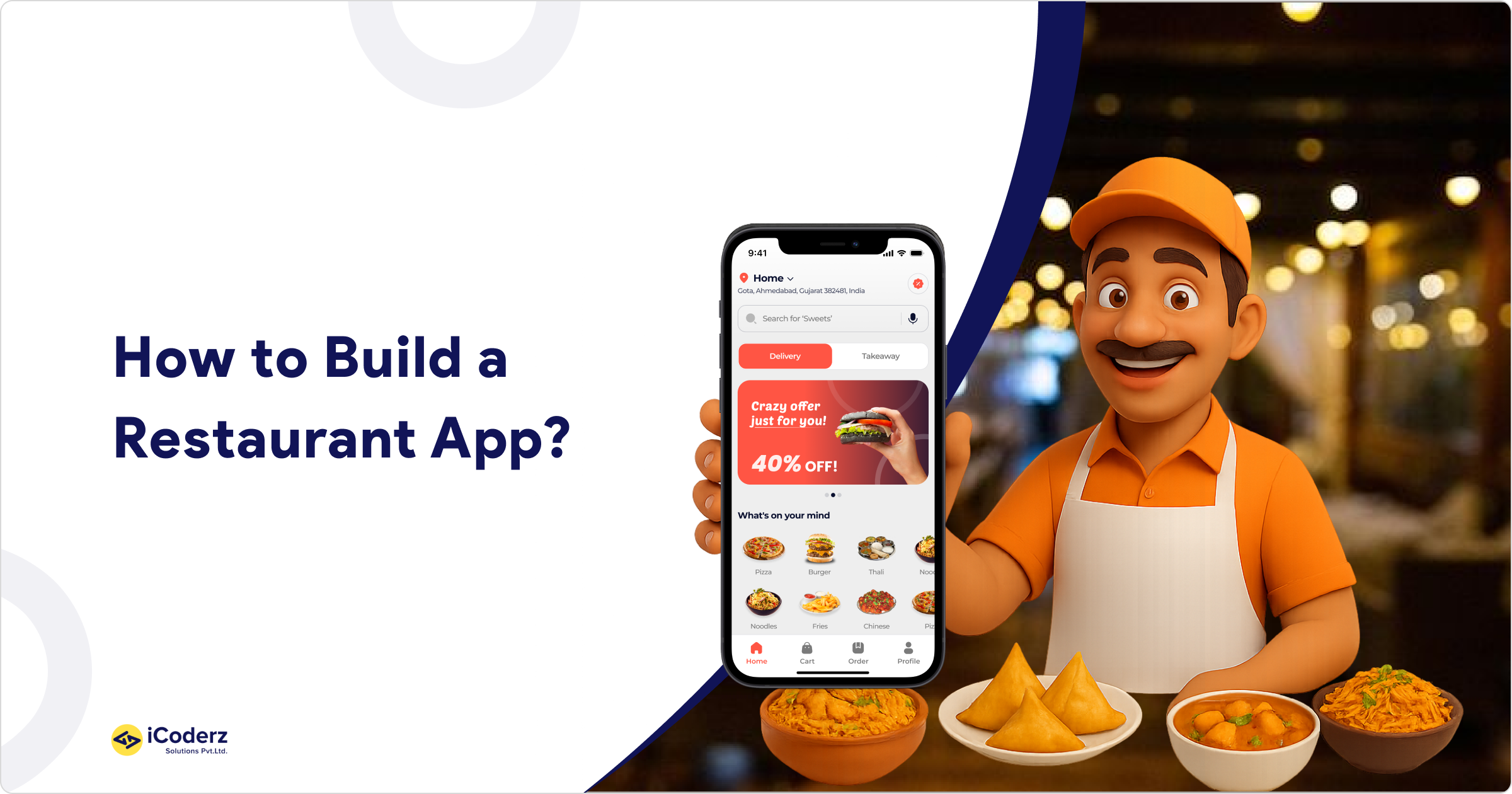
A restaurant app is a mobile application designed to connect restaurants with their customers digitally. These apps streamline operations, enhance customer experience, and drive revenue growth.
Types of Restaurant Apps:
| App Type | Primary Function | Best For |
| Restaurant Ordering App | In-app menu browsing, ordering, and payment | Quick-service restaurants |
| Food Delivery App | Online ordering with delivery logistics | Restaurants offering delivery |
| Restaurant Management App | Backend operations, inventory, staff management | Multi-location chains |
The restaurant management software market reached USD 5.79 billion in 2024 and is expected to grow to USD 14.70 billion by 2030 at a remarkable 17.4% CAGR—indicating massive opportunities for restaurants embracing digital solutions.
Benefits of restaurant mobile app development extend to both businesses and customers: faster ordering, reduced wait times, personalized experiences, and streamlined operations.
Why Build a Restaurant App? (Business Benefits)
Understanding the benefits of restaurant mobile app adoption helps justify your investment:
1. Increase Direct Orders & Reduce Aggregator Commissions
Third-party platforms like Uber Eats and DoorDash charge 15-30% commission per order. A custom restaurant app eliminates these fees, directly boosting profit margins.
2. Improve Customer Retention and Loyalty
With built-in loyalty programs and personalized offers, restaurant apps for small businesses and chains alike see up to 3x higher retention rates compared to walk-in customers.
3. Data Ownership and Personalized Marketing
Own your customer data—ordering patterns, preferences, and contact information—enabling targeted promotions that drive repeat business.
4. Better Operational Efficiency
From food delivery optimization to kitchen management, restaurant apps streamline workflows and reduce human error.
Step-by-Step Process to Build a Restaurant App
Here’s a complete restaurant app development step by step guide to help you navigate the journey from concept to launch.
Step 1 – Market Research & Requirement Analysis
Every successful custom restaurant app development process begins with thorough research:
- Identify target users: Define your primary audience—busy professionals, families, college students, or tourists
- Competitor analysis: Study how leading apps in your market operate
- Define core features: List non-negotiable functionalities based on user needs
Avoid common mistakes in food service app development by conducting proper market validation before writing a single line of code.
Step 2 – Choose App Type & Business Model
Decide on your operational model:
- Pickup vs. Delivery vs. Dine-in: Each requires different features and logistics
- Single restaurant vs. Multi-restaurant: Determines backend complexity
- Monetization strategy: Delivery fees, subscription models, or commission-based earnings
For delivery-focused businesses, explore our guide on how to start a food delivery business.
Step 3 – UI/UX Design
Design makes or breaks your app. Focus on:
- User journey mapping: From app opening to order completion in minimal taps
- Wireframes and prototypes: Visual blueprints for all screens
- Accessibility and performance design: Fast loading, easy navigation, inclusive design
The goal? Users should place an order within 60 seconds.
Step 4 – Choose the Right Technology Stack
Selecting the right technology ensures scalability and performance:
Frontend Options:
- Restaurant app development using Flutter: Single codebase for Android and iOS
- Restaurant app development using React Native: JavaScript-based cross-platform solution
- Swift (iOS) or Kotlin (Android) for native development
Backend Technologies:
- Node.js for real-time features
- Laravel for robust PHP applications
- Firebase for rapid prototyping
Database & Hosting:
- MongoDB or PostgreSQL for data storage
- AWS, Google Cloud, or Azure for scalable hosting
For cross-platform restaurant app development, Flutter and React Native offer the best balance of performance and development cost.
Step 5 – App Development
The development phase includes three core components:
1. User App Development
Customer-facing features including browsing, ordering, and payment—covered in detail in our online food ordering app features section below.
2. Restaurant Admin Panel
Backend dashboard for menu management, order tracking, and analytics.
3. Delivery Partner Module (if needed)
For restaurants handling deliveries, a separate app for drivers is essential. Learn more about building comprehensive solutions in our food delivery app development service page.
Step 6 – Testing & Quality Assurance
Never skip rigorous testing:
- Functional testing: Ensure all features work as intended
- Security testing: Protect user data and payment information
- Performance optimization: Fast load times across devices
Understanding food delivery app development time includes adequate testing phases.
Step 7 – Launch & App Store Deployment
Prepare for launch by understanding:
- Play Store & App Store guidelines: Compliance requirements for approval
- Beta testing: Limited release for feedback collection
- Release strategy: Phased rollout vs. full launch
Step 8 – Post-Launch Support & Maintenance
Your app needs ongoing attention:
- Regular bug fixes and security patches
- Feature upgrades based on user feedback
- Performance monitoring and optimization
Must-Have Functions & Features of a Restaurant App
A comprehensive restaurant app features list covers three key modules:
Customer App Features
Essential restaurant app user panel features include:
| Feature | Description |
| User Registration/Login | Social login, phone verification, guest checkout |
| Menu Browsing | Category filters, search, dietary tags |
| Order Placement & Tracking | Real-time status updates |
| Online Payment & Offers | Multiple payment gateways, promo codes |
| Reviews & Ratings | Post-order feedback system |
Payment and checkout features in restaurant apps should support credit cards, digital wallets (Apple Pay, Google Pay), and cash-on-delivery options.
Restaurant Admin Panel Features
Key admin panel features for restaurant app include:
- Menu & Price Management: Real-time updates, item availability toggles
- Order Management: Accept, reject, or modify incoming orders
- Analytics & Reports: Sales trends, popular items, customer insights
- Offer & Coupon Management: Create and track promotional campaigns
Delivery Partner Features (Optional)
For apps with delivery functionality:
- Order assignment and acceptance
- Live GPS tracking
- Earnings dashboard and payment history
Explore how hyperlocal food delivery apps handle these logistics efficiently.
Cost to Build a Restaurant App
Understanding restaurant app development cost helps with budget planning:
Cost by Complexity
| App Type | Features | Estimated Cost |
| Basic | Core ordering, payment, simple admin | $15,000 – $30,000 |
| Mid-Level | + Delivery tracking, loyalty, analytics | $30,000 – $60,000 |
| Advanced | + Multi-restaurant, AI recommendations, enterprise features | $60,000 – $150,000+ |
Factors Affecting Cost
Several variables influence how much does it cost to build a restaurant app:
- Features complexity: More features = higher cost
- Design requirements: Custom designs cost more than templates
- Platform choice: Restaurant app for Android and iOS (both) costs more than single-platform
- Third-party integrations: Payment gateways, maps, POS systems
- Development region: Teams in India offer 40-60% cost savings vs. US/UK agencies
For detailed breakdowns, read our comprehensive guide on app development cost.
Custom vs Ready-Made Restaurant App
| Approach | Pros | Cons |
| Custom Development | Full control, unique branding, scalability | Higher cost, longer timeline |
| White Label Restaurant App Solution | Faster launch, lower upfront cost | Limited customization, ongoing fees |
For most growing restaurants, starting with an MVP approach and scaling to custom solutions works best.
Best Tech Stack for Restaurant App Development
Choosing the right technology ensures long-term success:
Mobile Development:
- Flutter or React Native for cross-platform restaurant app development
- Native (Swift/Kotlin) for maximum performance
Backend Services:
- Node.js with Express for real-time features
- Firebase for startups needing rapid development
Payment Integration:
- Stripe, PayPal, Razorpay (India)
Maps & Location:
- Google Maps API for delivery tracking
Learn more about mobile application development best practices.
Common Challenges in Restaurant App Development
Anticipate these hurdles:
- User adoption: Requires marketing investment post-launch
- Delivery logistics: Complex routing and driver management
- Payment failures: Multiple gateway backups needed
- Scalability: Handling peak-hour traffic spikes
Our marketing guide for food delivery apps addresses adoption challenges specifically.
Tips to Build a Successful Restaurant App
1. Start with MVP First
Launch with core features, validate demand, then expand.
2. Focus on Speed and Usability
Users abandon slow apps. Optimize for 2-second load times.
3. Implement Loyalty Programs
Reward repeat customers with points, discounts, or exclusive offers.
4. Gather User Feedback
In-app surveys and review monitoring guide feature priorities.
How to Choose the Right Restaurant App Development Company
When looking to hire restaurant app developers, evaluate:
- Experience and Portfolio: Look for proven restaurant app development services with case studies
- Technology Expertise: Proficiency in your chosen tech stack
- Post-Launch Support: Ongoing maintenance commitments
- Pricing Transparency: Clear estimates without hidden costs
A reputable restaurant app development agency in India, like iCoderz Solutions, offers the perfect balance of quality and cost-effectiveness, serving clients worldwide.
Conclusion
Building a restaurant app is no longer a luxury—it’s a necessity in the digital-first dining landscape of 2025-2026. With the online food delivery market heading toward $505 billion by 2030, restaurants that invest in mobile technology now will capture significant market share.
From understanding the step by step restaurant app development process to evaluating restaurant app development cost and choosing the right features, this guide has covered everything you need to make informed decisions.
Whether you’re exploring food and beverages software solutions or need a complete custom food delivery app development company, the time to act is now.
Ready to transform your restaurant business? Contact our experts for a free consultation and personalized cost estimate.
Ready to Build Your Restaurant App?
Get a free consultation and a personalized cost estimate based on your restaurant’s needs, features, and growth plans.

FAQs
How long does it take to build a restaurant app?
Basic apps take 3-4 months; feature-rich applications require 6-9 months. Learn more in our development timeline guide.
Can I integrate third-party delivery services?
Yes. APIs from DoorDash, Uber, and other aggregators can supplement your delivery network.
Do I need both Android and iOS apps?
For maximum reach, yes. Cross-platform development using Flutter or React Native makes this cost-effective.
Is white-label restaurant app a good option?
For quick launches and limited budgets, yes. However, custom development offers better long-term value for growing businesses.
How to market a restaurant app after launch?
Combine social media, loyalty programs, local SEO, and push notifications. Read our complete marketing strategy guide.