Quick Answer:
Starting a cloud kitchen in India costs ₹1–3 lakhs from home or ₹5–20 lakhs for a rented/owned space. You need an FSSAI license (apply free at foscos.fssai.gov.in), GST registration, and a trade license. You can list on Zomato and Swiggy once your FSSAI is approved. Profit margins typically run 18–25%.
India’s cloud kitchen market was valued at USD 1.13 billion in 2024 and is projected to reach USD 2.84 billion by 2030 — a CAGR of 16.66% (Research and Markets) — and for good reason. No expensive real estate. No dine-in setup. Just a functional kitchen, a few licenses, and a listing on Zomato or Swiggy.
But most guides online give you a rosy picture without the real numbers. This one won’t.
Here’s everything you need to know about how to open a cloud kitchen in India — startup costs broken down by setup type, a step-by-step FSSAI license walkthrough, Zomato registration details, and an honest answer on profitability.
What Is a Cloud Kitchen?
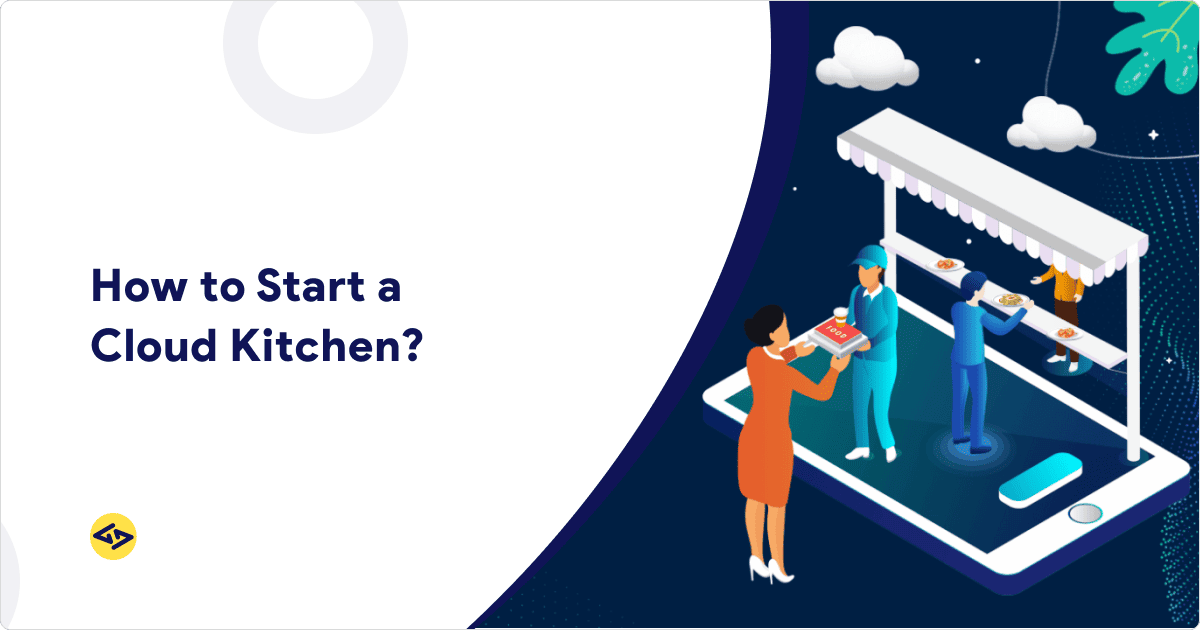
A cloud kitchen (also called a ghost kitchen or dark kitchen) is a delivery-only food business with no dine-in facility. Orders come entirely through apps like Zomato, Swiggy, or your own website.
You need a functional kitchen, the right licenses, and a strong menu. That’s it. No front-of-house staff, no interior design, no prime-location rent.
Cloud Kitchen Startup Cost in India: Realistic Breakdown
This is the question most people Google first. Here’s a clear breakdown of the cost of starting a cloud kitchen in India, based on setup type.
Cost by Setup Type:
|
Cost Head |
Home Kitchen |
Shared/Rented Space |
Independent Owned Space |
|
Space/Rent |
₹0 |
₹8,000–50,000/month |
₹3–6 lakhs (fit-out) |
|
Kitchen Equipment |
₹50K–1.5L |
₹60K–2L |
₹1.5L–5L |
|
Licenses (FSSAI, GST, Trade) |
₹5K–15K |
₹10K–25K |
₹10K–25K |
|
Packaging (first month) |
₹10K–20K |
₹15K–30K |
₹20K–40K |
|
Raw Materials (first month) |
₹15K–30K |
₹20K–40K |
₹20K–50K |
|
Marketing (first 3 months) |
₹10K–30K |
₹20K–50K |
₹30K–80K |
|
Emergency/Reserve Fund |
₹50K–1L |
₹1–2L |
₹2–3L |
|
Total Estimated Startup Cost |
₹1–3 lakhs |
₹5–10 lakhs |
₹12–20 lakhs |
Important: Operators using Kitchen-as-a-Service (KaaS) models — renting a fully equipped shared kitchen — have launched with as little as ₹1.5 lakhs in working capital and broken even in 5 months. You don’t need to own a kitchen to start.
For context, a traditional restaurant in India costs ₹50 lakhs to ₹1 crore to set up. Cloud kitchens are genuinely low-barrier.
City Matters Too
Metros like Mumbai and Delhi carry higher rent and security deposits due to commercial real estate rates. Tier-2 cities like Jaipur, Indore, or Ahmedabad offer significantly cheaper space — often ₹8,000–12,000/month for 100–200 sq ft.
The Cash Reserve Rule Nobody Talks About
Cloud kitchens with a 3-month cash reserve survive Year 1 at a 70% rate. Without it, only 45% make it past the first year. Build your reserve before you launch — not after things get hard.
Cloud Kitchen Startup Cost from Home
Starting from home is the lowest-risk entry point — and it’s completely legal in India.
Realistic total: ₹1–3 lakhs
Here’s what that covers:
- FSSAI Basic Registration: ₹100
- Basic kitchen equipment upgrades: ₹50K–1.5L
- Packaging materials: ₹10K–20K
- First month raw materials: ₹15K–30K
- Marketing and aggregator listing: ₹10K–30K
Two things to know before going the home-kitchen route:
First, standard Indian apartments have 3–5kW sanctioned power loads. A single commercial electric oven draws 3–6kW. If you run it alongside an AC or water heater, you’ll trip the breaker. Gas-based equipment is a practical solution — it bypasses electrical limits, though you’ll need proper ventilation.
Second, your menu must match your setup. A 2-burner home stove is fine for biryani or tiffin meals. It won’t support a multi-cuisine menu with 40 items.
Start focused. One cuisine, 10–15 items. Prove demand before you invest more.
Licenses Required for a Cloud Kitchen in India
Getting your compliance right from Day 1 protects you legally and builds customer trust. Here’s what you actually need:
FSSAI License — Mandatory. No FSSAI, no Zomato/Swiggy listing.
GST Registration — Required if annual turnover exceeds ₹20–40 lakhs (varies by state). Recommended even below threshold for B2B credibility. Shop & Establishment License — Required in most states. Obtained from your local municipal office.
Trade License — Required in most cities. One-time process via your municipal corporation.
Fire NOC — Not always mandatory for home kitchens, but essential for commercial setups.
Udyam Registration — Not mandatory, but gives you MSME benefits including easier access to bank loans and government schemes.
Trademark — Not a legal requirement to start, but registering your brand name early protects you as you scale.
How to Get an FSSAI License for Your Cloud Kitchen Online
The FSSAI license is your single most important compliance step. Without it, you can’t legally sell food or list on any major delivery platform.
The entire process happens online via the FoSCoS portal at foscos.fssai.gov.in.
Step 1: Determine Your License Type
Choose based on your expected annual turnover:
|
License Type |
Annual Turnover |
Best For |
|
Basic Registration |
Up to ₹12 lakhs |
Home kitchens, first-time operators |
|
State License |
₹12 lakhs – ₹20 crores |
Single-state commercial kitchens |
|
Central License |
Above ₹20 crores |
Multi-state operations |
Most first-time cloud kitchen operators start with Basic Registration.
Step 2: Gather Your Documents
For Basic Registration, you’ll need:
- Aadhaar card or PAN card (identity proof)
- Address proof of your kitchen premises (electricity bill or rental agreement)
- Passport-size photograph
- Declaration form (Form A)
For State/Central License, additional documents include:
- Kitchen layout plan
- Food safety management plan
- Water test report from an NABL-approved lab
- Landlord NOC (if operating from a rented/home premises)
- Partnership deed or company incorporation documents (if applicable)
Step 3: Apply Online
- Go to foscos.fssai.gov.in and create an account with your email and mobile number
- Select your license type (Basic, State, or Central)
- Fill in Form A (Basic) or Form B (State/Central) with your business details
- Upload all required documents in the specified format
- Pay the applicable fee online via UPI, net banking, or debit/credit card
Step 4: Fees
|
License Type |
Annual Fee |
|
Basic Registration |
₹100/year |
|
State License |
₹2,000–₹5,000/year |
|
Central License |
₹7,500/year |
You can choose a validity period of 1 to 5 years. Longer validity means lower per-year cost.
Step 5: Approval Timeline
- Basic Registration: 7–10 working days. No physical inspection required.
- State License: 30–60 days. A Food Safety Officer will inspect your kitchen premises.
- Central License: 30–60 days. Inspection and document verification required.
After approval, download your FSSAI certificate from the FoSCoS dashboard. Display it at your kitchen premises and print the FSSAI number on all packaging.
Common mistake to avoid: Many first-time applicants underestimate the document requirements for State Licenses — especially the kitchen layout plan and water test report. Get these ready before applying to avoid delays or rejection.
Setting Up a Cloud Kitchen in India — Step-by-Step Process
Here’s the full process to start a cloud kitchen in India once you’ve decided to move forward:
Step 1 — Choose your model
Home kitchen (lowest cost), shared/KaaS kitchen (mid-range, quickest to launch), or own independent space (highest cost, most control). Whichever model you choose, having the right food & beverage software to manage orders, inventory, and operations from Day 1 prevents costly chaos as volume grows.
Step 2 — Pick your cuisine and build your menu
Keep it tight. 15–20 items is the sweet spot for a new cloud kitchen. Choose dishes that travel well, hold their quality for 30–40 minutes of delivery time, and have good margins. Biryani, rolls, thalis, and healthy meal boxes consistently perform well.
Step 3 — Get your licenses
Start with FSSAI. Apply while you’re setting up your kitchen so both are ready at the same time.
Step 4 — Set up kitchen equipment
Match equipment to your menu. Basic requirements: commercial gas stove, refrigerator, prep tables, knives and utensils, exhaust fan, fire extinguisher. Don’t over-invest in equipment you don’t need for your initial menu.
Step 5 — Sort packaging
Packaging is your customer’s first physical experience of your brand. Invest in leak-proof, tamper-evident containers. Brand them with stickers if custom boxes are outside your initial budget. Poor packaging is one of the fastest ways to get bad reviews.
Step 6 — List on Zomato and Swiggy
Once FSSAI is approved, register as a partner on both platforms. Details in the next section. If you eventually want to reduce commission dependency, consider building your own online food ordering system — it pays off faster than most operators expect.
Step 7 — Market before you launch
Run Instagram content for 2–4 weeks before going live. Show the kitchen, the food, the packaging. Build an audience first. Use Google Business Profile to get discovered locally.
For a deeper dive, check out these cloud kitchen marketing ideas that work specifically for delivery-only brands.
Zomato Cloud Kitchen — How to Register and What It Costs You
Zomato fully supports cloud kitchens. You don’t need a physical storefront or dine-in space to list.
Documents Required for Zomato Registration
- FSSAI license (mandatory — no exceptions)
- GST registration certificate
- PAN card (business or proprietor)
- Bank account details
- Menu with photos
- Shop & Establishment Act license (required in most states)
- Udyam registration (helpful, not always mandatory)
How to Register
- Visit zomato.com/business (Zomato for Business portal)
- Search for your kitchen name — if not found, click “Add your Restaurant”
- Fill in the registration form with kitchen name, phone number, city, cuisine type, and opening hours
- Upload the required documents
- Wait for Zomato’s verification team to review — typically 5–7 working days
- Once approved, your kitchen goes live
Zomato’s Commission Structure
This is where most operators get surprised. Zomato charges a commission on every order:
|
Delivery Range |
Commission Rate |
|
Up to 3 km |
~23% |
|
Up to 6 km |
~25% |
|
Up to 12 km |
~27% |
For kitchens processing fewer than 50 orders per week, a lower rate of ~2.99% plus a ₹99 platform fee may apply. High-volume operators can negotiate.
What this means in practice: On a ₹300 order, Zomato takes roughly ₹69–81. Factor this into your pricing from Day 1. If you’re thinking about building your own platform to avoid these fees long-term, see how much it costs to build an app like Zomato.
The smart move: Use Zomato and Swiggy for customer acquisition early on. Build your own ordering channel (WhatsApp, direct website) for repeat customers to reduce commission dependency over time. One Chennai-based cloud kitchen grew repeat orders by 37% in 45 days through WhatsApp ordering, saving ₹40,000/month in commissions. Read more about building a food delivery app like Swiggy if you want to understand what goes into your own platform.
Once you’ve validated demand on Zomato, many operators move toward their own branded app. Read the full guide on how to build a restaurant app to understand what that transition looks like.
Is Cloud Kitchen Profitable in India?
Yes — but with conditions. Here’s an honest breakdown.
Profit margins: Cloud kitchens typically achieve 18–25% net margins. This is significantly higher than traditional restaurants, which run on 5–10% margins after rent and front-of-house costs.
Break-even timeline: Most well-run cloud kitchens break even in 6–12 months. Poorly planned ones, especially those that over-invested in equipment or underfunded marketing, take longer or don’t make it.
Sample monthly math (mid-scale operation):
|
Metric |
Example |
|
Average daily orders |
50 |
|
Average order value |
₹300 |
|
Monthly gross revenue |
₹4,50,000 |
|
Zomato/Swiggy commission (25%) |
−₹1,12,500 |
|
Raw material cost (~30%) |
−₹1,35,000 |
|
Packaging, staff, rent, utilities |
−₹75,000 |
|
Net monthly profit |
~₹1,27,500 (~28%) |
The key variables that determine profitability: order volume, average order value, commission rate, and food cost percentage. Menus with a food cost below 30% and average order values above ₹300 are the ones that scale.
What kills cloud kitchens most often:
- Launching with too many menu items (high waste, inconsistent quality)
- Relying entirely on aggregators without building direct customers
- Underpricing to compete, then being unable to sustain margins
- Skipping the cash reserve and running out of working capital in Month 3–4
If you’re thinking long-term, explore how to build a food delivery app from scratch, or see iCoderz’s food delivery app development services when you’re ready to move forward.
Can I Start a Cloud Kitchen from Home in India?
Yes — and it’s one of the most practical ways to start.
Home-based cloud kitchens are legal in India. Thousands of operators are running them profitably, especially in the tiffin, healthy meals, and homestyle food categories.
What you still need even at home:
- FSSAI Basic Registration (₹100, apply at foscos.fssai.gov.in)
- Fire NOC from your local fire department (essential for commercial cooking)
- Landlord’s NOC if you’re in a rented apartment
- GST registration if your turnover crosses ₹20–40 lakhs
What works well from home:
- Single-cuisine menus (biryani, tiffin, continental, desserts)
- Lunch/dinner subscription services for nearby offices and residences
- Targeted delivery radius of 3–5 km keeps quality consistent
What doesn’t work well from home:
- Multi-cuisine menus with complex equipment requirements
- High-volume operations (50+ orders/day is difficult on a home setup)
- Cuisines requiring large exhaust, commercial ovens, or industrial fryers
Start with one cuisine, get your first 20–30 regular customers, then decide if the demand warrants upgrading to a larger space. When you’re ready to go beyond aggregators, a hyperlocal food delivery app is often the most cost-effective next step for home-based operators expanding within a tight delivery radius.
Final Takeaway
Starting a cloud kitchen in India is genuinely accessible — but only if you go in with realistic expectations.
The opportunity is real: low startup costs, high delivery demand, and margins that traditional restaurants can’t match. The risks are also real: high aggregator commissions, a competitive market, and a high failure rate for operators who underestimate cash requirements or launch without testing demand first.
The path that works: Start small. Prove your concept from home or a shared kitchen with a focused menu. Get your FSSAI done early. Build a customer base on Zomato and Swiggy, then gradually migrate loyal customers to a direct online food ordering system. Reinvest margins into marketing and quality — not equipment you don’t yet need.
The cloud kitchens that succeed aren’t the ones with the biggest setups. They’re the ones that launched lean, listened to customers, and iterated fast.
Ready to Build Your Cloud Kitchen App or a Food Delivery Platform?
You’ve got the business plan. Now you need the technology to scale it.
iCoderz Solutions builds food delivery apps and custom food & beverage software for brands across India, the UAE, and the US. Whether you need a branded ordering app for your kitchen, a full Zomato-style multi-restaurant delivery platform, or a mobile application built around your exact workflow — their team has done it before.
✅ Custom cloud kitchen apps
✅ White-label food delivery platforms
✅ Multi-brand kitchen management systems
✅ Real-time order tracking & delivery management
Get a free consultation with iCoderz Solutions →
Frequently Asked Questions
How much does it cost to start a cloud kitchen in India?
Startup costs range from ₹1–3 lakhs for a home-based operation to ₹5–10 lakhs for a shared/rented commercial kitchen, and ₹12–20 lakhs for an independent owned space. Costs vary by city, cuisine type, and equipment needs.
What FSSAI license do I need for a cloud kitchen?
Most home-based and small cloud kitchens need a Basic FSSAI Registration (for turnover under ₹12 lakhs/year). As you grow, upgrade to a State License. Apply online at foscos.fssai.gov.in. Basic Registration costs ₹100/year and takes 7–10 days.
How long does it take to get an FSSAI license for a cloud kitchen?
Basic Registration takes 7–10 working days with no physical inspection. State and Central Licenses take 30–60 days and involve a premises inspection by a Food Safety Officer.
Can You List a Home Kitchen on Zomato?
Yes. Zomato allows home-based cloud kitchens as long as you have a valid FSSAI license. Your home address will be used as the kitchen location. Register under the “home chef” or cloud kitchen category.