The global electric vehicle market is accelerating at unprecedented speed. By 2030, EVs are projected to represent 60% of new vehicle sales worldwide. But here’s the challenge—EV adoption doesn’t just depend on better batteries or sleeker cars. It hinges on seamless charging infrastructure.
This is where EV charging apps become mission-critical.
Whether you’re a startup launching your first charging network, a fleet operator managing hundreds of vehicles, or an enterprise scaling EV infrastructure—understanding comprehensive EV charging app features determines your success.
This EV charging app guide breaks down every feature you need, from user-facing functionality to backend control panels, payment systems, and emerging technologies.
Understanding EV Charging Apps
What Is an EV Charging App?
An EV charging app is a mobile or web-based platform that connects electric vehicle drivers with charging stations. It enables users to locate chargers, check availability, make payments, and monitor charging sessions—all from their smartphones.
But the functionality extends far beyond drivers.
Three key stakeholders rely on these platforms:
- Drivers need easy station discovery and payment
- Operators require network monitoring and revenue management
- Administrators demand analytics, user management, and system control
If you’re exploring how to set up an EV charging station business, understanding this ecosystem is your starting point.
Types of EV Charging Apps
The EV charging app feature list varies based on the platform type:
| App Type | Primary Users | Key Functionality |
| User-facing apps | EV drivers | Station finder, payments, session tracking |
| Operator/management apps | Network operators | Dashboard, analytics, charger control |
| White-label platforms | Businesses, resellers | Customizable, branded solutions |
| SaaS EV charging solutions | Startups, enterprises | Subscription-based, cloud-hosted |
EV charging SaaS platform features offer the fastest path to market for startups, while white-label solutions provide brand customization without development overhead.
Must-Have User Features (Driver App)
Core EV Charging App Features for Users
Your driver app determines user adoption. These essential features for EV charging app success aren’t optional—they’re expected.
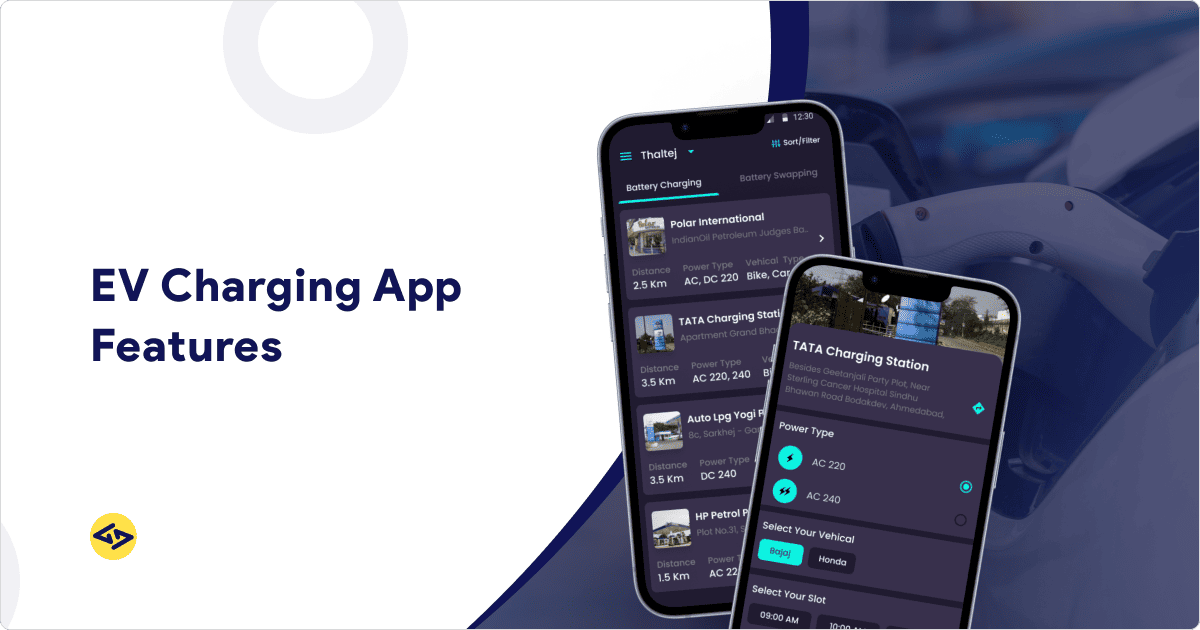
1. EV Charging Station Finder (GPS + Maps)
The EV charging station finder features form your app’s foundation. Users need:
- GPS tracking EV charging stations with real-time location updates
- Map integration showing nearby stations
- Distance and estimated travel time calculations
Navigation features in EV charging app development must prioritize accuracy and speed. Consider exploring how leading platforms approach EV charging station finder app development.
2. Real-Time Charger Availability
Nothing frustrates drivers more than arriving at an occupied station. Real-time availability status EV charging functionality shows:
- Live occupancy status
- Queue length estimates
- Expected availability times
3. Charger Type & Connector Filters
Different vehicles require different connectors. Allow filtering by:
- Charger type (Level 1, Level 2, DC Fast)
- Connector compatibility (CCS, CHAdeMO, Tesla)
- Power output (kW ratings)
4. Booking & Slot Reservation
The reservation system EV charging app feature reduces anxiety and improves planning. Enable:
- Time-slot bookings
- Cancellation policies
- No-show handling
5. In-App Payments & Wallet
Seamless in-app payments for EV charging require:
- Multiple payment methods (cards, wallets, UPI)
- Payment gateway integration EV charging app with Stripe, PayPal, or regional providers
- Digital wallet functionality for faster checkout
6. EV Charging Session Management
Users should monitor active sessions showing:
- Current charge level
- Time elapsed/remaining
- Energy consumed
- Cost accumulation
7. Notifications & Alerts
Notifications and alerts EV charging functionality keeps users informed:
- Charging complete alerts
- Session interruption warnings
- Booking reminders
- Promotional offers
8. Charging History & Invoices
Comprehensive records including:
- Past session details
- Downloadable invoices
- Carbon footprint tracking
9. Ratings & Reviews
User-generated reviews build trust and help others find reliable stations.
10. Multi-language Support
Essential for regional and international expansion.
Advanced User Experience Features
Smart Features That Improve User Engagement
The best UI for EV charging app goes beyond basic functionality. These EV charging app user experience features create competitive differentiation.
Route Planning with Charging Stops
Integrate trip planning that automatically suggests optimal charging stops based on:
- Vehicle range
- Route distance
- Charger availability
- User preferences
AI-Based Charger Recommendations
Machine learning algorithms suggest stations based on:
- Past usage patterns
- Peak time predictions
- User ratings
Dynamic Pricing Display
Dynamic pricing features EV charging apps should show:
- Current pricing tiers
- Peak/off-peak rates
- Estimated total cost before charging begins
Loyalty Programs & Rewards
Loyalty program features EV charging platforms use to retain users:
- Points accumulation
- Tier-based benefits
- Referral bonuses
- Partner discounts
Emergency Roadside Support
Integrate emergency assistance for stranded drivers—a feature that builds brand loyalty.
Admin & Operator Features
EV Charging App Features for Admin Panel
The admin dashboard EV charging app functionality determines operational efficiency. Here’s what your backend control panel EV charging app needs:
Real-Time Network Monitoring
Network monitoring EV charging software capabilities include:
- Live station status across all locations
- Fault detection and alerts
- Performance metrics
Charger Status Management
Remote visibility into:
- Online/offline status
- Utilization rates
- Error codes
Revenue Analytics Dashboard
Analytics and reporting EV charging app features should deliver:
- Daily/weekly/monthly revenue
- Station-wise performance
- User acquisition metrics
- Payment success rates
User & Subscription Management
Manage user accounts, subscription tiers, and access permissions from a centralized dashboard.
Pricing Control System
Implement flexible pricing strategies:
- Location-based pricing
- Time-of-use rates
- Customer segment pricing
Remote Charger Control
Start, stop, or reset chargers remotely—critical for troubleshooting and maintenance.
Maintenance Scheduling
Track maintenance cycles, service history, and preventive maintenance schedules.
Understanding the benefits of EV charging management software helps operators maximize ROI.
Payment, Billing & Monetization
EV Charging App Monetization Features
Sustainable revenue requires flexible billing models EV charging software supports.
Pay-Per-Use Billing
Pay-per-use features EV charging apps use:
- Per-kWh pricing
- Per-minute pricing
- Flat session rates
Subscription Plans
Subscription features EV charging app options:
- Monthly unlimited charging
- Discounted rates for subscribers
- Priority booking access
Corporate/Fleet Billing
Enterprise features including:
- Consolidated invoicing
- Employee usage tracking
- Budget allocation
Promo Codes & Discounts
Marketing tools for user acquisition and retention.
Invoicing & GST Compliance
Automated invoice generation with tax compliance for your operating regions.
Compare this model with traditional approaches in our analysis of fuel delivery apps vs EV charging apps.
Technology & Integrations
Technical Features of EV Charging Apps
The EV charging app tech stack determines scalability and reliability. Critical EV charging app API integrations include:
OCPP Protocol Support
Open Charge Point Protocol ensures hardware interoperability across manufacturers.
IoT Device Integration
IoT features for EV charging app platforms enable:
- Real-time data streaming
- Remote diagnostics
- Predictive maintenance
Learn more about developing IoT-based EV charging apps for technical deep-dives.
Cloud Infrastructure
Cloud integration for EV charging software provides:
- Scalability
- High availability
- Disaster recovery
- Global deployment
Payment Gateway APIs
Integrate with major payment processors for seamless transactions.
Google Maps & GPS APIs
Power location services and navigation features.
CRM & ERP Integration
Connect with business systems for holistic operations management.
Security & Compliance
Security Features in EV Charging Apps
EV charging app security features protect users and operators alike.
User Authentication & OTP
User authentication EV charging app best practices:
- Multi-factor authentication
- OTP verification
- Biometric login options
Data Encryption
End-to-end encryption for:
- Payment information
- Personal data
- Session details
Role-Based Access
Age-verification/security in EV charging app and role-based controls ensure appropriate access levels.
GDPR & Data Privacy Compliance
Essential for European markets and increasingly expected globally.
Fraud Detection
AI-powered systems monitoring for:
- Unusual payment patterns
- Account abuse
- Unauthorized access attempts
Build vs Buy Decision
Custom EV Charging App vs White-Label vs SaaS
| Approach | Development Time | Cost | Customization |
| Custom Development | 6-12 months | $100K-$500K+ | Complete |
| White-Label Platform | 2-4 weeks | $10K-$50K | Moderate |
| SaaS Solution | Immediate | Monthly subscription | Limited |
Custom development suits enterprises with unique requirements and budgets. White-label solutions balance customization with speed. SaaS platforms offer the fastest, most affordable entry point.
Startups often benefit from reviewing successful EV charging station business models before deciding.
Cost & Development Timeline
EV Charging App Development Cost
EV charging mobile app development features costs vary significantly:
MVP (Minimum Viable Product): $30,000 – $60,000
- Basic station finder
- Simple payments
- Core user features
Full-Featured Platform: $100,000 – $300,000+
- Complete EV charging user app features
- Admin dashboard
- Analytics
- IoT integrations
Development Timeline:
- MVP: 3-4 months
- Full platform: 8-12 months
Ongoing Costs:
- Cloud hosting: $500-$5,000/month
- Maintenance: 15-20% of development cost annually
Our EV charging station finder app development services can help you plan accurately.
Best Practices & UX Tips
Best Practices for EV Charging App Design
Creating the best UI for EV charging app requires:
Minimal User Flow
Reduce taps between opening the app and starting a charge. Three taps maximum.
One-Tap Charging Experience
For repeat users, enable saved preferences and one-tap session initiation.
Offline Fallback
Cache essential data for areas with poor connectivity.
Accessibility Design
Ensure compliance with WCAG guidelines for users with disabilities.
Review the best EV charging station finder apps for design inspiration.
Future Features & Trends
Future of EV Charging Apps
Emerging technologies shaping tomorrow’s platforms:
- AI-based energy optimization for grid management
- V2G (Vehicle-to-Grid) integration enabling bidirectional charging
- Blockchain-based payments for transparency
- Smart grid integration for demand response
- Voice assistants for hands-free operation
Similar to how the Uber business model disrupted transportation, EV charging apps will transform energy distribution.
Want to Build Your Own EV Charging App?
Building a successful EV charging platform requires the right features, technology, and expertise. Whether you’re launching an MVP or scaling an enterprise solution, our team has delivered comprehensive EV charging app features for clients across the globe.
Here’s what we offer:
Free product consultation
Feature roadmap planning
White-label demo access
Detailed cost estimation
Ready to get started?
Contact our EV charging app specialists today for a personalized consultation and turn your vision into reality.
Launch Your EV Charging App in Weeks, Not Months
Use our ready-made white-label EV charging solution with mobile apps, admin dashboard, and payment integrations.

FAQs
What features should an EV charging app have?
Essential features include GPS-based station finder, real-time availability, in-app payments, session monitoring, booking/reservation, notifications, and charging history.
How much does it cost to build an EV charging app?
Costs range from $30,000-$60,000 for an MVP to $100,000-$300,000+ for a full-featured platform with admin dashboards and IoT integrations.
Can I use white-label EV charging software?
Yes. White-label solutions offer faster deployment (2-4 weeks) with customizable branding, ideal for businesses wanting quick market entry.
Is SaaS EV charging platform good for startups?
Absolutely. SaaS platforms require minimal upfront investment, offer immediate deployment, and allow startups to validate their market before custom development.