The grocery shopping landscape has fundamentally transformed. What once required a trip to the store now happens with a few taps on your smartphone. By 2026, the global online grocery market has surpassed $680 billion, with quick commerce platforms promising 10-minute deliveries becoming the new standard.
This explosive growth isn’t just about convenience; it’s about AI-powered personalization, real-time inventory management, and sophisticated logistics networks that make same-day delivery possible. In this guide, we’ll explore the top grocery delivery apps in 2026, compare their features, and provide business insights for anyone considering entering this dynamic market.
Quick Answer
What are the top grocery delivery apps in 2026?
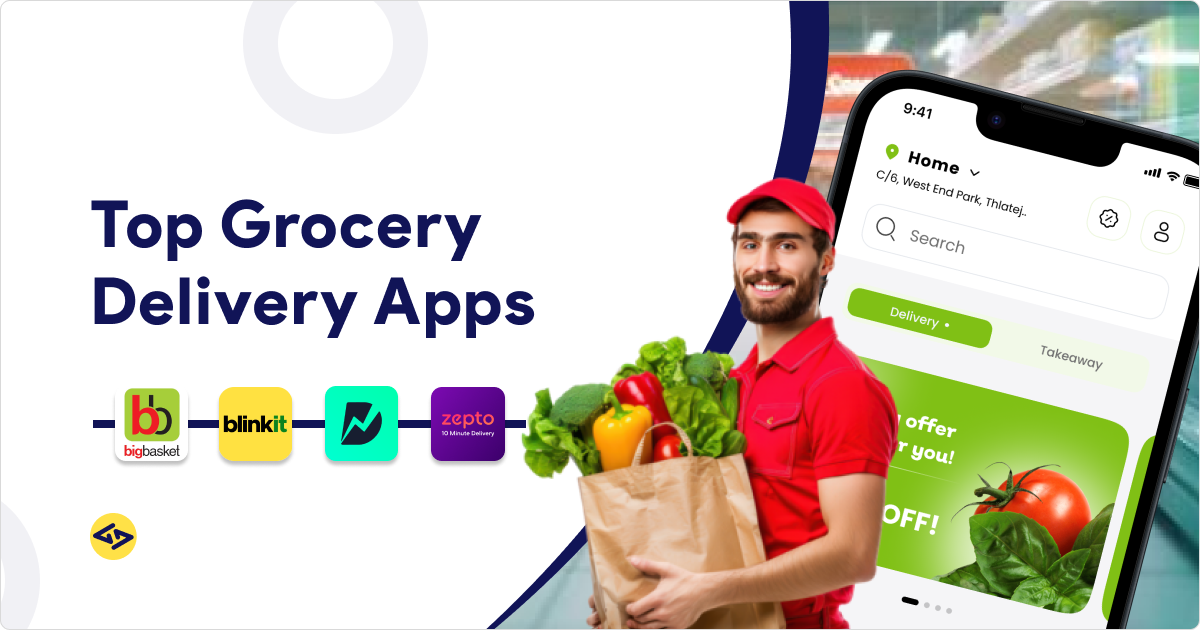
The leading grocery delivery apps in 2026 include Instacart, Walmart Grocery, Amazon Fresh, Zepto, Blinkit, BigBasket, and FreshDirect. These platforms dominate through AI-powered personalization, rapid delivery times (some offering 10-minute service), extensive product selections, real-time inventory tracking, and seamless user experiences that prioritize convenience and reliability.
Grocery Delivery Market Overview in 2026
Market Size & Growth
The online grocery delivery industry shows remarkable expansion, with the global market exceeding $680 billion in 2026. Quick commerce apps—platforms offering ultra-fast delivery within 10-30 minutes—now represent over 35% of the total market, growing 78% year-over-year.
Mobile commerce accounts for approximately 72% of all online grocery transactions, making mobile app optimization critical for success.
Why Grocery Delivery Apps Continue to Grow
Changing customer expectations: Post-pandemic consumer behavior has permanently shifted. Convenience is no longer a luxury—it’s an expectation.
AI-powered personalization: Modern platforms leverage machine learning to understand purchase patterns, dietary preferences, and shopping habits, creating highly personalized experiences that increase conversion rates by 25-40%.
Faster delivery: The arms race for delivery speed continues. While same-day delivery was impressive in 2020, 10-minute grocery delivery apps have become the new battleground, enabled by dark stores strategically positioned in urban centers.
Top Grocery Delivery Apps in 2026
Here’s a comprehensive comparison of the market leaders:
| App | Headquarters | Best For | Delivery Time | Unique Features |
| Instacart | San Francisco, USA | Wide retail partnerships | 1-2 hours | Personal shoppers, 1,400+ store network |
| Walmart Grocery | Bentonville, USA | Budget shoppers | 1-2 hours | Walmart+ integration, lowest prices |
| Amazon Fresh | Seattle, USA | Prime members | 2 hours | Alexa integration, Amazon ecosystem |
| BigBasket | Bangalore, India | Indian market | 2 hours – next day | 40,000+ products, subscriptions |
| Blinkit | Gurugram, India | Ultra-fast delivery | 10-20 minutes | Dark store network, quick commerce |
| Zepto | Mumbai, India | Fastest delivery | 10 minutes | Speed-focused, urban coverage |
| FreshDirect | New York, USA | Premium quality | Next day | Farm-to-table, quality focus |
Instacart
Instacart pioneered the personal shopper model, partnering with over 1,400 retail banners. Their platform allows shopping from multiple stores in a single order. Unmatched retail partnerships provide incredible product variety, while Instacart+ membership offers unlimited free delivery. They generate revenue through delivery fees, subscriptions, advertising, and retailer partnerships.
Walmart Grocery
Seamlessly integrated with Walmart’s ecosystem, offering 150,000+ products at everyday low prices. Walmart+ membership includes free delivery and fuel discounts. Their massive physical footprint ensures coverage across urban and suburban areas with unbeatable price competitiveness.
Amazon Fresh
Exclusive to Prime members, Amazon Fresh leverages Amazon’s world-class logistics infrastructure. Alexa voice ordering simplifies repeat purchases, while seamless integration across Amazon properties creates ecosystem lock-in. They operate both dark stores and utilize Whole Foods locations for fulfillment.
Blinkit & Zepto
These Indian quick commerce pioneers deliver in 10-20 minutes from strategically located dark stores. Blinkit focuses on 3,000-4,000 SKUs, while Zepto operates with 2,500+ high-demand items. Both command premium pricing through their convenience value proposition and exceptional operational efficiency.
Comparison of the Best Grocery Delivery Apps
| Feature | Instacart | Amazon Fresh | Walmart | Blinkit | Zepto |
| Delivery Speed | 1-2 hours | 2 hours | 1-2 hours | 10-20 min | 10 min |
| Pricing | Mid-range | Mid-range | Low | Premium | Premium |
| Membership | $99/year optional | Prime required | $98/year optional | None | None |
| AI Recommendations | Advanced | Advanced | Moderate | Basic | Basic |
| Product Range | 150,000+ | 50,000+ | 150,000+ | 4,000 | 2,500 |
The right platform depends on your priorities. For ultra-fast delivery, Blinkit or Zepto excel. For comprehensive selection and competitive pricing, Walmart or Instacart lead. For premium quality and ecosystem integration, Amazon Fresh offers compelling advantages.
Essential Features of Successful Grocery Apps
The best grocery delivery apps share core feature of grocery app development:
Customer Features: Smart search with filters, organized categories, wishlist, multiple payment options, live order tracking, delivery scheduling, push notifications, AI-powered recommendations, barcode scanning, and loyalty rewards.
Driver Features: Route optimization, integrated navigation, order management dashboard, and simple delivery status updates.
Admin Features: Real-time inventory management, comprehensive order management, customer profiles, delivery analytics, promotional tools, and business intelligence reporting.
Latest Grocery Delivery App Trends in 2026
AI Shopping Assistants: Conversational AI helps customers discover products, answer nutritional questions, and provide recipe suggestions based on available items.
Quick Commerce Dominance: The 10-minute grocery delivery apps pioneered in India have expanded globally, requiring dense dark store networks but commanding premium pricing.
Dark Stores: These fulfillment-only facilities optimized for rapid picking stock 2,000-5,000 fast-moving SKUs in accessible layouts, enabling 3-5 minute picking times. Learn more about the dark store grocery delivery app model.
Voice Shopping Integration: Alexa, Google Assistant, and Siri integration enables hands-free shopping and reordering.
Predictive Inventory: AI in grocery delivery app systems forecast demand analyzing historical patterns, weather data, and local events to optimize stock levels.
Sustainable Delivery: Apps now offer carbon-neutral delivery options and reusable packaging programs responding to environmental consciousness.
Business Insights for Entrepreneurs
Why Grocery Delivery Remains Profitable
Recurring revenue: Groceries are necessity purchases with predictable frequency. Customers return weekly or multiple times per week.
Multiple monetization streams: The grocery delivery app monetization strategy includes delivery fees ($3.99-$9.99), subscription plans ($99-$139 annually), retail commissions (15-25%), advertising revenue, featured listings, and surge pricing.
Market opportunities: Regional grocery chains, organic specialty delivery, B2B grocery delivery, rural delivery, and niche markets represent significant opportunities. The grocery delivery app development for retail chains and multi vendor grocery marketplace models are particularly promising.
How to Build a Grocery Delivery App
Development Steps
1. Market Research: Analyze competitors, identify underserved segments, conduct customer interviews, evaluate retail partnerships, and calculate unit economics.
2. Choose Business Model: Aggregator model (partner with stores), inventory model (own stock), hybrid approach, or quick commerce focus.
3. Define Features: Start with MVP essentials—product catalog, search, cart, payment, order management. Add AI recommendations, advanced tracking, and loyalty programs in phase 2.
4. Select Technology Stack: The recommended tech stack for grocery app includes flutter for grocery delivery app development or React Native for mobile, Node.js or Laravel for backend, PostgreSQL database, AWS infrastructure, and Google Maps API.
5. Development & Testing: Implement UI/UX design, frontend and backend development, third-party integrations, and comprehensive testing including grocery delivery app security measures.
6. Launch & Marketing: Beta test, implement analytics, prepare support systems, execute soft launch, leverage referral programs, and optimize based on feedback.
Grocery Delivery App Development Cost
Understanding the cost to build a grocery delivery app helps set realistic budgets:
| App Type | Estimated Cost | Timeline |
| MVP | $25,000 – $40,000 | 3-4 months |
| Standard App | $50,000 – $80,000 | 5-7 months |
| Enterprise Platform | $100,000 – $250,000+ | 8-12 months |
Costs vary based on feature complexity, platform choice, AI integration, third-party APIs, and team location. Budget 15-20% annually for maintenance and updates.
Key Challenges
Inventory synchronization: Real-time accuracy across multiple locations requires robust integration with existing systems.
Last-mile delivery: Delivery represents 30-50% of operating costs. Route optimization directly impacts profitability.
Peak demand management: Infrastructure must scale to handle 5-10x normal traffic during weekends and holidays.
Payment security: PCI-DSS compliance, encryption, and fraud detection are non-negotiable.
Customer retention: Acquiring customers costs $30-100 each. Retention requires consistently excellent experiences.
Why Choose iCoderz Solutions?
When selecting a partner for your grocery delivery app development project, iCoderz Solutions offers:
- 14+ years of experience with 500+ successful projects
- End-to-end development from consulting through ongoing support
- AI-powered solutions with advanced recommendation engines
- Scalable architecture handling 100 to 100,000+ daily orders
- Secure payment integration with 50+ global gateways
- White-label platforms for faster time-to-market
Ready to develop a grocery delivery app?
Conclusion
Grocery delivery in 2026 demonstrates technology’s power to transform retail. Leading platforms succeed by combining extensive selection, competitive pricing, ultra-fast delivery, and AI-powered personalization into seamless experiences.
For consumers, these apps represent unprecedented convenience. For entrepreneurs, grocery delivery represents massive opportunity. Success requires robust technology, operational excellence, customer-centric features, and continuous innovation.
Partner with experienced developers, invest in scalable architecture, focus on customer experience, and continuously innovate. The technology exists, consumer demand is proven, and business models are validated.
Contact iCoderz Solutions to transform your vision into a market-leading grocery delivery app.
Build the Next Leading Grocery Delivery App
Launch a scalable grocery delivery app with AI, real-time tracking, and features inspired by top market leaders.

Frequently Asked Questions
Which is the best grocery delivery app in 2026?
It depends on your needs. Instacart offers the widest selection, Walmart provides lowest prices, Amazon Fresh excels in ecosystem integration, while Blinkit and Zepto lead in 10-minute delivery.
How do grocery delivery apps make money?
Through delivery fees, subscription memberships, retail commissions (15-25%), advertising revenue, surge pricing, and private label products.
How much does grocery delivery app development cost?
An MVP costs $25,000-$40,000 (3-4 months), standard apps $50,000-$80,000 (5-7 months), and enterprise platforms $100,000-$250,000+ (8-12 months).
What features should a grocery delivery app have?
Essential features include smart search, product categories, cart management, multiple payments, real-time tracking, delivery scheduling, AI recommendations, and comprehensive admin tools.
Is AI used in grocery delivery apps?
Yes. AI powers personalized recommendations, demand forecasting, dynamic pricing, chatbots, route optimization, and fraud detection.
Can startups compete with large platforms?
Yes, through strategic differentiation: focusing on underserved niches (organic foods, ethnic groceries, rural areas, B2B), providing superior service, and excelling operationally in target segments.