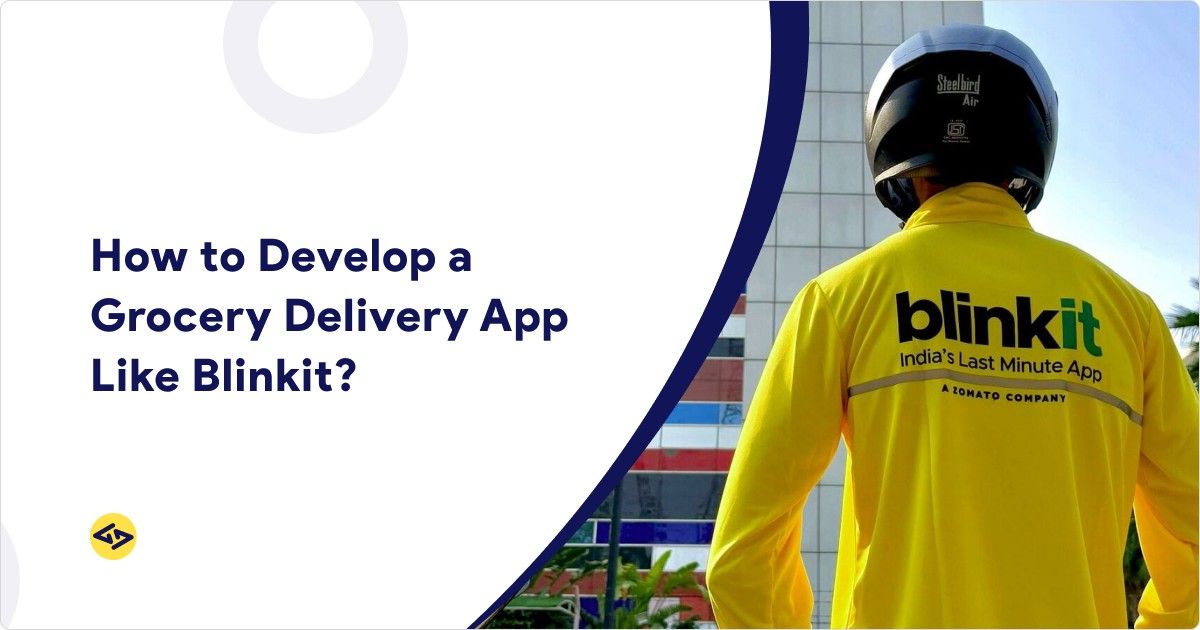
People seek quick, personalized solutions in a busy society—Blinkit delivers just that.
India’s quick commerce market — the category Blinkit pioneered — has grown into a $7–8 billion opportunity in FY25, projected to reach $65–70 billion by 2030, according to the India Brand Equity Foundation (IBEF).
Blinkit is reshaping the grocery delivery sector in India and beyond with its fast deliveries, easy-to-navigate app, and unique features, and its success has entrepreneurs across India, the USA, and the UK exploring how to build a Blinkit clone for their own market.
It collaborates with local stores that cater to its users’ busy lives to ensure quick and efficient service.
From your daily supplies to snacks in the middle of the night, Blinkit ensures you get your supplies in a blink!
Blinkit plays a vital role in businesses and apps by offering solutions for personal shopping, delivery, AI, and sustainable delivery methods in the grocery industry. Efficient inventory management is also crucial to its success.
This blog will explain creating a Blinkit clone and the functions necessary for developing an efficient grocery delivery app.
Learn more- Why Does Your Grocery Store Need a Grocery Delivery App?
Quick Snapshot of the Blinkit App: What Is the Blinkit App?
- Blinkit app is an on-demand grocery delivery service provider that promises delivery of groceries in 10-30 minutes.
- Blinkit, formerly known as Grofers, was launched in 2013 as a quick-commerce (Q-commerce) site that delivers products to 31 cities, including Ahmedabad, Delhi, Mumbai, Bengaluru, and Pune.
- Sector: Grocery Delivery – Online Shopping – E-commerce
Check out the Top 10 Grocery Delivery Mobile Apps in 2025
Blinkit App: Key Features & What Makes It Stand Out
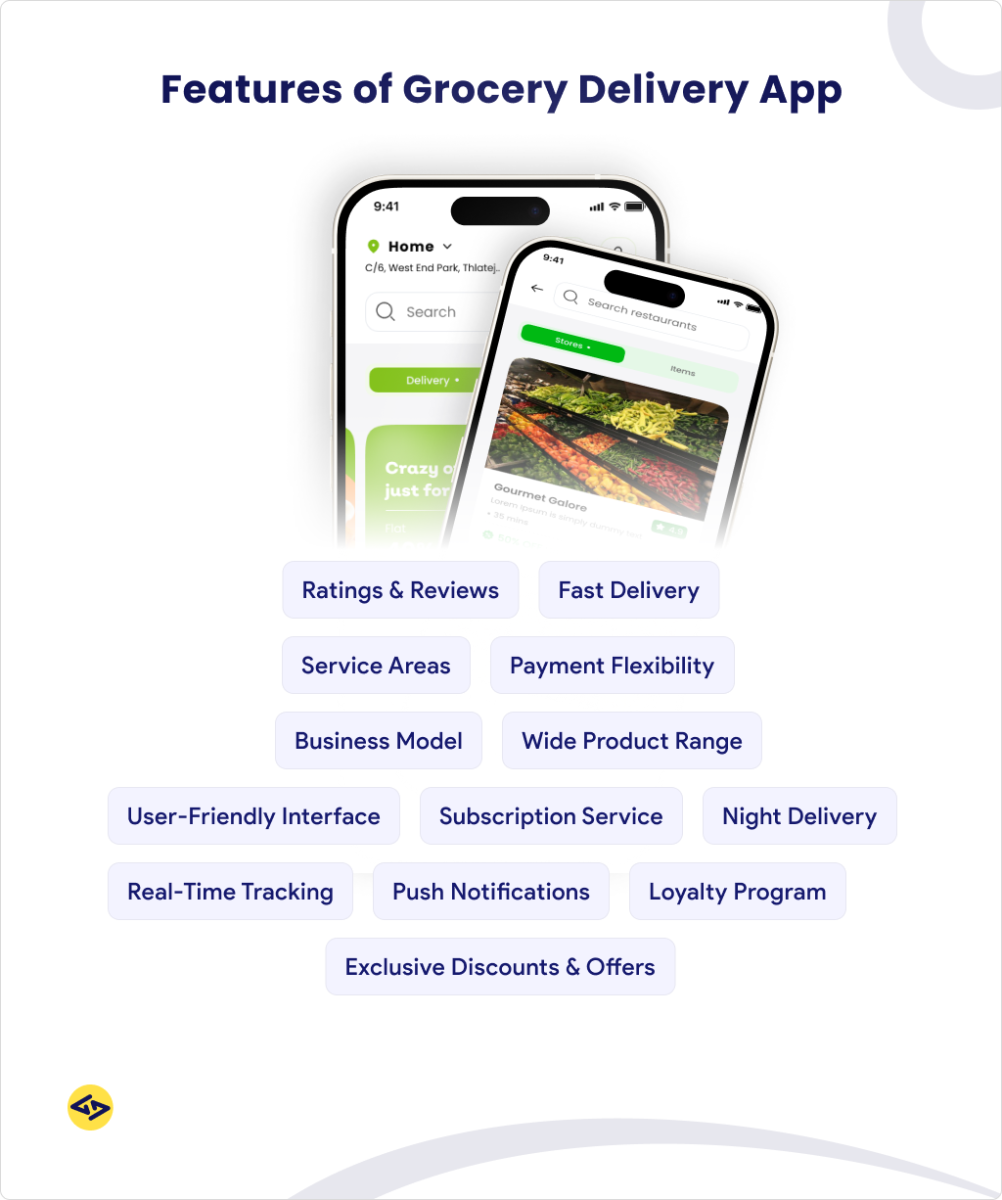
1) Ratings & Reviews:
BlinkitApp has received 4.4-star ratings on Google Play with 50+ crore downloads and 21+ lakh reviews, making it credible and reliable.
2) Fast Delivery:
Blinkit focuses on delivering groceries, household products & daily necessities within 10-30 minutes of placing an order so that the users do not have to wait for long.
3) Business Model:
Blinkit operates on a hyperlocal marketplace model and thus collaborates with stores to enable delivery within minutes. This approach supports faster services and, at the same time, assists local producers.
4) Wide Product Range:
Blinkit App now has more than 10,000+ products and services across the groceries, electronics, beauty care, fruit & vegetable, and even medicine categories.
5) Service Areas:
Present in 30+ cities across India, including Ahmedabad, Delhi, Mumbai, Bengaluru, Pune, and many more urban locations, BlinkitApp is making quick deliveries possible across all these main areas.
6) Payment Flexibility:
Offering a variety of payment options such as UPI, credit/debit cards, wallets, COD, and Paytm Food Wallet, BlinkitApp ensures that users can choose their preferred method for a seamless shopping experience.
7) Real-Time Tracking:
BlinkitApp features live tracking for all orders, so users can stay updated on the delivery status in real-time, making the process more transparent and reliable.
8) Exclusive Discounts & Offers:
The Blinkit app offers low prices on groceries daily, along with bundle deals and monthly specials. It also provides amazing deals that help customers shop at a lower price.
9) User-Friendly Interface:
The BlinkitApp is easy to use, with a clear and clean interface, nicely laid out product information and quick response from customer service.
10) Subscription Service (Blinkit Gold):
With Blinkit Gold, users can get privileges like free deliveries, special discounts, and priority services, which help them save and experience more.
11) Night Delivery:
BlinkitApp offers round-the-clock delivery in some locations to cater to clients’ requirements during odd hours.
12) Push Notifications:
Stay updated in real-time with push notifications from BlinkitApp, covering orders, promotions, and special offers. Blinkit ensures you never miss any important updates.
13) Loyalty Program:
The loyalty program of BlinkitApp entails that users access exclusive deals, discounts, and benefits once they shop frequently with the entity.
Explore our blog on how much It costs to build a grocery delivery app like Instacart.
How Blinkit’s Dark Store Model Powers 10-Minute Delivery
Before you start building, it helps to understand why Blinkit can deliver in minutes: the dark store model.
A dark store is a small, locality-level warehouse that isn’t open to walk-in customers – it exists purely to fulfil online orders. Blinkit places these dark stores densely across each city, so every order ships from the store nearest to the customer instead of a single large warehouse outside the city.
If you’re planning a Blinkit clone, your technology stack and operations plan need to account for dark store grocery delivery model infrastructure from day one — it isn’t something you can bolt on later.
How To Develop an App Like Blinkit?
Blinkit-like app development involves several key steps. Here’s a simple overview of the process:
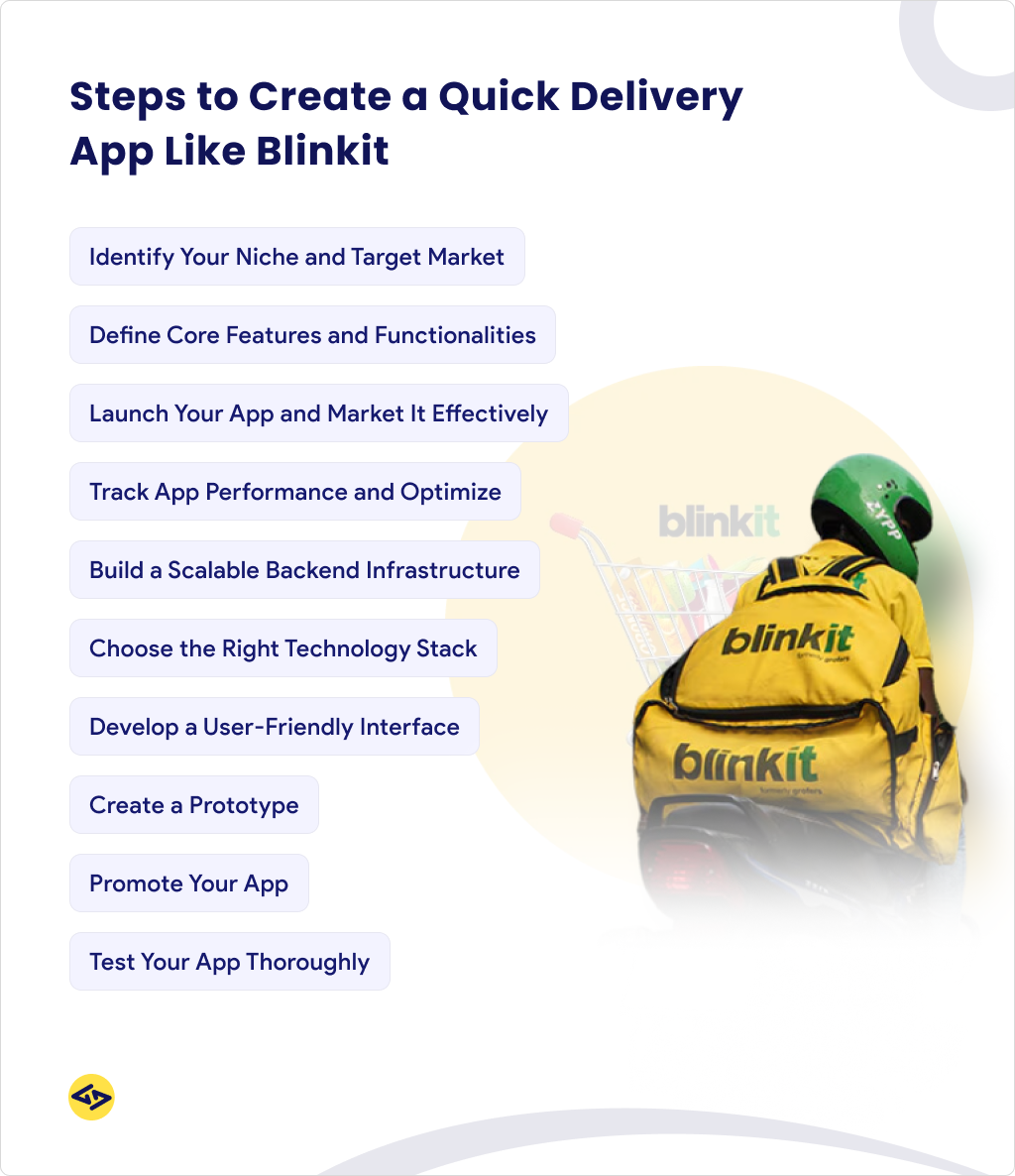
1) Identify Your Niche and Target Market
Before you start development, defining your niche within the grocery delivery sector is crucial. Determine Your Specialization and Audience
First, you should search for your specialization and target audience to know competitors and possible users’ requirements.
This will help you develop your proposition and know which target market to concentrate on. Here’s how to approach it:
2) Conduct Market Research:
Research Blinkit, Swiggy Instamart, Zepto, and BigBasket to compare their coverage, delivery speed, pricing, and customer reviews.
3) Set Your Own Unique Selling Proposition (USP)
Promote the factors that set your app apart from your competitors, such as delivery time, inventory, or customer service.
4) Segment Your Target Market
Focus on specific demographics, such as working people or families, and ensure that the app’s features and ads speak to those demographics.
Analyzing the target market will make it easier to determine what they would expect concerning the app’s features to meet their demands.
5) Define Core Features and Functionalities
Your app must include fundamental features that enhance user experience and operational efficiency:
- User Registration & Profiles
- Product Search & Categories
- Real-Time Order Tracking
- Payment Integration
- Push Notifications
- Shopping Cart & Wishlist
- In-App Chat/Support
- Loyalty Programs & Discounts
- Review & Rating System
6) Choose the Right Technology Stack
Selecting an appropriate technology stack is crucial for performance and scalability:
Mobile App Development: React Native or Flutter let you build one codebase for both iOS and Android, which speeds up a Blinkit clone app launch. Node.js handles high-concurrency order processing well; Laravel is a solid choice if your team prefers a structured PHP framework.
Database Management: PostgreSQL works well for structured data like orders and payments, while MongoDB suits fast-changing inventory data across dark stores.
Real-Time & Location Services: Google Maps or Mapbox APIs power live order tracking and delivery-partner routing — a core expectation for any quick commerce app development project.
Cloud Infrastructure: AWS or Google Cloud provide the scalability needed to handle demand spikes during peak grocery-ordering hours.
7) Develop a User-Friendly Interface
The success of your app hinges on its usability. Focus on:
- Clean design principles
- Flexible designs that are optimized for multiple devices
- Easy navigation that enables consumers to locate the product of their choice.
8) Build a Scalable Backend Infrastructure
Ensure your backend can handle increasing traffic as your user base grows:
- Implement real-time updates for order processing
- Consider incorporating AI technologies to optimize delivery routes
9) Create a Prototype
Once you have defined the design elements, develop a prototype of your app. This will help visualize the user experience and identify potential issues before full-scale development begins.
10) Test Your App Thoroughly
Conduct extensive testing across various devices and operating systems to ensure functionality, performance, and security meet the required standards.
11) Launch Your App and Market It Effectively
After testing, launch your app on the appropriate operating systems (iOS/ Android). Ensure you use appropriate marketing techniques to get to the audience you want to appeal to.
12) Promote Your App
After launching, promote your app through social media campaigns, collaborate with influencers, utilize email marketing, and optimize for app store visibility to increase downloads.
13) Track App Performance and Optimize
Use analytics tools to monitor your app’s performance. Track key metrics such as downloads, user retention, and engagement. Continuously optimize based on user feedback and data insights.
The Development Cost of Blinkit-Like App
The estimated cost to develop an app similar to Blinkit typically averages between $25K to $50K avg, depending on the app’s complexity and features.
a) Approx cost– Basic Version:
- $15K – $25K: This includes essential features necessary for functionality.
b) Approx cost- Advanced Version:
- $50K – $100K+: This version incorporates advanced functionalities such as AI integration, route optimization, and loyalty programs.
Costs depend on the app’s scope, features, and development team/location. Additional factors like the platform (iOS/Android), integrations, and post-launch support can also influence the final development cost.
Visit our blog on How to Start a 10-minute Grocery Delivery Business like Zepto.
How Does a Blinkit-Like App Make Money?
A Blinkit clone app can combine multiple revenue streams instead of relying on just one:
- Delivery fees — a flat or distance-based charge on every order
- Commission from partner stores — a percentage cut on each sale routed through your platform
- Sponsored placements — brands pay to feature products higher in search and category pages
- Subscription/membership — a Blinkit Gold-style paid tier offering free delivery and priority slots
Most successful quick commerce apps blend two or three of these rather than depending on delivery fees alone, since fees rarely cover the cost of hyperlocal fulfilment on their own.
Conclusion- Launch Your Blinkit like Grocery Delivery App
Creating a successful food and grocery delivery app like Blinkit involves a solid business plan, technology stack, and user interface.
Incorporation of the right features enables users to develop a more effective supermarket app that will allow customers to access the services more conveniently and faster.
Implementing features similar to Blinkit’s is possible, but it is important to guarantee that the company has a stable technological base, sound logistics, and business relationships.
You can thus bring similar advantages such as fast delivery, coverage of numerous categories, and round-the-clock service to design a credible, customer-oriented Blinkit clone app — whether you’re launching in India, the USA, or the UK.
At iCoderz, we have skilled developers proficient in grocery delivery app development and quick commerce app development. Contact us today to start building your own app like Blinkit.
Frequently Asked Questions
How Much Does It Cost to Make an App Like Blinkit?
The cost to develop a Blinkit clone app depends on several factors, including the final price, such as the iOS or Android platform, number of features, design, backend, SDKs, integration, and maintenance and marketing costs.
How Long Does It Take to Build an App Like Blinkit?
As expected, developing an app like Blinkit often takes about 4 to 6 months. These are a software system’s planning, designing, developing, testing, and deployment phases.
How Does a Grocery Delivery App Make Money?
On-demand grocery delivery apps mainly earn revenue from clients receiving delivery fees. They can also make money through providing ad spaces to grocery stores or through providing subscription services that come with free delivery.
Build your own app like Blinkit and revolutionize the delivery industry.