Introduction: The Shift to Digital Grocery Shopping
It is 2026, and the way people buy milk, bread, and vegetables has changed forever.
Just five years ago, the local kirana store or supermarket was the only option for daily essentials. Today, consumers expect groceries to arrive at their doorstep in 10 minutes—or at least at a time that suits their schedule. The global online grocery market is projected to exceed $1.2 trillion, and giants like Bigbasket, Instamart, and Blinkit are devouring market share at an alarming rate.
For the independent grocery store owner, this isn’t just a trend; it is a survival alert.
The question is no longer “Should I go digital?” but rather, “How fast can I launch my grocery delivery platform?” If you are still relying solely on foot traffic, you are leaving money—and customers—on the table. This is the essence of digital transformation for grocery stores, and it starts with understanding why grocery store needs a delivery app in 2026.
What Is a Grocery Delivery App?
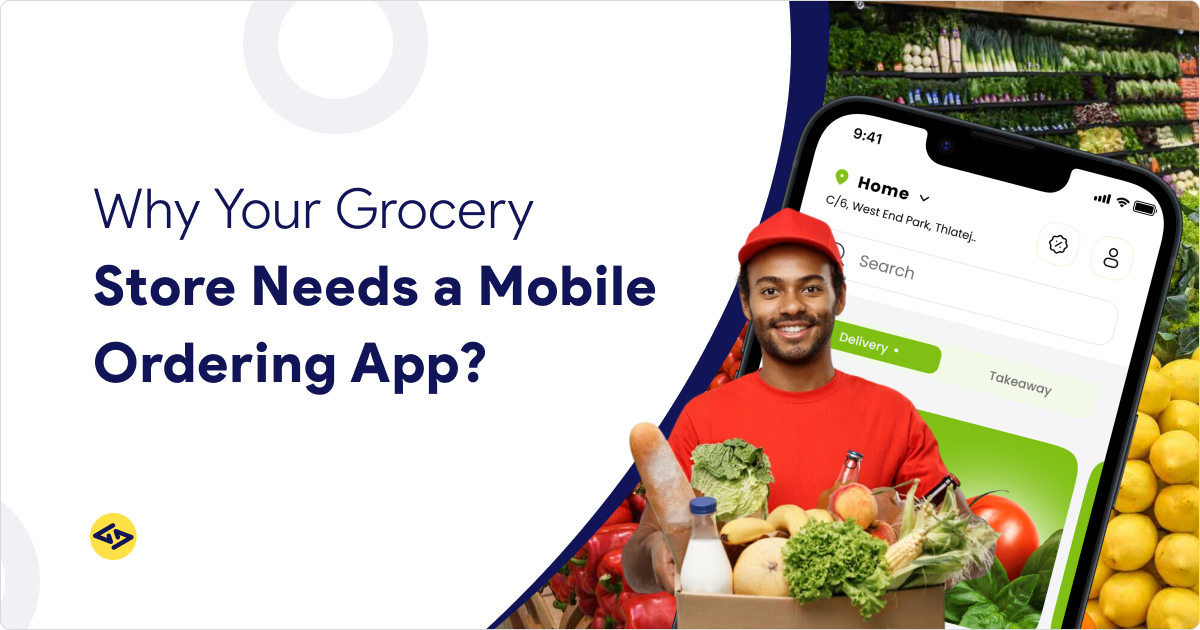
A grocery delivery app is a mobile and web-based platform that connects grocery stores with customers, enabling them to browse products, place orders, and receive deliveries directly to their doorstep. It’s the cornerstone of the online grocery business benefits ecosystem, streamlining operations while enhancing customer experience.
How it works:
- Customer: Opens the app, browses your actual inventory, adds items to a cart, and pays online.
- Store Owner: Receives the order on an admin dashboard, picks the items, and assigns a delivery partner.
- Delivery Partner: Navigates to the customer’s address, updates the order status in real-time.
Types of solutions:
- Single-Store Model: Ideal for one independent grocery store.
- Multi-Vendor/Marketplace: For larger businesses aiming to onboard other local shops (hyperlocal model).
Whether you choose a custom grocery delivery app or a white-label grocery delivery app, the core value remains the same: your store, available 24/7. This is the foundation of grocery delivery app software and a robust grocery delivery system for stores.
Key Reasons Your Grocery Store Needs a Delivery App
1. Increase Sales & Revenue
A physical store has a geographical fence. An app does not.
By launching a delivery app, you extend your trading floor to the entire neighborhood. We have seen local stores increase their revenue by 30-45% within six months of launch simply by capturing the “too busy to shop” demographic. This is exactly how grocery apps increase sales. Furthermore, digital menus allow for smart upselling: “Customers who bought rice also bought this masala.” This is a prime example of grocery delivery app for business growth.
2. Improve Customer Convenience
Modern shoppers value time over loyalty points. A 24/7 grocery ordering app ensures you never lose a sale because the store is “closed.” Whether it is a late-night diaper run or a scheduled weekly shop, your app is always open. This is the ultimate convenience of grocery delivery app.
3. Stay Competitive in the Market
Can a local store really compete with Bigbasket and Instamart? Absolutely. While giants have scale, you have trust, proximity, and personalization. A digital presence levels the playing field. You offer the same convenience, but with the human touch of a local business. This is your grocery store competitive advantage. To survive in online grocery market, you need a local grocery store online strategy.
4. Better Customer Retention
Acquiring a new customer is five times more expensive than retaining an existing one. A grocery app gives you a direct marketing channel. Through push notifications and in-app loyalty programs, you can bring customers back with personalized offers based on their purchase history. This is customer retention with grocery apps in action.
5. Business Automation
Spreadsheets and paper bills create bottlenecks. Grocery store automation software digitizes inventory management, order processing, and billing. This reduces manual errors and frees up staff to focus on customer service. It is one of the most significant advantages of grocery delivery app.
Benefits of a Grocery Delivery App for Store Owners
The benefits of grocery delivery app extend far beyond just accepting orders online.
- Lower Operational Costs: Digital payments reduce cash handling costs; automated workflows reduce labor overhead.
- Real-Time Data & Analytics: Know exactly which products sell fastest, at what time, and to whom.
- Improved Brand Visibility: Your brand lives on your customer’s home screen, not just a street corner.
- Scalability: Adding a new product category or opening a new branch is seamless with a robust grocery delivery system for stores.
These are the online grocery business benefits that drive the importance of grocery delivery app in a post-pandemic economy.
Must-Have Features in a Grocery Delivery App
To deliver a seamless experience, your app ecosystem must include three interfaces. These are non-negotiable grocery delivery app features.
Customer App:
- Intelligent product search & filters
- Secure cart & checkout
- Real-time order tracking (reduces “where is my order?” calls)
- Multiple payment options (UPI, cards, wallets, COD)
Store Admin Panel:
- Centralized product & price management
- Order dashboard with status tracking
- Customer management & CRM tools
Delivery Partner App:
- Route optimization & navigation
- One-tap status updates
For a deep dive into technical architecture, read our guide on the best tech stack for grocery app . This is the kind of grocery app solution for retailers that actually works.
How a Grocery Delivery App Improves Customer Experience
Customer experience is the new battleground. Here is how you improve customer experience in grocery store through digital means:
- Faster Service: Saved addresses and payment methods reduce checkout time to under 30 seconds.
- Personalized Shopping: AI-driven recommendations make customers feel understood.
- Contactless Delivery: A non-negotiable feature post-pandemic. Your contactless grocery delivery solution builds safety and trust.
- Easy Reordering: One-click reorder of the “weekly staple” list.
Business Models for Grocery Delivery Apps
Choosing the right business model affects your grocery app solution for retailers:
Single Store Model: Ideal for independent grocers or small chains. You maintain complete brand control, direct customer relationships, and higher profit margins. Revenue comes from direct product sales.
Marketplace Model: Connect multiple grocery stores on one platform. Earn through commission on sales, listing fees, and premium placement charges. This model suits entrepreneurs looking to build the next BigBasket.
Subscription-Based Model: Monthly/annual membership fees provide predictable revenue. Offer benefits like free delivery, exclusive discounts, and priority service to justify the subscription cost.
Hyperlocal Model: Focus on ultra-fast delivery (15-30 minutes) within limited radius. This model works well for urban areas with high population density and strong demand for immediate delivery.
| Model | Best For |
| Single Store Model | Independent grocers, organic stores |
| Marketplace Model | Multi-store owners, aggregators |
| Subscription Model | Premium services (e.g., free delivery for members) |
| Hyperlocal Model | 30-minute delivery zones |
If you are looking for inspiration, explore our analysis on how to build a hyperlocal grocery delivery app . Choosing the right model is one of the key reasons to build grocery delivery app that aligns with your business goals.
Is a Grocery Delivery App Profitable? (ROI)
The short answer: Yes. But let’s look at the math.
Revenue Streams:
- Delivery fees
- Surge pricing during peak hours
- Promotional listings (vendors paying for top slots)
- In-app advertising
The ROI Perspective:
Most of our clients recover their initial grocery delivery app investment within 12 to 18 months. Unlike physical expansion, which requires heavy CAPEX in real estate, an app scales with zero marginal cost per new user. This is the definitive answer to is grocery delivery app profitable.
Understanding the ROI of grocery delivery app is critical before you hire grocery app developers.
Read more about real-world profitability metrics in our post: Building a Grocery Delivery App Like Instacart .
Cost to Build a Grocery Delivery App
One of the first questions we hear is: “How much will this cost me?”
MVP vs Full-Scale:
- MVP App: ~$25,000 – $35,000 (iOS, Android, Admin Panel). Focuses on core ordering and payment.
- Full-Scale App: $50,000+. Includes advanced analytics, AI recommendations, multi-language, and complex logistics.
Factors Affecting Cost:
- Platform (native vs cross-platform)
- Number of features
- Third-party integrations (payment gateways, SMS, maps)
For a detailed breakdown, see our definitive guide on grocery app development cost and cost of grocery delivery app .
Build vs Buy: Custom vs White-Label Solution
Custom Grocery Delivery App:
- Pros: 100% unique, own IP, unlimited scalability.
- Cons: Higher upfront cost, longer time-to-market.
White Label Grocery Delivery App:
- Pros: Launch in 2 weeks, significantly cheaper.
- Cons: Limited customization, monthly licensing fees.
Which one suits your business?
If you are a single store testing the waters, a white label grocery delivery app is a smart, low-risk start. If you are a regional chain with specific workflows, investing in a custom grocery delivery app is the long-term win.
This decision is at the heart of every grocery delivery app development company consultation.
Challenges & How to Overcome Them
When you launch grocery delivery platform, you’ll encounter challenges. Here’s how to address them:
- Logistics Management:
- Challenge: Coordinating multiple deliveries efficiently.
- Solution: Implement route optimization algorithms, maintain a fleet of delivery partners, use real-time tracking, and establish efficient packing processes. Partner with third-party logistics when needed.
- Inventory Synchronization:
- Challenge: Keeping online and offline stock levels aligned.
- Solution: Use real-time inventory management systems, set buffer stock levels, implement automatic reorder points, and integrate POS systems with your app for seamless synchronization.
- User Adoption:
- Challenge: Getting customers to download and use the app.
- Solution: Offer first-order discounts, create referral programs, provide exceptional initial experiences, maintain active social media presence, and educate customers about app benefits through in-store promotions.
- Technology Scalability:
- Challenge: Handling increased traffic during peak times.
- Solution: Use cloud infrastructure that scales automatically, implement CDN for faster loading, optimize database queries, and conduct regular load testing. Choose the right tech stack for grocery app development.
How to Get Started with Your Grocery App
Step 1: Define Your Goals
Are you trying to defend your market share, or are you aiming to expand into new pin codes? Your goal dictates your feature set. This is your local grocery store online strategy.
Step 2: Choose the Right Development Partner
You don’t just need coders; you need a partner who understands the online grocery business benefits and the local retail landscape. Look for a team with a proven portfolio in on-demand app development. You want to hire grocery app developers who have done this before.
Step 3: Launch Strategy
Do not go dark. Use social media, in-store signage, and WhatsApp broadcasts to announce your app. A soft launch with your top 100 loyal customers is often the best beta test. This is how you successfully launch grocery delivery platform.
Ready to start? Contact our grocery app development team for a free consultation and project estimate.
Future of Grocery Stores with Mobile Apps
The future is not just about delivery; it is about intelligence.
- AI Recommendations: Apps that predict what you need before you search.
- Voice Ordering: “Alexa, reorder my usual vegetables.”
- Smart Inventory: Shelves that automatically trigger a reorder when stock is low.
- Quick Commerce: The 10-minute delivery window is becoming the standard.
Stores that embrace digital transformation for grocery stores today will be the dominant players of 2030. If you want to build grocery delivery app for store that lasts, you must think ahead.
Conclusion
A grocery delivery app is no longer a luxury for the modern grocery store; it is the engine of survival and growth.
From increasing revenue and automating operations to providing the convenience of grocery delivery app that customers now demand, the advantages of grocery delivery app far outweigh the initial investment. The importance of grocery delivery app cannot be overstated in a market driven by instant gratification.
The giants are not waiting. Why should you?
Transform your grocery business today.
iCoderz Solutions —your trusted partner in building high-performance, scalable grocery delivery system for stores. We help you build grocery delivery app for store and dominate your local market.