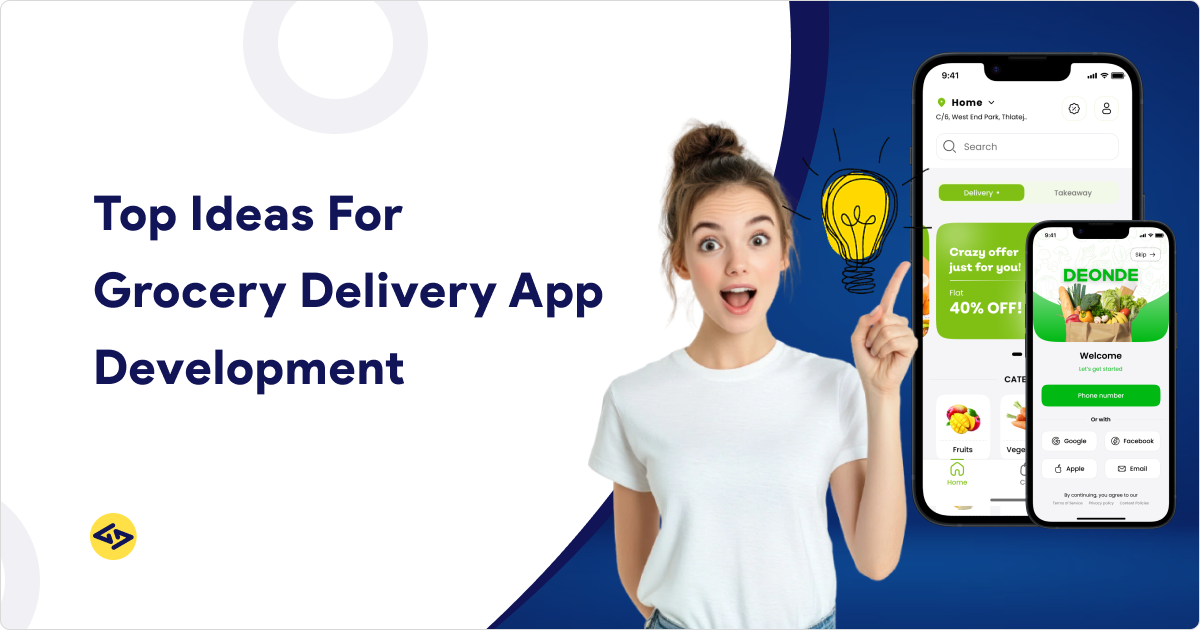
The grocery delivery industry has transformed dramatically over the past few years. What started as a convenience has become a necessity for millions of consumers worldwide. If you’re an entrepreneur or startup founder exploring grocery delivery app ideas, you’ve landed at the right place.
In this comprehensive guide, we’ll explore the best grocery app ideas, essential features, technology requirements, and everything you need to know to build a grocery delivery app that stands out in today’s competitive market.
Introduction: The Rise of Online Grocery Apps
Growth of the Digital Grocery Market
The global online grocery market is projected to exceed $1.1 trillion by 2027, growing at a compound annual growth rate of over 25%. This explosive growth isn’t slowing down anytime soon.
Consumer behavior has shifted permanently. People who once hesitated to order groceries online now prefer the convenience of doorstep delivery. This behavioral change presents a massive opportunity for online grocery startup ideas.
Why Grocery Delivery Apps Are Booming in 2026
Several factors fuel this growth:
- Time-starved consumers seeking convenience
- Smartphone penetration reaching new highs
- Improved logistics infrastructure enabling faster deliveries
- Post-pandemic habits that became permanent lifestyle choices
What Entrepreneurs Can Learn from BigBasket, Blinkit & Instacart
These market leaders have shown us valuable lessons:
- Speed matters: Blinkit’s 10-minute delivery model revolutionized expectations
- Selection wins: BigBasket’s vast inventory attracts diverse customers
- Technology drives efficiency: Instacart’s AI-powered recommendations increase basket sizes
Understanding these success factors helps shape your grocery app business ideas for maximum impact. For deeper insights into building apps like these giants, explore our detailed guide on building a grocery delivery app like Instacart.
Why Invest in Grocery Delivery App Development?
Market Demand & Customer Behavior
Today’s customers expect:
- Instant gratification: Same-day or even same-hour delivery
- Personalization: Recommendations based on purchase history
- Seamless experience: Easy ordering, tracking, and payment
These expectations create room for innovative grocery app ideas that address unmet needs.
Benefits for Startups and Retailers
Investing in grocery delivery app development ideas offers multiple advantages:
- Lower overhead compared to physical retail expansion
- Broader reach without geographical limitations
- Data-driven insights for better inventory and marketing decisions
- Recurring revenue through subscriptions and repeat purchases
Key Opportunities in Emerging Markets
Regions like India, Southeast Asia, and MENA present untapped potential. Lower smartphone costs, increasing internet penetration, and growing middle-class populations make these markets ideal for grocery tech startup ideas.
For startups looking for ready-to-launch solutions, SaaS-based grocery delivery solutions offer a faster path to market.
Top 15 Innovative Ideas for Grocery Delivery Apps
This section covers the most promising top grocery delivery app concepts that can differentiate your business in 2026 and beyond.
1. AI-Powered Smart Grocery App
Smart grocery app ideas leverage artificial intelligence to transform shopping experiences:
- Personalized recommendations based on dietary preferences and past purchases
- Predictive reordering that anticipates when you’ll run out of essentials
- Voice-based shopping for hands-free convenience
AI grocery app ideas represent the future of grocery shopping, making the experience intuitive and effortless.
2. Hyperlocal Grocery Delivery App
Hyperlocal grocery app ideas focus on speed and community connection:
- Partner with nearby neighborhood stores
- Enable 10–30 minute delivery windows
- Reduce logistics costs through optimized routing
This model works exceptionally well in densely populated urban areas. Learn more about implementing this approach in our hyperlocal grocery delivery app development guide.
3. Subscription-Based Grocery App
Subscription grocery app ideas generate predictable recurring revenue:
- Daily essentials packages delivered weekly
- Customizable meal kits for busy families
- Premium memberships with exclusive discounts
This model improves customer retention and lifetime value significantly.
4. Multi-Vendor Marketplace App
Create a platform connecting multiple sellers:
- Aggregate local grocers, specialty stores, and farmers
- Implement a commission-based revenue model
- Offer customers variety without managing inventory
This grocery delivery business idea minimizes capital requirements while maximizing selection.
5. Organic & Healthy Grocery App
Organic grocery delivery app ideas and healthy grocery app ideas target health-conscious consumers:
- Curated selections for vegan, keto, gluten-free, and organic lifestyles
- Nutritional information and ingredient transparency
- Partnerships with local organic farms
This niche segment commands premium pricing and loyal customers.
6. B2B Grocery Delivery App
B2B grocery delivery app ideas serve business customers:
- Bulk ordering for restaurants, hotels, and corporate offices
- Scheduled recurring deliveries
- Invoice-based payment systems
- Dedicated account management
The B2B segment offers larger order values and predictable demand patterns.
7. AR-Based Grocery App
Augmented reality creates immersive shopping experiences:
- Visual product scanning for instant information
- Virtual aisle browsing from home
- Interactive recipe visualization
This unique grocery delivery app idea appeals to tech-savvy consumers seeking innovation.
8. Voice Commerce Grocery App
Integration with voice assistants expands accessibility:
- Alexa and Google Assistant compatibility
- Conversational ordering experience
- Hands-free list building while cooking
Voice commerce represents a growing channel for grocery purchases.
9. Zero-Waste Grocery App
Sustainability-focused apps attract environmentally conscious consumers:
- Returnable container programs
- Package-free product options
- Carbon footprint tracking for deliveries
This innovative grocery app idea addresses growing environmental concerns.
10. Smart Pantry App
IoT grocery app ideas connect physical and digital worlds:
- Automatic stock tracking through smart sensors
- Expiry date alerts preventing food waste
- One-tap reordering when supplies run low
These apps integrate with smart home ecosystems for seamless experiences.
11. Community Group Buying App
Leverage collective purchasing power:
- Neighbors pooling orders for bulk discounts
- Shared delivery reducing costs
- Community-building through shared shopping experiences
12. Ethnic & Specialty Foods App
Target diaspora communities with hard-to-find ingredients:
- Authentic international products
- Cultural food expertise and recipes
- Festival and celebration packages
13. Senior-Friendly Grocery App
Design specifically for elderly users:
- Simplified interface with larger text
- Voice ordering capabilities
- Medication and dietary restriction integration
14. Last-Minute Party Supply App
Combine groceries with event needs:
- Party packages with decorations and food
- Two-hour delivery guarantees
- Event planning assistance
15. Farm-to-Table Direct App
Connect consumers directly with farmers:
- Seasonal produce boxes
- Farm visit scheduling
- Transparent sourcing stories
These grocery app ideas for startups offer numerous paths to differentiation. Explore more possibilities in our comprehensive online grocery app development overview.
Must-Have Features for Grocery Delivery Apps
Successful grocery delivery app features ideas span three core panels:
User Panel
- Registration & profiles: Social login, saved addresses, payment methods
- Product search & filters: Category browsing, dietary filters, brand sorting
- Cart & checkout: Easy editing, promo codes, multiple payment options
- Order tracking: Real-time GPS tracking, delivery notifications
- Reviews & ratings: Product and delivery feedback systems
Delivery Partner Panel
- Order management: Accept/reject assignments, delivery queue
- Navigation: Integrated maps with route optimization
- Earnings tracking: Daily/weekly summaries, incentive visibility
Admin Panel
- Vendor management: Onboarding, commission settings, performance metrics
- Analytics dashboard: Sales trends, popular products, customer insights
- Payment management: Settlements, refunds, transaction histories
These grocery app functionality ideas form the foundation of any successful platform. For additional inspiration, review our analysis of top grocery delivery apps.
Technology Stack for Grocery App Development
Choosing the right grocery app tech stack ideas impacts performance, scalability, and development speed:
| Layer | Recommended Technologies |
| Frontend | React Native, Flutter |
| Backend | Node.js, Laravel, Python |
| Database | MongoDB, PostgreSQL, Firebase |
| APIs | Google Maps, Stripe, Razorpay |
| Cloud | AWS, Google Cloud, Azure |
| Real-time | Socket.io, Firebase Realtime |
For detailed technology recommendations, read our guide on the best tech stack for grocery app development. If you’re considering cross-platform development, our Flutter for grocery delivery app development article provides valuable insights.
Grocery App Business & Revenue Models
Understanding grocery app revenue ideas helps build sustainable businesses:
Commission Model
Charge vendors a percentage (typically 10-25%) per transaction. This is the most common grocery app monetization strategy.
Subscription Model
Offer premium memberships with benefits like free delivery, exclusive discounts, and early access to deals.
Delivery Fees
Charge customers based on distance, order value, or delivery speed preferences.
In-App Advertising
Allow brands to promote products through featured listings and sponsored placements.
Private Labeling
Develop store-brand products with higher margins.
Understanding how to make money with grocery app platforms helps structure your grocery delivery app business model for profitability.
Cost to Develop a Grocery Delivery App
The cost to build grocery app varies significantly based on several factors:
MVP vs Full-Featured App
| App Type | Estimated Cost |
| Basic MVP | $25,000 – $50,000 |
| Standard App | $50,000 – $100,000 |
| Advanced Platform | $100,000 – $250,000+ |
Cost by Region
| Development Region | Hourly Rate |
| North America | $100 – $200 |
| Western Europe | $80 – $150 |
| Eastern Europe | $40 – $80 |
| India | $20 – $50 |
Factors Affecting Development Cost
- Number of features and complexity
- Design customization level
- Third-party integrations
- Platform choices (iOS, Android, or both)
- Ongoing maintenance requirements
For precise estimates, consult our detailed breakdown of the cost to develop a grocery delivery app.
Challenges in Grocery App Development
Building successful apps requires addressing key challenges:
Logistics & Last-Mile Delivery
Managing perishable goods, maintaining cold chain, and ensuring timely deliveries require robust operational frameworks.
Inventory Management
Real-time stock synchronization across multiple vendors prevents order cancellations and customer frustration.
High Competition
Standing out requires unique value propositions, superior user experience, or underserved niche targeting.
Customer Retention
Acquiring customers costs significantly more than retaining them. Loyalty programs, personalization, and consistent service quality drive retention.
Grocery app automation ideas help address many of these challenges through intelligent systems and workflows.
Future Trends in Grocery Delivery Apps (2026+)
Stay ahead with these emerging grocery app growth ideas:
AI-Driven Demand Forecasting
Machine learning predicts inventory needs, reducing waste and stockouts.
Drone Delivery
Aerial delivery reduces last-mile costs and delivery times in suitable areas.
Dark Stores
Dedicated fulfillment centers optimized for picking and packing rather than retail browsing.
Quick Commerce
Ultra-fast delivery (under 15 minutes) continues gaining market share.
Sustainable Packaging
Eco-friendly packaging becomes a competitive differentiator.
How to Choose the Right Grocery App Development Company
Selecting the right grocery app development company determines project success:
Experience in On-Demand Apps
Look for proven expertise in delivery logistics, real-time tracking, and payment integration. Companies specializing in on-demand app development understand unique challenges.
Portfolio & Case Studies
Review previous grocery and food delivery app projects for quality assessment.
White-Label vs Custom Solutions
Decide between faster-to-market white-label platforms or fully custom grocery delivery app solutions based on your differentiation needs.
Post-Launch Support
Ensure ongoing maintenance, updates, and scaling support availability.
When you’re ready to hire grocery app developers, prioritize partners who understand both technology and grocery industry nuances.
Step-by-Step Process to Build a Grocery Delivery App
Follow this systematic approach:
Step 1: Market Research
Analyze competitors, identify gaps, and understand target customer needs.
Step 2: Define Business Model
Choose revenue streams and operational approach based on market findings.
Step 3: Create MVP
Develop grocery app MVP ideas focusing on core functionality that validates your concept. Prioritize essential features over comprehensive solutions.
Step 4: UI/UX Design
Invest in grocery app UX ideas that simplify navigation and encourage conversions. User-friendly design significantly impacts adoption rates.
Step 5: Development
Build frontend, backend, and integrations following your defined tech stack.
Step 6: Testing
Conduct thorough quality assurance, security testing, and user acceptance testing.
Step 7: Launch & Marketing
Deploy strategically with promotional campaigns, influencer partnerships, and app store optimization.
For comprehensive grocery delivery app development support, partner with experienced development teams.
Conclusion: Your Grocery App Journey Starts Now
The grocery delivery market offers tremendous opportunities for entrepreneurs willing to innovate. From AI grocery app ideas to subscription grocery app ideas, the possibilities for differentiation are endless.
Success requires combining the right concept with solid execution—the perfect blend of innovative features, user-centric design, reliable technology, and sustainable business models.
Whether you’re exploring unique grocery delivery app ideas or refining existing concepts, the time to act is now. The market rewards first movers who deliver genuine value to customers.
Ready to Build Your Grocery Delivery App?
Looking to build your own grocery delivery app? Partner with a trusted grocery app development company today.
At iCoderz Solutions, we’ve helped numerous startups and enterprises launch successful on-demand delivery platforms. Our team brings hands-on experience in grocery app development, from MVP creation to enterprise-scale solutions.
Contact us today to discuss your grocery app vision and get a detailed project estimate.