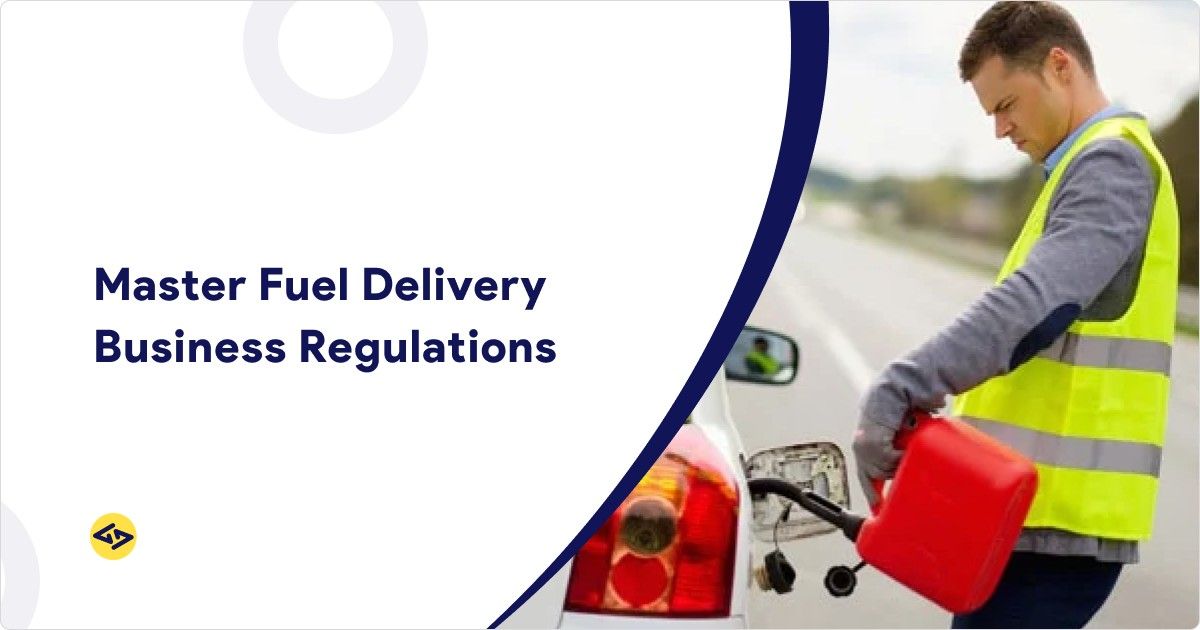
On-demand fuel delivery is one of the fastest-growing niches in the mobility and logistics space, and more entrepreneurs are asking how to start a fuel delivery business every month. But fuel isn’t like food or groceries — it’s a hazardous material, and that single fact changes everything about how you launch and run this business.
Understanding fuel delivery business regulations isn’t optional paperwork you handle after launch. It’s the foundation your entire operation is built on. Skip it, and you risk fines, shutdowns, lawsuits, and — in serious cases — criminal liability.
This guide walks you through fuel delivery business compliance, the licenses and permits you’ll need, federal and state rules, insurance requirements, and how the right technology can make staying compliant far easier — the kind of platform a team like iCoderz Solutions specializes in building.
What Is a Fuel Delivery Business?
A fuel delivery business brings gasoline, diesel, or other fuels directly to customers — at home, at work, or on a job site — instead of requiring them to visit a gas station. It’s part of the broader on-demand economy, and it typically runs on a fuel delivery business model that pairs a mobile app with a fleet of specially equipped tanker trucks. If you’re new to the concept, our guide on what is a fuel delivery app covers the basics.
Common types of fuel delivery services include:
- Consumer fuel delivery — topping off personal vehicles at home or work
- Fleet fueling — servicing commercial vehicle fleets on-site
- Construction site fueling — supplying diesel to heavy equipment
- Agricultural fuel delivery — fueling farm machinery in the field
- Emergency fuel delivery — roadside assistance for stranded drivers
Operationally, a customer requests fuel through an app, a driver is dispatched with a compliant tanker, and fuel is delivered directly into the vehicle or storage tank — all while following strict safety and fuel delivery safety regulations.
Why Fuel Delivery Businesses Are Highly Regulated
Fuel delivery sits at the intersection of several regulatory categories, which is why oversight is so strict:
- Hazardous material classification — fuel is flammable and volatile, requiring special handling
- Public safety — fueling near people, buildings, and traffic carries real risk
- Environmental protection — spills and leaks can contaminate soil and water
- Transportation compliance — moving fuel on public roads triggers DOT oversight
- Fire prevention — local fire codes govern storage, handling, and dispensing
Because of these overlapping concerns, a fuel delivery startup answers to federal, state, and local authorities simultaneously — not just one licensing body.
Essential Licenses and Permits Required to Start a Fuel Delivery Business
Before you can legally operate, expect to work through several layers of fuel delivery business license requirements. Many operators pair this process with Fuel delivery app development early on, so licensing details and documents stay organized digitally from day one.
Business Registration
Register your business entity (LLC, corporation, etc.) with your state and obtain a federal EIN.
Fuel Retail or Distribution License
Most states require a fuel distribution license or petroleum retailer license before you can sell or deliver fuel commercially.
Hazardous Materials Transportation Permit
Since fuel is a regulated hazmat, you’ll need a hazardous materials transportation permit, often tied to DOT hazmat registration.
Commercial Vehicle Registration
Tanker trucks require commercial registration, and drivers typically need a CDL with a hazmat endorsement.
Fire Department Approval
Local fire marshals frequently must inspect and approve fueling equipment and procedures.
Environmental Permits
Depending on your state, you may need permits covering storage, spill prevention, and emissions.
Local Municipal Licenses
Cities and counties often require their own business or vendor permits on top of state requirements.
Sales Tax Registration
Fuel sales usually carry specific excise and sales tax obligations that require separate registration.
Petroleum Storage License (if applicable)
If you maintain storage tanks — above or below ground — a separate storage license is typically required.
Federal, State, and Local Regulations You Must Follow
Department of Transportation (DOT) Regulations
DOT fuel transportation regulations govern vehicle standards, driver qualifications, and hazmat handling for any company transporting fuel on public roads.
OSHA Workplace Safety Standards
OSHA fuel delivery requirements cover employee safety, hazard communication, and protective equipment during fueling operations.
Environmental Protection Agency (EPA) Rules
EPA fuel storage regulations address spill prevention, underground storage tanks, and air quality standards.
Fire Safety Codes
Local and state fire codes regulate how fuel is stored, transported, and dispensed near people and property.
Local Government Requirements
Zoning laws, parking restrictions, and local business ordinances can all affect where and how you operate.
Tip: Regulations vary by country, state, and municipality. Always verify local compliance before launching.
Fuel Transportation Rules Every Entrepreneur Should Know
Fuel transportation license requirements extend well beyond simply owning a truck. Entrepreneurs need to understand:
- Approved fuel transport vehicle specifications
- Fuel tank design and capacity requirements
- Driver qualification standards, including hazmat endorsements
- Routine vehicle inspection requirements
- Proper fuel labeling and placarding under ADR fuel transport regulations (for international operations)
- Spill prevention measures built into every delivery
- Emergency response procedures for leaks or accidents
Most compliant fleets now rely on gps tracking in fuel delivery apps to prove routes were followed and deliveries were completed as reported.
Safety Standards for Fuel Delivery Operations
Safety compliance protects your team, your customers, and your business. Core requirements typically include:
- Employee safety training before any driver makes a delivery
- Personal protective equipment (PPE) for all fueling staff
- Fire extinguishers mounted on every vehicle
- Emergency shutdown systems on delivery equipment
- Spill kits carried on board at all times
- Documented, repeatable safe fueling procedures
- Hazard communication so every employee understands the risks they’re managing
Our detailed guide on fuel delivery app safety and compliance breaks down how these standards translate into app-level controls.
Environmental Compliance Requirements
Fuel delivery environmental regulations are among the strictest a startup will face, covering:
- Fuel spill prevention protocols
- Proper disposal of waste fuel and contaminated materials
- Underground storage tank compliance where applicable
- Air pollution standards for emissions
- Water contamination prevention near storm drains and waterways
- Recordkeeping requirements that document every delivery and incident
Insurance Coverage Required for a Fuel Delivery Business
Fuel delivery insurance requirements typically include several distinct policies working together:
- General liability insurance
- Commercial vehicle insurance
- Environmental liability insurance
- Workers’ compensation
- Cargo insurance
- Professional liability insurance
Carrying the right combination isn’t just a legal box to check, it’s core to your fuel delivery risk management strategy.
Compliance Checklist Before Launching Your Fuel Delivery Business
Use this fuel delivery compliance checklist as your pre-launch punch list:
- Register your company
- Obtain required licenses
- Secure fuel transportation permits
- Purchase compliant fuel delivery vehicles
- Train drivers
- Purchase insurance
- Develop emergency response plans
- Implement safety procedures
- Install GPS tracking
- Set up digital recordkeeping
Once your licensing groundwork is in place, most founders move on to the technical side, our guide on how to develop a fuel delivery app is a good next step.
How Technology Helps Meet Fuel Delivery Regulations
Modern fuel delivery software does far more than take orders — it actively supports compliance:
- Route optimization that reduces risk exposure
- Driver verification before every shift
- Digital inspection reports replacing paper checklists
- Electronic proof of delivery for accurate recordkeeping
- GPS fleet tracking for real-time visibility
- Fuel inventory management to prevent shortages or overfilling
- Automated compliance reporting for regulators
- Incident reporting tools for fast response
- Customer verification to prevent fraud
- Real-time monitoring across the entire fleet
If you’re evaluating what to build on, our breakdown of the fuel delivery app tech stack is a good starting point.
Common Compliance Mistakes Fuel Delivery Startups Make
Even well-funded startups stumble on compliance. Watch for:
- Operating before permits are fully approved
- Ignoring hazardous material regulations to save time
- Cutting corners on driver training
- Poor or missing maintenance records
- Skipped or overdue vehicle inspections
- Gaps in insurance coverage
- Improper fuel storage on-site or in vehicles
- Failing to maintain compliance documentation consistently
A surprising number of these mistakes trace back to a weak platform, reviewing the features of fuel delivery app options available can help you avoid building on the wrong foundation.
Penalties for Non-Compliance
The cost of skipping compliance is steep:
- Financial fines that scale with severity
- License suspension or revocation
- Forced business shutdown
- Civil lawsuits from affected parties
- Environmental penalties for spills or contamination
- Criminal liability in severe negligence cases
- Loss of customer trust that’s hard to rebuild
Best Practices for Staying Compliant
- Conduct regular compliance audits
- Keep employee certifications current
- Monitor regulatory changes at every level of government
- Use compliance management software
- Schedule routine vehicle inspections
- Maintain accurate, accessible records
- Develop and follow standard operating procedures (SOPs)
Increasingly, this is where ai in fuel delivery app development is making a real difference, flagging anomalies and compliance gaps before they become violations.
Future Regulatory Trends in Fuel Delivery
Regulations are evolving alongside the industry itself. Expect to see:
- Digital compliance reporting becoming standard
- Telematics and IoT monitoring built into more fleets
- AI-powered fleet compliance tools
- Stricter environmental standards
- New rules around alternative fuel delivery
- Carbon emission reporting requirements
- Enhanced driver safety monitoring
Our comparison of fuel delivery vs ev charging explores how these trends are already reshaping the space.
Why Build a Compliance-Ready Fuel Delivery App?
A well-built fuel delivery app bakes compliance directly into daily operations through:
- Digital document management
- Driver authentication
- Route optimization
- Real-time GPS tracking
- Automated compliance reports
- Electronic signatures
- Fleet monitoring
- Customer notifications
- Secure payment integration
Studying what already works well is a smart starting point, our roundup of the Best fuel delivery app options highlights the compliance features leading platforms have already figured out.
Why Choose iCoderz Solutions for Fuel Delivery App Development?
At iCoderz Solutions, we build platforms that treat compliance as a feature, not an afterthought:
- Custom fuel delivery app development tailored to your regulatory environment
- Fleet and dispatch management solutions
- GPS and route optimization
- Compliance-focused app features from day one
- Scalable architecture that grows with your business
- Secure payment integrations
- Ongoing maintenance and support
Curious what it actually costs? Check our breakdown of fuel delivery app development cost before you budget your build.
Launch a secure, scalable, and compliance-ready fuel delivery platform with iCoderz Solutions.
Final Thoughts on Fuel Delivery Business Regulations
Fuel delivery is a promising business model, but it’s not a space where you can move fast and figure out compliance later. From fuel delivery permits by state to DOT, OSHA, and EPA requirements, entrepreneurs need to treat regulation as a core part of their fuel delivery startup requirements, not an afterthought.
Research your local, state, and national requirements thoroughly before launching, and build your operations around compliance from day one. The right technology can simplify much of this burden — much like how platforms similar to an app like ezfill have automated documentation, improved safety, and kept fleets audit-ready at scale.
Ready to build a fuel delivery platform designed for compliance from the ground up? Partner with iCoderz Solutions to launch a secure, scalable, and regulation-ready fuel delivery app.
Build Your Fuel Delivery App
Develop a feature-rich solution designed for safety and compliance.

Frequently Asked Questions (FAQs)
What licenses are required to start a fuel delivery business?
You’ll typically need business registration, a fuel retail or distribution license, a hazardous materials transportation permit, commercial vehicle registration, and local municipal approvals.
Are fuel delivery businesses regulated by the DOT?
Yes. Any company transporting fuel on public roads must follow DOT fuel transportation regulations covering vehicles, drivers, and hazmat handling.
Do fuel delivery companies need environmental permits?
In most cases, yes — especially if you store fuel on-site, since EPA and state environmental agencies regulate spill prevention and storage tanks.
What insurance is required for fuel delivery businesses?
Common policies include general liability, commercial vehicle, environmental liability, workers’ compensation, and cargo insurance.
How much does it cost to obtain fuel delivery licenses?
Costs vary widely by state and business size, ranging from a few hundred to several thousand dollars once you factor in permits, inspections, and registration fees.
Can I start a fuel delivery business in any state or country?
Most regions allow it, but requirements differ significantly — some states have far stricter hazmat and environmental rules than others.
What are the biggest compliance risks in fuel delivery?
Operating without proper permits, inadequate driver training, and poor recordkeeping are among the most common — and costly — risks. Studying an established operator’s approach, like the booster fuel delivery business model, can show how mature companies structure compliance into daily operations.
How can software help fuel delivery businesses stay compliant?
Fuel delivery software automates inspections, tracks driver certifications, monitors fleet location, and generates compliance reports automatically.
How often should fuel delivery vehicles be inspected?
Most jurisdictions require regular inspections, often monthly or quarterly, in addition to pre-trip checks before every delivery.
What features should a fuel delivery app include for compliance?
Look for driver authentication, digital inspection logs, GPS tracking, electronic proof of delivery, and automated compliance reporting.