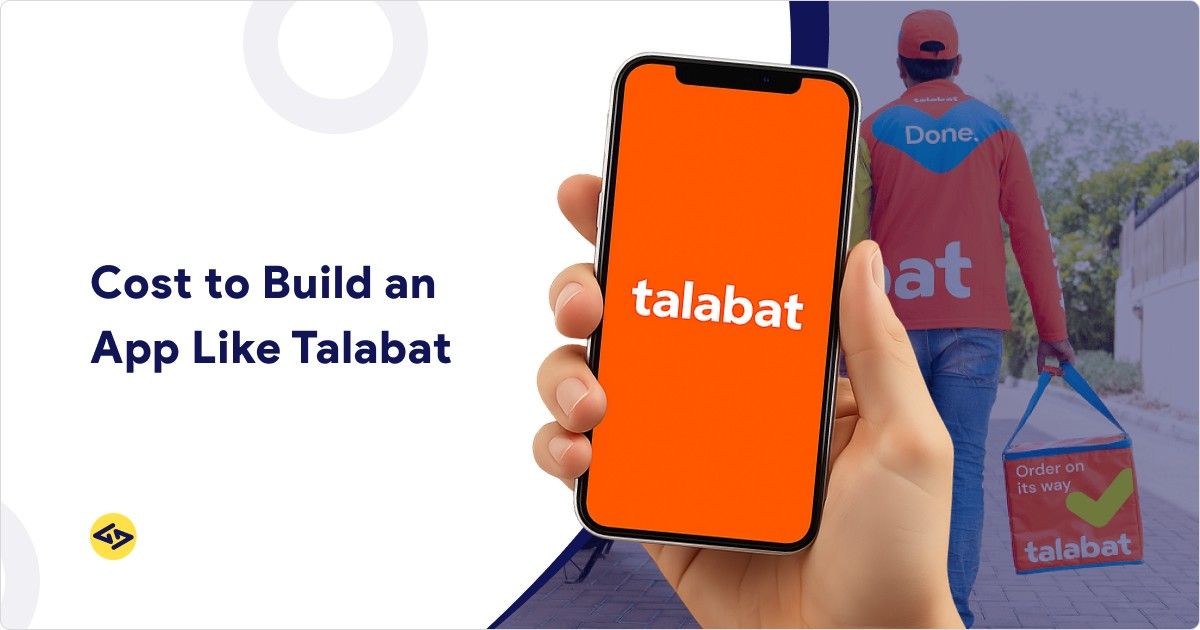
Launching a food delivery app in the Middle East in 2026 is still a strong opportunity.
Talabat remains the dominant name, but there is still room for new players—especially those who focus on specific cities, cuisines, or premium experiences.In 2026, considering current development rates and typical feature sets: The cost to build an app like Talabat realistically ranges from about $12,000 to $160,000+.
The lower end is possible when you use a white‑label / pre‑built solution, while fully custom, multi‑country platforms sit at the higher end.
At iCoderz Solutions, we build both cost‑effective white‑label Talabat‑like apps and fully custom platforms for Gulf-region entrepreneurs.
The table below gives you a clear, 2026‑ready breakdown.
Cost to Build an App like Talabat(With a Cost-Effective Option)
This single table summarizes the main paths you can take in 2026, what you get, and how much to budget.
| App Type & Goal | Ideal For | What You Get (Core) | Estimated Cost (USD, 2026) | Typical Timeline |
|---|---|---|---|---|
| White-Label Starter (Most Cost-Effective) – Launch quickly with Talabat-like features | Budget-conscious founders, small F&B chains | Pre-built customer app (Android & iOS via Flutter), branded UI, standard ordering & tracking, basic restaurant & driver modules, essential admin panel, 1–2 payment methods, limited customization |
$12,000 – $20,000 | 4–8 weeks |
| Basic Custom MVP – Validate in 1 city | Startups wanting more control than pure white-label | One custom-branded customer app (Android or iOS), core ordering flow, simple restaurant & driver apps, basic admin panel, 1–2 payment methods |
$18,000 – $30,000 | 10–14 weeks |
| Mid-Level Custom Product – Serious city/country launch | Funded startups, SMEs | Custom customer apps for Android & iOS (often via Flutter), full restaurant & driver apps, Arabic + English, multiple payments (cards, Apple Pay, COD), analytics dashboard, more tailored UX |
$35,000 – $55,000 | 16–22 weeks |
| Advanced Platform – Multi-city / multi-country | Enterprises, ambitious scale-ups | Everything in mid-level plus multi-country & multi-currency support, advanced analytics, loyalty & subscriptions, promo engine, AI recommendations, scalable cloud infra, complex third‑party integrations |
$80,000 – $160,000+ | 24–36 weeks |
These 2026 ranges reflect typical development rates for experienced teams, the number of modules
(customer, restaurant, driver, admin), and whether we use white‑label accelerators or go fully custom.
Most serious Gulf-region launches still sit in the mid-level custom range, but many founders now start
with the white‑label starter to keep initial spend low.
Why the Middle East Still Favors Food Delivery Startups in 2026
The fundamentals that helped Talabat grow are still in your favor:
- UAE: ~96% smartphone penetration, frequent online ordering, strong iOS presence
- Saudi Arabia: Largest GCC population, Vision 2030 continues to push digital services, Android-heavy
- Kuwait & Qatar: High disposable income, strong demand for convenience
- Bahrain, Oman, Jordan: Growing adoption with fewer big competitors
Overall regional patterns:
- Market value around or above $25B in the mid‑2020s
- 15–20% annual growth in online food delivery
- Young, mobile‑first population (median age under 30)
- Large share of users order food online weekly
For a new app, the best opportunities in 2026 tend to be niches (healthy food only, late‑night, corporate, hyperlocal delivery) and geographic focus (owning a city or district rather than the entire country on day one).
What Makes Talabat Profitable (And How You Can Mirror It)
Before committing to any budget, get clear on the revenue model:
- Restaurant Commissions (15–30% per order)
Your main revenue stream, adjustable by category, volume, or promotion. - Delivery Fees
Charged per order; you can fully charge, partially cover, or waive them for marketing. - Advertising & Sponsored Listings
Once you have traffic, restaurants pay for better visibility or banner placements. - Memberships / Subscriptions (e.g., Talabat Pro)
Monthly/annual plans that offer free delivery or extra discounts to increase order frequency.
For a deeper breakdown of this, it’s worth reading our analysis of how Talabat’s business model works, while you shape your own monetization strategy.
The 4 Core Components of a Talabat-Like App
Whether you go for the white‑label starter or a fully custom build, you will almost always need
these four components.
1. Customer App (Food Ordering)
Must-haves:
- Fast signup with phone + OTP and/or social login
- Restaurant & cuisine search with filters (rating, distance, price, cuisine)
- Menu browsing with add-ons and special instructions
- Real-time order tracking via GPS
- Multiple payments (cards, Apple Pay, cash on delivery)
- Bilingual UI (Arabic + English)
- Push notifications for order status and promotions
- Ratings & reviews for restaurants and drivers
When we build food delivery apps, this is where most UX optimization happens, because it directly affects conversion and repeat orders.
2. Restaurant Panel
For partner restaurants:
- Live order management (accept, prepare, ready, completed)
- Menu and price management
- Opening hours and availability settings
- Revenue and payout reports
- Tools to create promos or discounts
3. Delivery Driver App
For riders or third‑party drivers:
- New order alerts and acceptance
- Integrated navigation (Google Maps or similar)
- Order status updates (picked up, en route, delivered)
- Earnings overview (daily/weekly)
- In‑app chat or call with customer/restaurant
4. Admin Dashboard
Your control center:
- User, restaurant, and driver management
- Commission, delivery fee, and promo configuration
- Order monitoring and issue resolution
- Analytics and performance reports
The white‑label starter uses pre‑built versions of these modules with your branding;
the custom tiers allow deeper changes to flows, logic, and integrations.
How We Arrive at These 2026 Cost Ranges
In 2026, typical hourly rates for experienced app teams are roughly:
- $25–$50/hour for high‑quality teams in India and similar markets
- $50–$120/hour for agencies in Europe/GCC/US
A Talabat-like platform usually needs:
- ~300–600 hours for a white-label setup and branding
- ~700–1,200 hours for a custom MVP
- ~1,200–2,000+ hours for mid-level and advanced builds
Multiply those hours by the rates above, and the table ranges become realistic—especially when using
cross‑platform frameworks and reusable components to keep hours lower.
If you’re also considering other on-demand verticals (grocery, pharmacy, home services), aligning your build
with our broader on-demand app development approach can save additional cost across projects.
Key Cost Drivers
1. Platform & Tech Stack
- Android only or iOS only
Good for ultra-lean MVPs; lowest upfront cost. - Native Android + Native iOS
Two separate codebases; best performance and full flexibility; highest cost. - Cross-platform (Flutter / React Native)
One codebase, both Android & iOS; typically 20–30% cheaper
than two native apps for the same features; very common choice in 2026 for GCC startups.
2. Design Complexity
- White-label / semi-template design
Used in the $12k–$20k starter range; faster go‑live, lower cost. - Custom UI/UX
Used for basic, mid-level, and advanced custom builds; higher design effort,
but better differentiation and conversion; important in competitive cities like Dubai and Riyadh.
3. Features and Integrations
Common integrations:
- Local + international payment gateways
- Maps & GPS tracking (Google Maps, Mapbox)
- SMS/OTP services
- Analytics (Firebase, Mixpanel, etc.)
Optional extras that push cost upward:
- In-app wallet and stored balance
- Loyalty and membership programs
- Complex offer & referral engines
- AI‑driven recommendations and personalization
If you eventually want to extend into broader commerce (for example, adding groceries or general retail),
aligning with our eCommerce app development strategy can help avoid rework later.
4. Ongoing (Non-Development) Costs
Plan for these in your 2026 budget:
- App Store accounts
Apple: $99/year; Google Play: $25 one‑time. - Hosting & infrastructure
Roughly $100–$1,000/month, depending on scale. - Maintenance & updates
Typically 15–20% of initial dev cost per year. - Marketing & acquisition
Even lean launches usually require $5,000+ for ads, influencers, and promotions.
A Practical 3-Phase Roadmap (Using the Cost-Effective Option Wisely)
Phase 1: MVP Launch (Weeks 1–14)
- Choose between white-label starter ($12k–$20k) or basic custom MVP ($18k–$30k)
- Launch in one city or limited area
- Include essential ordering, payments, tracking, and simple restaurant/driver tools
Budget: $12,000–$30,000
Phase 2: Optimize & Stabilize (Weeks 15–24)
- Collect real feedback from customers, restaurants, and drivers
- Improve UX, performance, and reliability
- Add only the most‑requested features
Additional budget: $10,000–$20,000
Phase 3: Scale (Week 25+)
- Expand into new neighborhoods, cities, or countries
- Introduce loyalty, referrals, and more automation
- Upgrade infrastructure and refine operations
Using a white‑label base in Phase 1 is often the most cost‑effective move in 2026;
you start earning earlier and invest in heavier customization once you see traction.
Why Build Your 2026 Talabat-Like App with iCoderz Solutions?
iCoderz Solutions specializes in food delivery and on-demand apps for the Middle East, so we’re already tuned to:
- Arabic + English UX
- Local payment habits and cash‑on‑delivery expectations
- Operational realities in cities like Dubai, Riyadh, Doha, and Kuwait City
Our Key Strength:
- We have a professional team of mobile app developers
- Have built secure and safe applications for our customers
- We design as per the most up-to-date trend in UI and UX
- Take full care of your privacy and innovative business ideas
- We build high-quality custom apps at reasonable price
- Deliver projects within the decided milestones and timelines
We offer:
- White-label Talabat-like starters for cost‑effective, fast launches
- Custom builds for brands that want deeper control and differentiation
- End‑to‑end support: concept, design, development, launch, and scaling
Get Accurate Cost to Build an App like Talabat
If you’re targeting the UAE, Saudi Arabia, Kuwait, Qatar, or the wider Gulf,
the next step is to align your budget with the right tier:
- White‑label starter (fast & cost-effective)
- Basic custom MVP
- Mid-level custom
- Advanced multi‑country platform
Walk us through your idea, and we’ll send a clear, 2026‑accurate quote with timelines and features. Connect with our team!
Quick FAQ for 2026 Middle East Founders
1. What does it cost to build an app like Talabat in 2026?
From about $12,000 (white-label starter) up to $160,000+
(fully custom, multi‑country). Most serious first launches in the Gulf land in the
$35,000–$55,000 mid-level range.
2. How long will my app take to launch?
- White-label starter: 4–8 weeks
- Basic custom MVP: 10–14 weeks
- Mid-level custom product: 16–22 weeks
- Advanced platform: 24–36 weeks
3. Which platform should I prioritize: iOS or Android?
- UAE & Qatar: iOS is strong, but Android is still important.
- Saudi Arabia & rest of GCC: Android often leads.
For most 2026 projects, Flutter-based cross‑platform apps are the best balance
of reach and cost.
4. How do I realistically compete with Talabat?
By focusing, not copying:
- Target specific cuisines, neighborhoods, or customer segments
- Offer better support and faster delivery within a small radius
- Build tight relationships with a smaller set of restaurants
Our Chowman food delivery app case study shows how a focused, brand-driven app can succeed alongside big aggregators.
5. What will I pay after launch?
Expect ongoing costs for:
- Servers and infrastructure
- App store accounts
- Maintenance & updates (15–20% of dev cost per year)
- Marketing and partnerships