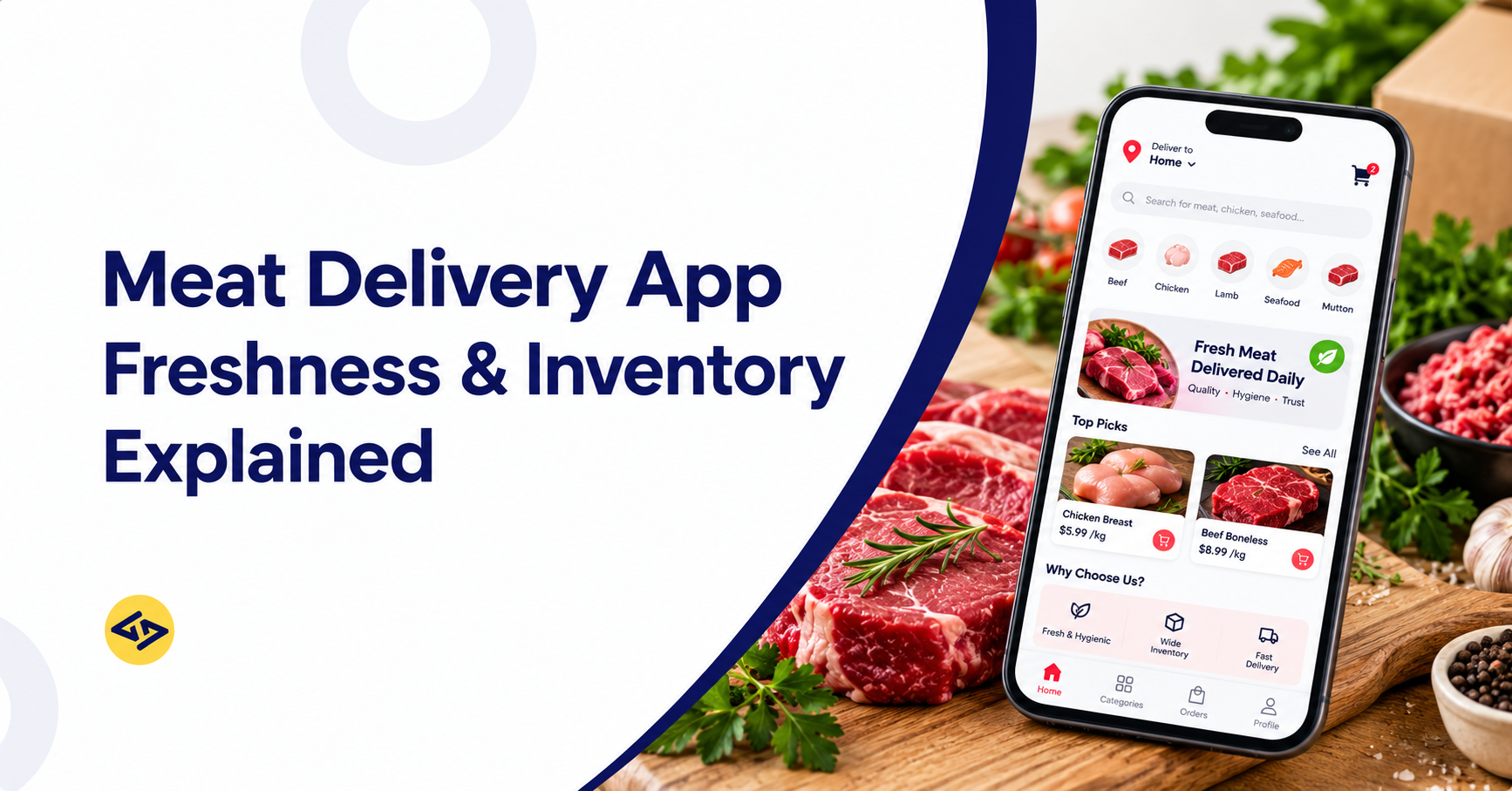
Meat is one of the hardest products to sell online. It spoils fast, stock changes by the hour, and one warm delivery can lose a customer for good. Meat Delivery App Freshness depends on how effectively a business manages storage, inventory, and delivery. So, how do meat delivery apps handle freshness, inventory, and delivery without things falling apart?
They connect three systems. Cold-chain monitoring protects quality, real-time inventory keeps stock accurate, and order and route management gets the product to the door on time. When these three share data, the business can promise only what it can deliver fresh.
This guide explains how each system works, which technologies support it, what features to build, and what it costs. It is written for founders and retailers planning a platform, including teams working with a partner like iCoderz Solutions.
In short: a meat delivery app is a connected platform where customers order fresh or frozen meat, stores manage live stock, and delivery partners fulfil orders under temperature control.
Why Freshness and Inventory Management Matter in Meat Delivery
Freshness and inventory accuracy decide whether a meat delivery business earns repeat orders or refunds. Raw meat has a short shelf life, strict safety rules and little room for error, so every stock count and every delivery minute matters.
Challenges of managing perishable meat products
- Short shelf life. Fresh cuts can go from sellable to waste within days.
- Temperature sensitivity. Bacteria grow fastest between 40°F and 140°F (about 4°C to 60°C), which USDA calls the “Danger Zone.”
- Variable yield. Cutting, trimming and portioning change quantities between purchase and sale.
- Demand swings. Weekends, festivals and weather can double demand for certain cuts.
Customer expectations for quality, hygiene, and timely delivery
Online shoppers cannot see or smell the product, so they judge you on proof: clean packaging, visible freshness or packed-on dates, a reliable delivery slot, and fast support when something is wrong. Platforms inspired by the Licious model raised that bar by making freshness and traceability part of the brand promise.
How inventory errors and delivery delays affect business operations
A wrong stock count leads to overselling, then cancellations and refunds. A delayed delivery means meat spends longer outside the cold chain. Over-ordering creates waste, and under-ordering loses sales. Strong inventory management for meat delivery businesses and disciplined food safety in online meat delivery protect margins and reputation together.
How Do Meat Delivery Apps Keep Meat Fresh?
Meat delivery apps keep meat fresh by supporting an unbroken cold chain, monitoring temperatures, using insulated packaging and enforcing quality checks before dispatch. The app coordinates and records these steps; the physical equipment and staff procedures do the actual cooling.
What is cold chain management? It is the practice of keeping perishable goods within a set temperature range from storage through transport to the customer’s door.
Maintaining the cold chain from storage to delivery
Chilled meat is typically held at 0°C to 4°C and frozen meat at -18°C or below, in line with common Indian and international guidance. In India, FSSAI has advised food businesses to maintain prescribed temperatures for perishables such as meat from sourcing through delivery to the end consumer. Check the rules that apply in your market and licence type.
Temperature monitoring and alerts
Temperature monitoring in meat delivery works best when sensors log readings in cold rooms, freezers and, where practical, delivery vehicles or boxes. The software then triggers alerts when readings drift outside range, so staff can act before stock is compromised.
Food-grade packaging and insulated delivery containers
Good meat packaging for online delivery uses leak-proof, food-grade packs, insulated boxes or bags, and a cold source such as gel packs or dry ice where appropriate. Packing rules should depend on delivery time and weather, and the app can show the right packing instruction for each order.
Hygiene, handling, and quality checks before dispatch
Before dispatch, staff should check packaging integrity, labels, dates and product condition. A digital checklist inside the vendor panel makes each check mandatory and creates a record if a complaint arrives later.
Coordinating order preparation with delivery schedules
Cutting and packing too early wastes cold time. Apps solve this by triggering preparation only when a delivery partner is close or a slot is confirmed, so meat leaves the cold room as late as possible.
Real-world scenario (illustrative): a city-based meat retailer with several stores often finds that most spoilage complaints come from orders packed during rush hour and then waiting for a rider. Linking pack-time to rider arrival in the order system is a common fix because it shortens the time meat sits out of refrigeration.
How Meat Delivery Apps Manage Inventory in Real Time
Meat delivery apps manage inventory by updating stock after every order, purchase and wastage entry, and by tracking batches and expiry dates. This keeps what customers see in the app aligned with what is actually in the cold room.
Live stock updates across stores and warehouses
When a store receives stock or a customer orders, the central system updates every connected storefront. Customers only see products available near them, which supports accurate real-time inventory tracking for meat delivery apps.
Automatic inventory deductions after confirmed orders
Stock is deducted the moment an order is confirmed, and it is returned if the order is cancelled. For weight-based items, the app reserves an estimated quantity and adjusts after actual weighing.
Batch tracking and expiry date management
Each delivery from a supplier is stored as a batch with a received date, supplier, and use-by or expiry date. Expiry date tracking in meat delivery apps lets staff see which batches need to move first and supports traceability if a quality issue is reported.
Stock rotation using FIFO or FEFO where appropriate
| Method | How it works | Best for |
|---|---|---|
| FIFO (First In, First Out) | Oldest received stock is sold first | Products with similar shelf lives |
| FEFO (First Expired, First Out) | Stock closest to expiry is sold first | Fresh meat with varying use-by dates |
For fresh meat, FEFO is often the safer default because arrival date and expiry date can differ.
Low-stock alerts and replenishment planning
Set minimum levels per product and store. When stock falls below the threshold, the system alerts managers or creates a purchase suggestion based on recent sales.
Preventing overselling and unavailable-item cancellations
Use stock buffers for fast-moving cuts, reserve stock at checkout, and hide or disable items instantly when they run out. These simple controls reduce the cancellations that frustrate customers most.
How Meat Delivery Apps Handle Orders and Last-Mile Delivery
Order and delivery workflows move an order from confirmation to doorstep with minimal delay. Good last-mile delivery for fresh meat is fast, trackable and temperature-aware.
Order confirmation and preparation workflows
After checkout, the store receives the order, accepts it, and moves it through statuses such as accepted, cutting, packing and ready for pickup. Each status update is visible to the customer.
Assigning delivery partners based on availability and location
The system picks the nearest available rider or fleet vehicle using location, current load and delivery slot. Some businesses use in-house riders; others combine them with third-party partners.
Route optimization and delivery time estimates
Meat delivery route optimization groups nearby orders, sequences stops, and updates ETAs using live traffic data. For same-day fresh meat delivery logistics, shorter routes usually mean better freshness, so many operators cap the number of stops per run.
Real-time order tracking and customer notifications
Live map tracking, push notifications and rider contact options reduce “where is my order?” calls. Real-time order tracking for meat delivery apps also lets customers be home when the order arrives, which matters for perishable items.
Managing delays, cancellations, and failed deliveries
Define clear rules in the app: automatic delay alerts, free cancellation before packing, and a set policy when a customer is unreachable. Perishable items usually cannot be re-delivered later, so decide refund or replacement rules in advance.
Maintaining temperature control during transportation
Refrigerated delivery for meat products can use insulated bags with cold packs for short urban routes or refrigerated vans for bulk and longer routes. The app should record dispatch time and, where sensors are used, temperature during the trip.
Key Technologies Behind Fresh Meat Delivery Apps
The technology used in meat delivery apps combines inventory software, sensors, forecasting tools and location services. Choosing the right mix depends on your scale and budget. A capable mobile application development partner can integrate these into one experience for customers, stores and riders.
Inventory management systems and POS integrations
Inventory software handles stock, batches and purchase orders. Integration with POS or ERP tools ensures in-store and online sales update the same stock count. This is the core of any meat inventory management software setup.
IoT sensors for cold-chain temperature monitoring
IoT temperature monitoring for meat delivery uses connected sensors and data loggers that send readings to a dashboard. They help teams spot equipment failures and keep records for audits. Sensors support the process but do not replace correct handling.
AI-based demand forecasting and stock planning
AI in meat inventory management analyses past sales, seasons, promotions and local events to predict demand by product. Better forecasts help reduce both shortages and waste, though they work best with clean sales data collected over time.
GPS tracking and route optimization tools
GPS powers live tracking, rider assignment and ETA calculation. Route tools reduce travel time and fuel costs, which directly supports meat delivery fleet management software goals.
Analytics dashboards for waste, stock, and delivery performance
Dashboards bring together waste percentage, stock accuracy, on-time delivery and cancellation reasons, so managers can fix problems quickly.
Essential Features to Include When Building a Meat Delivery App
A strong platform serves four user groups: customers, stores or vendors, delivery partners and admins. Understanding the features of a meat delivery app for each group helps you plan scope. You can also review our guide to meat delivery app development for a deeper look.
Customer app features
- Easy sign-up, search and category browsing (chicken, mutton, fish, marinated, ready-to-cook)
- Cut and weight selection with clear pricing
- Delivery slot selection and live tracking
- Multiple payment options, offers and reorder
- Ratings, reviews and in-app support
Store or vendor panel features
- Order acceptance and preparation status updates
- Stock updates, batch entry and expiry management
- Pack-time checklists and hygiene logs
- Sales and wastage reports
Delivery partner app features
- Order assignment and navigation
- Pickup and drop confirmation
- Delivery proof and customer contact options
- Earnings and shift tracking
Admin dashboard and inventory controls
- User, store and rider management
- Product catalogue, pricing and offers
- Central inventory rules and alerts
- Service area and delivery slot settings
Reports for stock accuracy, waste, and delivery performance
Reports should show stock variance, wastage by product, on-time delivery rate and refund reasons. These numbers guide purchasing and staffing decisions. Together, these features form the base to build a meat delivery app with inventory tracking that scales.
Best Practices for Managing a Meat Delivery Business
Technology supports food safety but does not replace it. Software can remind, record and alert; people and equipment must still cool, clean and handle the product correctly. For wider operational guidance, see our article on running an online meat delivery business.
Define food safety and temperature-control procedures
Write simple SOPs for receiving, storage, cutting, packing and dispatch. Train staff and review them regularly, and confirm legal requirements with your local food authority.
Set up accurate stock and batch records
Count stock on a fixed schedule, record wastage reasons and compare physical counts with system numbers.
Forecast demand to reduce shortages and waste
Start with basic sales trends by day and product, then add forecasting tools as data grows.
Establish delivery service areas and realistic time slots
Choose service zones that your cold chain can cover safely. A smaller radius with reliable delivery usually beats a wide area with delays.
Monitor operational KPIs and customer feedback
Track these regularly:
- Stock accuracy and wastage percentage
- Order cancellation rate
- On-time delivery rate
- Complaint and refund rate
- Repeat purchase rate
How Much Does It Cost to Build a Meat Delivery App?
The cost to build a meat delivery app depends on scope, platforms, integrations and team location. As a rough guide, a focused MVP often falls in the tens of thousands of US dollars, while a full multi-vendor platform with IoT and analytics can cost several times more. Request a detailed estimate for your exact needs. If you are comparing vendors, see our overview of meat delivery app development companies.
Factors affecting development costs
- Number of apps (customer, vendor, rider, admin)
- Platforms (iOS, Android, web)
- Complexity of inventory and batch logic
- Design and user experience depth
- Team location, testing and post-launch support
MVP versus a full-featured meat delivery platform
An MVP typically includes ordering, basic inventory, delivery assignment, tracking and payments. A full platform adds batch and expiry control, advanced analytics, forecasting, multi-store management and sensor integration.
Third-party integrations, cold-chain monitoring, and scalability
Payment gateways, maps, SMS, POS and sensor integrations add cost. Plan your architecture so you can add IoT monitoring and more cities later without rebuilding.
How to prioritize features for the first launch
- Accurate live inventory and order flow
- Reliable delivery assignment and tracking
- Batch and expiry basics
- Reports for wastage and delivery performance
- Advanced forecasting and sensors once volumes justify them
Conclusion: How Meat Delivery App Freshness Drives Better Operations
Fresh meat delivery works when inventory, order management, delivery tracking and temperature monitoring operate as one system. The app gives visibility and control, while good procedures and equipment protect safety.
Planning to launch a meat delivery platform? Explore iCoderz Solutions’ meat delivery app development services to discuss the features and workflows that fit your business.
Frequently Asked Questions
How do meat delivery apps keep meat fresh during delivery?
They support freshness through cold storage, insulated packaging, quick dispatch and optimized routes. The app schedules packing close to pickup, tracks delivery time and can record temperatures where sensors are used. The physical cooling still depends on proper equipment and handling.
How do meat delivery apps track inventory in real time?
Every purchase, order, cancellation and wastage entry updates a central stock record. Customers see only available items for their location, and managers receive low-stock alerts. This reduces overselling and keeps online and in-store numbers aligned.
How is the cold chain maintained during meat delivery?
Meat is stored at set chilled or frozen temperatures, packed in insulated containers with cold sources and delivered quickly. Sensors and logs can monitor conditions, and staff checks confirm compliance. The app records and alerts, while equipment and procedures keep the temperature.
Can a meat delivery app track expiry dates and batches?
Yes. Each supplier delivery can be saved as a batch with received and expiry dates. The system can then highlight items nearing expiry, support FEFO selling and help trace products if a quality issue arises.
What features are essential for a meat delivery app?
Core features include customer ordering with cut and weight options, live inventory, batch and expiry tracking, delivery assignment, real-time tracking, payments, a vendor panel, a rider app and an admin dashboard with reports on stock, waste and delivery performance.
Can AI help reduce meat inventory waste?
Yes, indirectly. AI forecasting uses sales history, seasonality and events to suggest purchase quantities, which can reduce over-ordering. Results depend on data quality, and teams still need good stock rotation and handling practices.
How much does it cost to develop a meat delivery app?
Cost varies with features, platforms and integrations. A basic MVP costs far less than a multi-vendor platform with IoT monitoring and forecasting. Share your requirements with a development partner to get a scoped estimate rather than relying on a generic figure.
What temperature should meat be kept at during delivery?
Chilled meat is generally kept near 0°C to 4°C (at or below 40°F) and frozen meat at -18°C or lower. Always follow your local food authority’s rules, and avoid leaving perishable meat in the Danger Zone for more than two hours.
How do I start an online meat delivery business?
Secure licences, set up cold storage and reliable suppliers, define safety procedures, choose service areas and build or buy an app with inventory and delivery management. Start with a focused MVP, then expand features as orders grow.