The shift toward digital health tracking has stabilized into a standard consumer expectation. According to a report by Grand View Research, the global fitness app market was valued at USD 1.54 billion in 2023 and is projected to grow at a compound annual growth rate (CAGR) of 17.7% through 2030 (Source).
For wellness brands, offering a mobile application is a practical way to manage clients. However, building an application from the ground up requires significant capital.
This is where a white label fitness app becomes a viable alternative. In this guide, we will examine what this software is, why businesses choose it, how it drives revenue, and examples of specific platforms you can rebrand today.
Understanding the Concept
At its core, white label software is a pre-built solution created by a development company. The provider develops the foundational functionality—such as video hosting, workout tracking, and payment processing. They then remove their branding, allowing you to apply your company logo, color scheme, and proprietary content.
When users download the application, they interact exclusively with your brand. If you are new to this business model, you can learn more about the technical foundations in our detailed guide on what is a white label app.
Custom vs White Label Fitness App: Why Choose Pre-Built?
When planning a mobile strategy, businesses typically weigh custom development against ready-made solutions. When analyzing a custom vs. white-label fitness app, here is why many organizations opt for white label mobile app development:
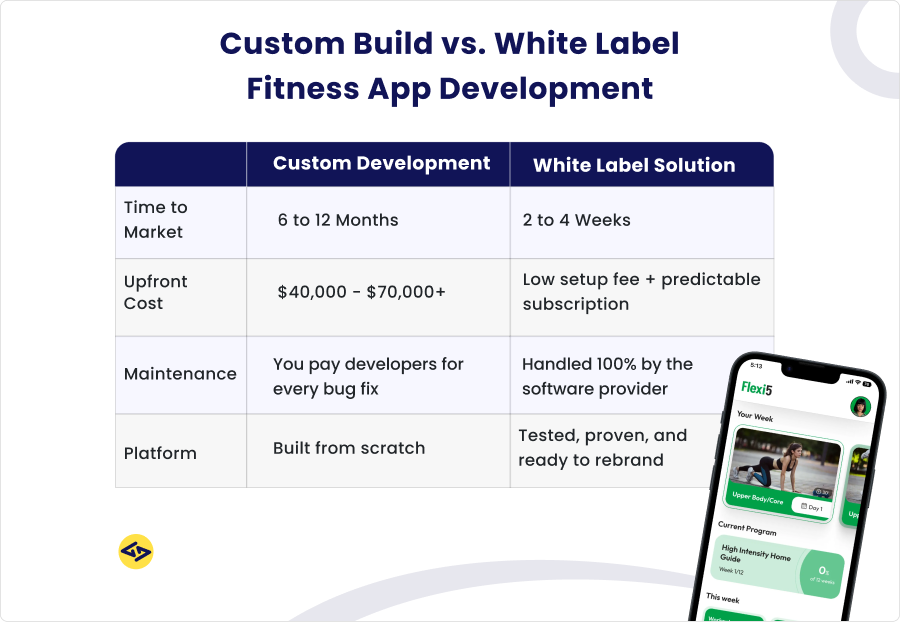
- Predictable White Label Fitness App Cost: Building a custom application requires hiring a team to write original code, which can cost tens of thousands of dollars. Conversely, the white label fitness app cost usually involves a standard setup fee and a predictable monthly subscription, drastically lowering the financial risk.
- Faster Time to Market: According to GoodFirms, developing a custom mobile application typically takes 4.5 to 5.5 months (Source). Because pre-built platforms are already coded and tested, you can customize and launch in a matter of weeks.
- Ongoing Maintenance: Operating system updates and bug fixes are handled entirely by the software provider.
Crucial Business Insights: Monetization, Data, and Integrations
Before investing in software, businesses must consider how the application will function within their broader operational ecosystem.
1. App Monetization Models (Driving ROI)
A branded application serves as a direct revenue channel. The best white label fitness app platforms offer secure, built-in payment gateways (like Stripe, Apple Pay, and Google Pay). This is especially effective for a white label personal training app, where trainers can automate billing for 1-on-1 coaching or tiered subscriptions. This allows businesses to monetize through:
- Tiered Subscriptions: Charging a recurring monthly fee for access to premium VOD libraries.
- One-Time Purchases: Selling specific 8-week or 12-week challenge programs.
- Freemium Models: Offering basic tracking for free, while restricting direct trainer communication behind a paywall.
2. Data Ownership and Privacy
Health and wellness apps collect sensitive user information. When utilizing a third-party builder, it is imperative to verify that your business retains 100% ownership of the client data. Ensure the software complies with modern privacy regulations such as GDPR and CCPA.
3. CRM and Third-Party Integrations
To prevent administrative bottlenecks, your app should integrate with the tools you already use. Look for platforms that sync seamlessly with email marketing software (like Mailchimp) or existing facility management systems.
Essential Features to Look For in 2026
If you are evaluating fitness app development options, the market has evolved. Modern platforms now include these capabilities:
- Wearable Connectivity: Syncing capabilities with Apple Health, Google Fit, and Garmin to track vital metrics are highly requested by users.
- Artificial Intelligence: An AI white label fitness app utilizes machine learning algorithms to help trainers generate customized workout plans and analyze user progress faster.
- Social Engagement: Look for built-in community features such as in-app messaging, group leaderboards, and social feeds to improve user retention.
How a White Label Fitness App Builder Works
The process of using a white label fitness app builder to launch your rebranded application generally follows these four steps:
- Platform Selection: You partner with a development provider and select the subscription tier that fits your business model.
- Branding & Customization: You provide your brand assets—logos, color hex codes, and typography. The developers apply these to the existing interface.
- Content Population: Before launch, you upload your proprietary content, including workout videos, meal plans, and pricing tiers.
- App Store Deployment: The development team handles the complex process of submitting the application to the Apple and Google app stores under your developer account.
To ensure a smooth process, it is critical to work with a reliable provider. For a step-by-step checklist on evaluating vendors, read our article on how to choose a white label partner.
Examples of Fitness Solutions That Can Be White-Labeled
The term “fitness app” covers a broad spectrum of services. Depending on your specific niche, here are examples of solutions that can be easily rebranded:
- White Label App for Personal Trainers: Designed for 1-on-1 coaching. These platforms feature workout assignment calendars, habit tracking, and video form-checking tools.
- White Label Gym App: Built for brick-and-mortar facilities. These solutions feature class booking systems, QR code facility access, and membership renewal processing.
- White Label Yoga App: Focused on wellness and mindfulness. These solutions prioritize Video on Demand (VOD) libraries, audio streaming for meditations, and live-streaming capabilities.
Moving Forward with Your App Strategy
Implementing a white label wellness app is a logical step for professionals looking to standardize their digital offerings. By leveraging pre-built software, you can allocate more resources toward marketing rather than technical troubleshooting.
When selecting a white label agency, look for a team that offers transparent pricing, reliable customer support, and a history of successful deployments.
At iCoderz Solutions, we specialize in delivering a secure, scalable, and fully customizable white label health and wellness solution. Our team manages the technical requirements so you can focus on scaling your business.
If you are ready to explore how a branded application can fit into your business model, reach out to our team to discuss your project