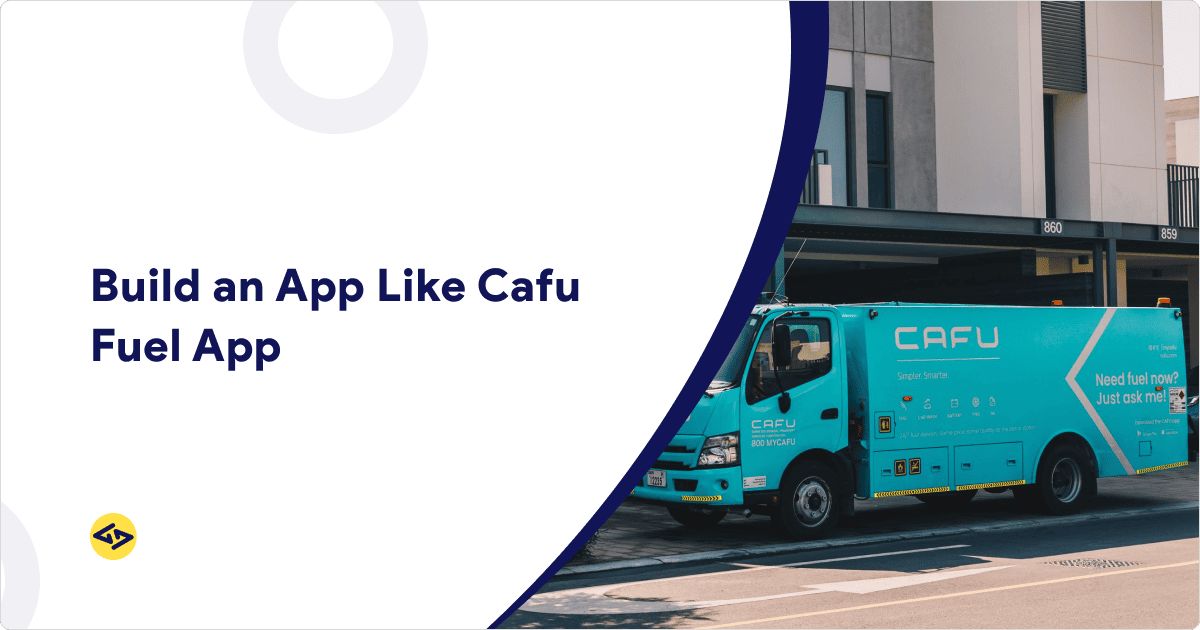
If you’ve watched Cafu grow from a Dubai startup into the Gulf’s defining on-demand fuel platform, you’ve probably asked the same question most founders in this space eventually ask: “How hard can it actually be to build something like this?”
Harder than it looks — but not for the reasons most guides tell you.
The technology is the manageable part. The features, the tech stack, the cost estimate — those are solvable problems. What kills most fuel delivery ventures before their second year isn’t the app. It’s a strategic decision made before a line of code is written: who are you actually building this for?
This guide covers both. We’ll walk you through how to build an app like Cafu — the workflow, the features, the tech, the real cost — and we’ll also address the strategic question that nobody else in this space answers directly: should you target consumers first, or businesses first? In the Gulf specifically, getting that wrong is expensive.
We’ve built on-demand fuel delivery platforms and logistics apps for clients across the UAE, Saudi Arabia, and beyond. This is what we’ve learned.
What Made Cafu Work — and What Most People Miss
Cafu launched in Dubai in 2018 and became a benchmark for the entire Gulf. But its success wasn’t primarily a technology story. It was a market timing and operational infrastructure story.
The UAE gave Cafu a rare combination of conditions: deregulated fuel pricing (which means workable margins), extremely high car ownership, a population already accustomed to premium on-demand services, brutal summer heat that makes standing at a petrol station genuinely unpleasant, and backing from the Al Ghurair family — one of the UAE’s most influential business groups.
Cafu also offered free delivery for nearly five years, from July 2020 through April 2025 — a subsidy most startups simply cannot afford. When they finally reintroduced delivery fees (AED 16–20 per order), it was a signal about the true unit economics of pure consumer-first fuel delivery.
The lesson for founders: Cafu’s technology is replicable. Its market conditions were exceptional. Understand which parts of its model actually transfer to your geography — and which parts required conditions you don’t have.
Explore the top fuel delivery apps operating globally to understand the full landscape before you design your own approach.
How a Cafu-Like Fuel Delivery App Works
Before you build anything, you need to deeply understand the workflow you’re replicating. If you’re new to the space, start with what a fuel delivery app is and how the core mechanics work.
Here’s the end-to-end flow:
- Registration & Vehicle Profile Users create an account and add vehicle details, fuel type, and payment method upfront. This data enables one-tap reorders — a feature that directly drives repeat usage. Don’t underinvest in onboarding design here; it pays back in retention.
- Order Placement The user selects fuel type, quantity, and delivery time (immediate or scheduled), and sees a real-time price calculated by location and fuel type. The UI should get a confirmed order in under 60 seconds — every extra tap loses users.
- Automated Driver Assignment The system assigns the nearest available and qualified driver. Route optimisation runs in the background via your maps API. This dispatch logic is where the operational intelligence of the platform lives.
- Live Tracking & Notifications The user tracks the driver in real time, receives push notifications when the driver is close, and gets a delivery confirmation. This transparency is what converts a first-time user into a repeat customer — it removes anxiety from a novel service.
- Contactless Delivery The driver arrives, refuels the vehicle with the fuel door left unlocked by the user, and records completion. No interaction required — this was a major adoption driver during COVID and remains a selling point.
- Automated Payment & Rating Payment processes automatically. The user rates the experience. That data feeds driver performance monitoring in the admin panel, which is critical for maintaining service standards as you scale.
Simple on the surface. Complex orchestration underneath — which is why your backend architecture decisions matter so much before you start building.
The B2B vs Consumer-First Decision: What Nobody Tells Gulf Founders
This is the section you won’t find in any other guide on this topic. It’s also the decision that most determines whether your fuel delivery business survives year two.
What the Global Market Has Already Proven
The US fuel delivery market ran this experiment over the past decade:
Booster Fuels went B2B-first from day one — fuelling vehicles in corporate parking lots for companies like eBay, Cisco, Amazon, and UPS. It grew Q1 2022 revenues by over 125% year-on-year and raised over $213 million in total funding. Its model: sign one corporate contract, gain access to hundreds of vehicles, generate predictable weekly revenue with zero consumer marketing spend.
Filld followed the same B2B playbook, focusing exclusively on fleet clients with scheduled delivery contracts and integrations into fleet management systems.
Yoshi went consumer-first. It raised $64.9 million, attracted General Motors Ventures and ExxonMobil as backers, and is still operating — but by 2024 had pivoted heavily toward fleet services and vehicle maintenance to fix its unit economics. The consumer model didn’t sustain itself.
Fuelster and other consumer-first US players quietly exited the fuel delivery business altogether.
The pattern: B2B-first built durable businesses. Consumer-first struggled and either pivoted or shut down.
Why the Gulf Changes the Equation
But the Gulf is not the US — and the differences matter significantly.
In the UAE, Cafu proved that consumer-first can work, for reasons specific to that market: deregulated fuel prices that allow a delivery margin, extremely high smartphone penetration and app adoption, a population accustomed to premium convenience services, and Cafu’s exceptional founder capital. Dubai and Abu Dhabi represent a rare environment where consumer-first fuel delivery is genuinely viable.
In Saudi Arabia, the equation flips sharply. Fuel is heavily subsidised at roughly SAR 0.67–1.05 per litre — leaving almost no margin to build a consumer delivery business on price differential. The regulatory baseline for fuel stations is also less evolved than UAE, with digital fuel services still in early development. B2B-first isn’t just a preference here; it’s essentially the only model with viable unit economics. Construction fleets, car rental operators, government vehicle fleets, and logistics companies all have fuel demand that is large in aggregate and high in operational frustration — that’s where your product fits.
In Kuwait, Bahrain, and Oman, similar subsidy structures apply. Markets are smaller, which means lower consumer density and longer payback periods. B2B government and corporate fleet contracts — which are substantial in these Gulf economies — are the reliable revenue base.
The Framework: Which Model Fits Your Market
Go B2B-first if:
- You’re launching outside of Dubai or Abu Dhabi
- You have less than 18–24 months of operational runway
- You don’t have a clear differentiation from Cafu (who already dominates the UAE consumer market)
- You want predictable revenue from month 3 onward rather than chasing user acquisition
Go consumer-first (with B2B running parallel) if:
- You’re launching specifically in Dubai or Abu Dhabi
- You have strong founder capital or institutional backing
- You have a genuine differentiation — an underserved segment, a geography Cafu doesn’t cover well (Northern Emirates, for instance), or a service bundle they don’t offer
- You’re prepared for a 12–18 month period of investment before unit economics improve
The hybrid approach that actually works: Sign 2–3 anchor B2B clients before launch — enough to cover operational costs and keep your drivers consistently busy. Then layer consumer marketing on top. The B2B base funds your consumer growth, rather than your consumer growth trying to fund itself. This is essentially what Booster refined over time, and it’s the model we recommend to most clients in this space.
What This Means for Your App
The B2B vs consumer decision isn’t just strategic — it fundamentally changes what you need to build.
For a B2B-first app, your critical features are:
- Recurring delivery scheduling (daily, weekly, custom cadences per client)
- Fleet management dashboard — per-vehicle fuel tracking, usage reports, exportable data
- Consolidated invoicing with net-30/60 payment terms
- Multi-user admin access for fleet managers
- API integration readiness for fleet management systems (Samsara, Verizon Connect, etc.)
- Safety compliance logging for each delivery
For a consumer-first app, your critical features are:
- Sub-60-second order flow from open to confirmed
- Real-time tracking with accurate ETAs
- Subscription plans that drive repeat orders and reduce churn
- Push notification strategy that brings users back without triggering uninstalls
- Referral mechanics and loyalty rewards
The mistake most founders make is building a consumer app and retrofitting B2B into it later — or vice versa. Fleet managers and individual consumers need fundamentally different experiences. Build for your primary audience first, don’t build a compromise product that serves neither well.
Core Features of a Fuel Delivery App Like Cafu
For a detailed breakdown, see our full guide on the features of a fuel delivery app. Here’s the essential structure:
Must-Have for Launch
User App
- Vehicle profile management (fuel type, license plate, saved addresses)
- Fuel type and quantity selection with real-time pricing
- Immediate and scheduled delivery options
- Live delivery tracking on map
- In-app payment (cards, digital wallets, Apple/Google Pay)
- Order history and digital receipts
- Push notifications (status updates, promotions)
- Ratings and feedback
Driver App
- Order queue with accept/reject workflow
- Turn-by-turn navigation with route optimisation
- Delivery status updates (en route → arrived → completed)
- Daily earnings and completed orders dashboard
- Safety compliance checklist per delivery
- In-app communication with dispatch
Admin Panel
- Live map of all active orders and drivers
- Real-time fleet monitoring and dispatch control
- Zone-based pricing management
- Fleet and driver profile management
- Order analytics, revenue reports, and performance metrics
- Customer support ticketing system
- Inventory and fuel stock monitoring
Add Later (Once You Have Traction)
- Loyalty points and referral programs
- Subscription plans for frequent users
- Emergency/after-hours delivery
- Multi-language support (Arabic is non-negotiable for Saudi Arabia)
- Corporate account management with dedicated dashboards
- IoT-readiness for connected vehicle fuel level monitoring
Step-by-Step: How to Build a Fuel Delivery App Like Cafu?
For a more technical deep-dive, see our guide on how to develop a fuel delivery app. Here’s the strategic overview:
Step 1 — Regulatory Research Before Anything Else
Fuel delivery is a regulated industry. Before writing a line of code, understand:
- Local licensing requirements for transporting fuel
- Insurance obligations for drivers and tanker vehicles
- Fuel supplier partnership structures in your target market
- Zone restrictions — some urban areas prohibit roadside fuel transfer
This research also shapes your feature set and go-to-market strategy. Get it wrong and you’re building a product you can’t legally operate.
Step 2 — Define Your Revenue Model
|
Revenue Stream |
How It Works |
Best For |
|
Delivery fee |
Flat or distance-based charge per order |
Consumer model, Dubai market |
|
Fuel markup |
Small margin above pump price |
Primary revenue, all markets |
|
Subscriptions |
Monthly plan for discounted/unlimited deliveries |
Retention, frequent users |
|
B2B / Fleet contracts |
Bulk agreements with fleet operators |
Saudi Arabia, non-Dubai Gulf markets |
|
Advertising |
In-app promotions from automotive or service brands |
Later-stage revenue layer |
Step 3 — Choose Your Development Approach
Cross-platform (Flutter or React Native): Our default recommendation for most fuel delivery startups. One codebase for iOS and Android, faster development, lower cost, performance that meets the needs of 95% of fuel delivery use cases.
Native (Swift + Kotlin): Best raw performance but roughly 40% more expensive and slower to ship. Justified only if you have very specific hardware integration needs or are building for a market where app store polish has significant impact on initial adoption.
White-label: Pre-built, rebrandable platform. Gets you to market in 2–4 weeks. Good for validating demand in a new market. The limitation is you’re inside someone else’s architecture when it comes time to scale or differentiate. Consider it a validation tool, not a long-term foundation.
Step 4 — UI/UX Design
The design priority for a fuel delivery app is speed, not aesthetics. A user ordering fuel is often short on time. Every extra tap is friction, and friction becomes churn.
Key principles: get users to a confirmed order in under 60 seconds, make the live tracking screen the default view for any active order, keep the driver app dead simple — drivers are operating a vehicle while using it, and the admin panel should lead with the live map, not analytics.
Step 5 — Backend Development & API Integration
The backend is where the real complexity lives:
|
Component |
Purpose |
|
Real-time location engine |
WebSockets or Firebase for live driver tracking |
|
Order management system |
State machine: placed → assigned → en route → delivered |
|
Dispatch algorithm |
Nearest qualified driver, with load balancing and fallback logic |
|
Payment processing |
Stripe (global), PayTabs (MENA-specific) |
|
Notification system |
Firebase Cloud Messaging + Twilio SMS fallback |
|
Integration |
Recommended Tool |
|
Maps & routing |
Google Maps Platform |
|
Payments |
Stripe + PayTabs for Gulf markets |
|
Push notifications |
Firebase |
|
SMS |
Twilio |
|
Analytics |
Mixpanel or Amplitude |
Step 6 — Testing With Fuel Delivery Specifics in Mind
Standard QA plus these fuel-delivery-specific scenarios:
- Driver app behaviour on poor mobile connectivity (common in delivery situations)
- Order state recovery if the app crashes mid-delivery
- Location ambiguity — user pins their home but the car is in basement parking with no GPS signal
- Payment failure, retry logic, and partial refund flows
- Admin panel performance under load (20+ simultaneous active orders)
Step 7 — Soft Launch, Learn, Then Scale
Launch in a single city or defined zone before scaling. This lets you stress-test your driver operations, refine dispatch logic, and fix edge cases without full market exposure.
The metrics that matter most in the first 90 days: repeat order rate and driver completion rate — not downloads.
Tech Stack for a Fuel Delivery App
For a full technical breakdown, see our dedicated guide on fuel delivery app tech stack. Here’s what we recommend based on projects we’ve actually shipped:
|
Layer |
Technology |
Why |
|
Mobile (cross-platform) |
Flutter |
Fast, performant, single codebase for iOS and Android |
|
Backend |
Node.js |
Handles real-time events and concurrent connections efficiently |
|
Real-time database |
Firebase Realtime DB |
Live driver tracking without polling overhead |
|
Primary database |
PostgreSQL |
Relational structure for orders, users, payments |
|
Cloud infrastructure |
AWS |
Reliable, scalable, strong infrastructure presence in MENA |
|
Maps |
Google Maps Platform |
Best routing accuracy for Middle East geographies |
|
Payments |
Stripe + PayTabs |
Global coverage plus MENA-specific gateway |
Honest Cost Breakdown
For a detailed market-specific analysis, see our guide on fuel delivery app development cost. Here are realistic ranges based on current development rates:
|
Component |
Estimated Cost |
|
UI/UX Design (all three apps) |
$4,000 – $8,000 |
|
Frontend — both platforms via Flutter |
$12,000 – $20,000 |
|
Backend + API integrations |
$15,000 – $25,000 |
|
Admin panel |
$5,000 – $10,000 |
|
Testing & QA |
$3,000 – $6,000 |
|
Total MVP |
$35,000 – $65,000 |
|
Full-featured platform |
$65,000 – $120,000+ |
Post-launch maintenance typically runs 15–20% of the initial build annually. Factor this in from day one — platforms that go unmaintained after launch lose users fast and accumulate technical debt that costs significantly more to fix later.
What affects cost most:
- Real-time tracking complexity (WebSocket infrastructure)
- Number of payment gateways (each adds integration time)
- B2B fleet dashboard depth
- Number of languages and regions supported at launch
Why Most Fuel Delivery Startups Don’t Survive Year Two
This is not a hypothetical pattern — Fuelster, Purple, and Yoshi all ran into the same wall.
The core problem: founders treat fuel delivery like food delivery. Food apps benefit from daily ordering. Most people refuel once or twice a week — your CAC-to-LTV payback period is inherently longer, your operational costs per order are higher, and consumer marketing spend keeps climbing before the unit economics ever close.
The ones that survived either secured B2B anchor contracts before launch, had exceptional founder capital to absorb the consumer growth phase, or pivoted to B2B fast enough. As we covered above — your go-to-market decision determines which of those paths is even available to you.
White Label vs Custom Fuel Delivery App: Which Is Right for You?
|
White Label |
Custom Development |
|
|
Time to market |
2–4 weeks |
4–8 months |
|
Upfront cost |
$5,000–$15,000 |
$35,000–$120,000+ |
|
Customisation |
Limited |
Fully tailored |
|
Scalability |
Constrained |
Built for your architecture |
|
Best for |
Market validation |
Long-term differentiation |
Our recommendation: if you’re entering a genuinely new market and aren’t sure about demand, a white-label solution to validate first is a rational choice. Once you have 300–500 active users and a clear picture of what your customers actually need — especially on the B2B side — move to custom development. Don’t try to build an enterprise fleet product on a white-label consumer app foundation.
How to Choose a Development Partner
Whether you’re building a mobile app from scratch or expanding an existing platform, your choice of development partner shapes the outcome more than most founders expect. Key questions to ask:
- Can they show you a live fuel delivery or on-demand logistics app they’ve shipped — not mockups, but a working product in the market?
- How do they handle real-time tracking architecture specifically — what happens when a driver goes offline mid-delivery?
- Do they have experience with payment gateway integration for your target market (PayTabs for MENA, not just Stripe)?
- What does their post-launch support model actually look like?
- Have they built both B2B and consumer-facing on-demand apps, or only one?
At iCoderz Solutions, we’ve built on-demand delivery platforms across fuel, logistics, and fleet management verticals for clients in the UAE, Saudi Arabia, and beyond. We’re direct about what scope costs, what takes time, and what corners genuinely shouldn’t be cut.
If you want a candid conversation about what your specific market and strategy require — including whether to start B2B or consumer, and which architecture supports where you want to be in two years — get in touch. That conversation is always free and comes with no sales pressure.
Frequently Asked Questions
How long does it take to build a fuel delivery app? A focused MVP with core features takes 3–5 months. A full-featured platform with corporate fleet dashboards, multi-language support, and advanced analytics typically runs 6–9 months. Timeline is heavily influenced by the complexity of your B2B features.
Should I start with B2B or consumer-first in the Gulf? For Dubai and Abu Dhabi: hybrid from day one, with B2B as your financial floor. For Saudi Arabia and the rest of the Gulf: B2B-first is the only model with reliable unit economics, given subsidised fuel pricing. Full detail in the strategy section above.
Should I start with a white-label solution or custom development? White-label first if you’re validating a new market with limited runway. Custom if you already have a user base, a clear B2B pipeline, or a differentiated model that doesn’t fit a generic template.
Can you build for both iOS and Android? Yes. We use Flutter for cross-platform development — one codebase, both platforms, without meaningful performance compromise for fuel delivery use cases.
What ongoing costs should I plan for after launch? Server and cloud infrastructure ($500–$2,000/month depending on scale), ongoing maintenance and updates ($1,500–$5,000/month), and any new feature development. Budget 15–20% of your initial build cost annually for maintenance.
Do you have experience building fuel delivery apps specifically? Yes. We’ve built on-demand delivery and fleet management platforms for clients in the UAE and broader MENA region. Talk to our team if you want specifics on what we’ve built and how we approached it.