Transportation has changed dramatically in the past decade. People no longer rely only on traditional taxi services. Mobile apps now dominate urban transportation worldwide. Platforms like Uber proved how powerful the ride-hailing model can be.
Uber completed 13.6 billion trips in 2025, including 3.8 billion in the fourth quarter alone, and operates in more than 70 countries, showing the global demand for app-based transportation.
Many entrepreneurs now want to launch similar platforms in their local markets.
However, building such platforms from scratch can require large investments and long development cycles.
Startups planning to build scalable digital platforms often rely on experienced teams offering software development services to build reliable systems.
For early-stage businesses, entering the market faster often matters more than building complex technology from the beginning.
That is why many founders choose a white label taxi app as a starting point.
This approach allows businesses to launch quickly, reduce technical risk, and test the market efficiently.
What Is a White Label Taxi App?
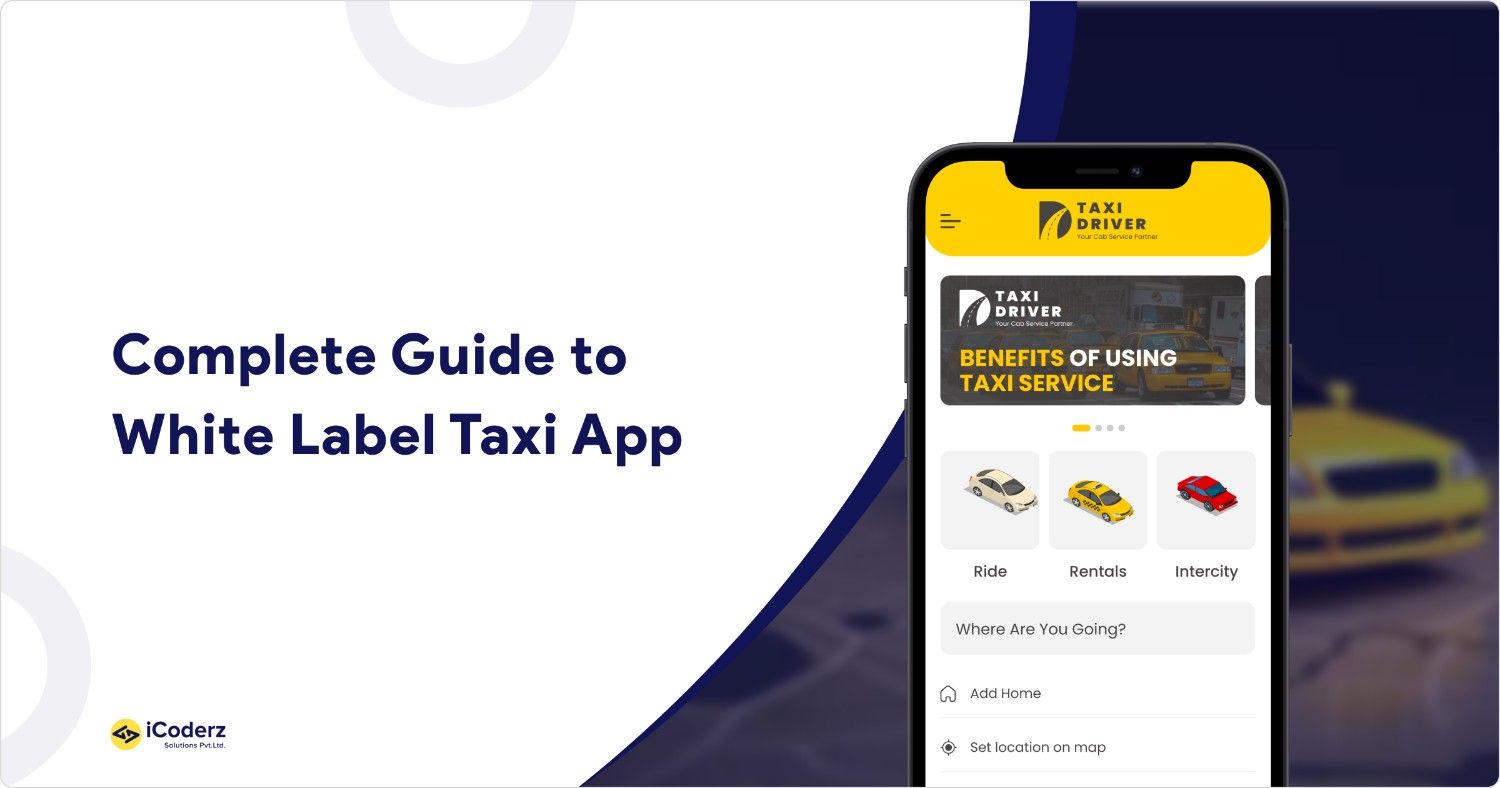
A white label taxi app is a ready-built ride-hailing platform that businesses can customize and launch under their own brand.
A white label taxi app allows startups to launch a branded ride-hailing platform using ready-built technology.
Instead of developing everything from scratch, entrepreneurs use an existing software framework.
The platform can then be customized with branding, pricing rules, and operational settings.
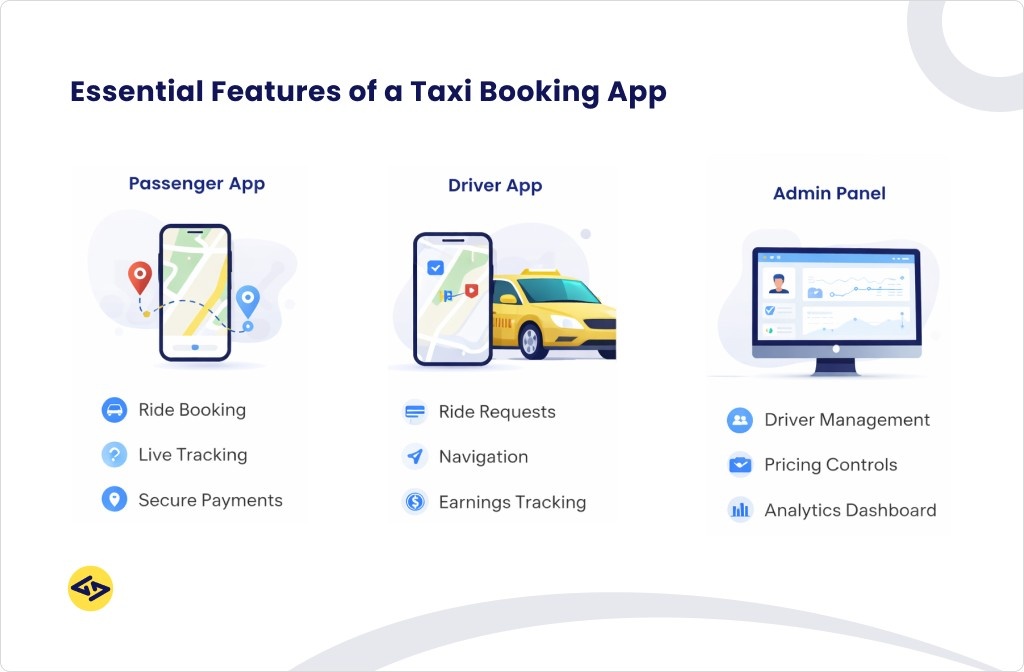
Most taxi platforms include three essential components.
The first is the passenger mobile app, where customers book rides and track drivers.
The second is the driver mobile app, which allows drivers to accept trips and manage earnings.
The third component is the admin dashboard, where business owners control operations.
Businesses looking to implement these systems often start with complete taxi booking app development solutions that already include passenger apps, driver apps, and management dashboards.
This ready infrastructure significantly reduces development time.
Companies can launch their ride-hailing platform much faster compared to traditional development approaches.
Why Startups Prefer White Label Taxi Solutions
Many entrepreneurs have strong ideas for transportation platforms.
However, developing a ride-hailing system from scratch can take 6 to 12 months and require a large engineering team. White label platforms remove much of that complexity.
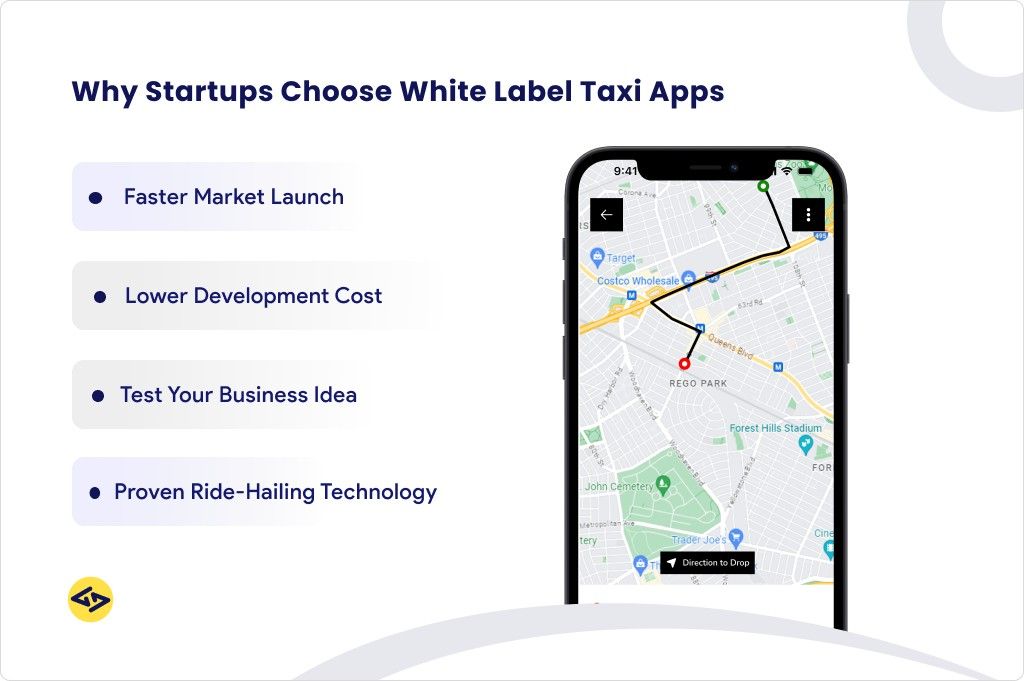
Faster Market Entry
Speed matters in competitive markets.
Ready solutions allow startups to launch quickly.
Instead of spending months developing software, businesses can start onboarding drivers and attracting customers.
Lower Initial Investment
Custom ride-hailing platforms require significant development budgets.
White label solutions reduce the initial investment.
This allows startups to focus more resources on marketing and operations.
Test the Business Idea
One of the biggest advantages is market validation.
Entrepreneurs can test whether their taxi business idea works before investing heavily.
If the concept succeeds, the platform can later evolve into a custom solution.
A deeper comparison between these approaches can be seen when evaluating custom vs ready-made taxi apps.
Proven Technology
White label solutions are usually built on tested systems.
This reduces the risk of technical failures during launch.
It also ensures smoother experiences for both riders and drivers.
Essential Features of a Taxi Booking Platform
Technology plays a critical role in ride-hailing success. Both drivers and passengers expect fast and reliable apps.
A modern taxi platform must include features that support seamless operations.
Passenger App Features
Passengers expect convenience and transparency.
Important features typically include:
- Quick ride booking
- Automatic GPS location detection
- Fare estimation before booking
- Real-time ride tracking
- Secure payment options
- Ride history and receipts
- Driver rating system
These features improve user trust and platform reliability.
Driver App Features
Drivers rely on the app to receive ride requests and manage trips.
Common driver features include:
- Ride request alerts
- Integrated navigation
- Trip management tools
- Earnings dashboard
- Availability controls
- Ride history
These features help drivers maximize productivity.
Admin Panel Features
The admin dashboard manages the entire system.
Operators can:
- Monitor live trips
- Manage driver registrations
- Configure pricing and commissions
- Access analytics reports
- Track platform performance
White Label vs Custom Taxi App Development
Entrepreneurs often compare both development approaches before launching.
Each method offers different advantages depending on the business stage.
| Factor | White Label Solution | Custom Development |
| Development Time | Few weeks | 6–12 months |
| Initial Cost | Lower | High |
| Customization | Limited but configurable | Fully customizable |
| Risk Level | Lower | Higher |
| Best For | Startups | Large companies |
| Maintenance | Provider support | In-house team |
Businesses that begin with ready platforms sometimes transition to custom solutions later.
Understanding Uber app development time and system complexity often helps entrepreneurs evaluate which approach fits their long-term strategy.
Real Market Insights for Taxi Startups
Entrepreneurs should understand industry trends before launching a ride-hailing platform.
The global ride-hailing industry continues to grow rapidly.
According to Grand View Research, the ride hailing market is projected to exceed $220 billion by 2030.
Smartphone adoption also drives this growth.
Statista reports that there are over 6.9 billion smartphone users worldwide.
This massive mobile user base makes app-based transportation more accessible.
Many modern platforms now incorporate advanced technologies such as machine learning and predictive algorithms, which are increasingly discussed in AI powered taxi app development strategies.
Things to Know Before Starting an Online Taxi Business
Launching a ride-hailing business requires careful planning.
Technology is only one part of the overall ecosystem.
Market Demand
Understanding transportation patterns in your city is critical.
Some cities require airport transport services, while others rely heavily on daily commuting rides.
Entrepreneurs evaluating this opportunity often research how to start a taxi business like Uber to understand operational requirements.
Driver Recruitment
Drivers are the backbone of the platform.
Successful platforms invest in strong driver onboarding strategies.
Incentives and fair commission structures help attract reliable drivers.
Development Budget
Taxi app development costs vary depending on features and scalability.
Understanding the cost to build an app like Uber helps entrepreneurs plan budgets realistically.
Revenue Strategy
Ride-hailing platforms generate revenue through commissions, surge pricing, and subscription models.
Many startups analyze common taxi app revenue models to determine sustainable monetization strategies.
Why Choose iCoderz Solutions for Taxi App Development
Building a reliable ride-hailing platform requires strong technical expertise.
At iCoderz Solutions, we specialize in developing scalable mobility platforms for global businesses.
Our team has extensive experience building taxi booking systems with modern architecture and advanced features.
We work closely with startups and enterprises to understand their operational goals and long-term growth strategies.
Whether businesses prefer a ready platform or a fully customized solution, the right technology foundation plays a crucial role in long-term scalability.
Conclusion
Ride-hailing platforms have transformed urban transportation. Millions of users now depend on mobile apps for daily travel. For startups, entering this industry can create significant opportunities. However, building technology from scratch requires time and resources.
A ready platform allows entrepreneurs to launch faster while minimizing risk. If you are planning to launch your own taxi platform, iCoderz Solutions can help build scalable ride-hailing solutions tailored to your business vision.

Frequently Asked Questions
How much does a taxi app cost?
Taxi platform costs vary depending on customization, integrations, and scalability.
Ready platforms cost less than building fully custom systems.
Development investment increases when advanced features or integrations are required.
How long does it take to build a taxi platform?
Custom taxi platforms can take several months to develop.
Ready solutions significantly reduce development timelines.
Can startups compete with large ride-hailing companies?
Yes.
Many successful platforms focus on regional markets or niche transportation services.
What are the main components of a ride-hailing platform?
A complete platform typically includes:
- Passenger mobile app
- Driver mobile app
- Admin dashboard
- Payment gateway integration
- GPS and navigation services